
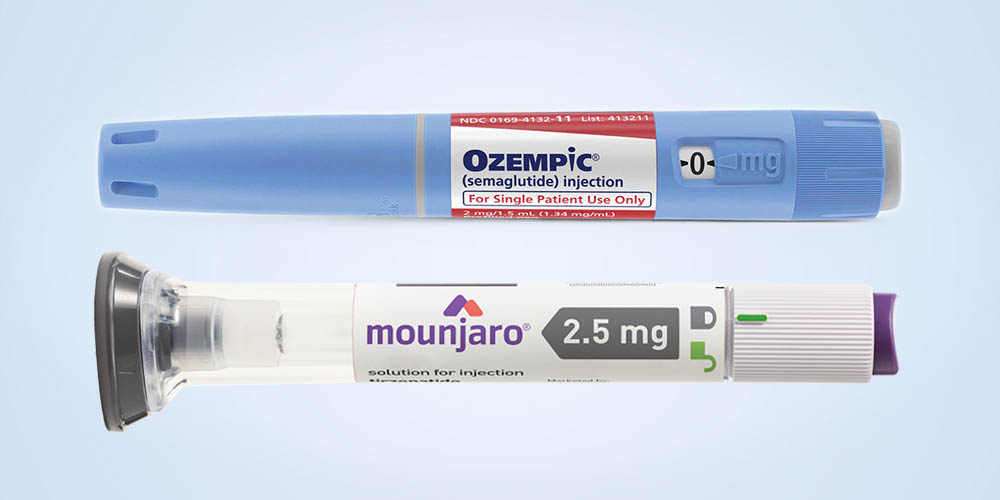
When it comes to injectable diabetes medications and their emerging use for weight management, two names are dominating discussions: Ozempic, which contains semaglutide, and Mounjaro, containing tirzepatide.
At Zealthy, we help people understand these tools so they can make informed choices about their health and wellness. Whether you’re managing type 2 diabetes, seeking weight management solutions, or curious about new medical options, understanding the differences between these two drugs is crucial.
Understanding Ozempic and Mounjaro
Ozempic is a weekly injectable medication approved for adults with type 2 diabetes to help manage blood sugar, typically alongside diet and exercise. Its active ingredient, semaglutide, is a GLP‑1 receptor agonist that not only improves insulin secretion and lowers glucagon but also slows stomach emptying, helping patients feel full. Additionally, it has documented cardiovascular benefits for people with type 2 diabetes and existing heart conditions.
Mounjaro is a newer injectable option for type 2 diabetes. Its unique mechanism targets two hormones: GLP‑1 and GIP (glucose-dependent insulinotropic polypeptide). By acting on both pathways, Mounjaro often results in stronger blood sugar reduction and weight-loss effects compared to traditional GLP‑1-only medications.
Mechanisms: How They Work
Ozempic’s action involves activating GLP‑1 receptors, which increases insulin release in response to high blood sugar, reduces glucagon production, and slows digestion. This delayed gastric emptying creates a feeling of fullness, contributing to modest weight loss alongside its glucose-lowering effects.
Mounjaro, on the other hand, activates both GLP‑1 and GIP receptors. This dual action enhances insulin secretion, suppresses glucagon more effectively, delays gastric emptying, and reduces appetite. As a result, Mounjaro often delivers stronger blood sugar control and potentially greater weight-loss benefits.
The dual mechanism of Mounjaro explains why some studies show it can outperform Ozempic in both glycemic control and weight management, though it may also increase the likelihood of gastrointestinal side effects.
Zealthy always reminds its clients that while medications are powerful tools, lasting results come from combining them with lifestyle changes, proper nutrition, and consistent support, elements we integrate into our programs.
Uses and Indications
Ozempic is primarily approved for type 2 diabetes management, with additional evidence supporting cardiovascular risk reduction in certain adults with type 2 diabetes and heart disease. While it causes weight loss, this is often considered a secondary benefit, with some regions not approving it specifically for obesity management.
Mounjaro is approved for type 2 diabetes, with its weight-loss potential being increasingly recognized. However, unlike Ozempic, its cardiovascular risk reduction is still being studied and may not yet be fully established in every country.
In practical terms, if cardiovascular protection is a priority, Ozempic holds an edge. For more aggressive weight-loss goals, Mounjaro’s dual-action mechanism offers greater potential.
Efficacy: Blood Sugar and Weight Loss
Clinical trials reveal that both drugs significantly reduce A1C levels. Mounjaro, in studies like SURPASS-2, has shown larger reductions compared to standard doses of Ozempic. Regarding weight loss, Mounjaro also often leads to greater reductions. Some studies report up to 21% body weight loss in trial participants using Mounjaro, while Ozempic users typically experience around 15% under comparable conditions.
These differences highlight that Mounjaro may provide stronger combined benefits for blood sugar control and weight reduction. Ozempic remains highly effective but may be more suited for patients prioritizing cardiovascular risk reduction alongside diabetes management.
Dosage and Administration
Both medications are administered via weekly subcutaneous injections in the abdomen, thigh, or upper arm. Ozempic doses typically start at 0.25 mg and can escalate to 2 mg weekly, often with a relatively straightforward dosing schedule. Mounjaro starts lower at 2.5 mg and gradually increases to 15 mg depending on patient tolerance, requiring careful dose escalation.
While both drugs use injection pens, Mounjaro’s higher maximum doses and gradual escalation may require closer monitoring by healthcare providers. This is particularly important for managing side effects and achieving optimal outcomes.

Cardiovascular and Broader Health Impacts
Ozempic has well-documented evidence showing a reduction in cardiovascular events, making it a preferred option for patients with type 2 diabetes who have cardiovascular disease. Mounjaro shows promising metabolic benefits, but its long-term cardiovascular outcomes are still under investigation in many regions.
Therefore, patients with high cardiovascular risk may favor Ozempic, while those focused primarily on weight loss and glycemic control may lean toward Mounjaro, provided they are closely monitored for side effects.
Zealthy guides clients by weighing both the short-term and long-term benefits of any treatment in the context of overall health goals.
Cost and Accessibility
Costs for both drugs can vary depending on country, insurance coverage, and dosage. In general, Mounjaro may be slightly more expensive than Ozempic. Insurance coverage can also be a limiting factor, especially if the medications are used for off-label purposes such as weight management. Discussing cost, coverage, and dosing options with a healthcare provider is essential to ensure consistent access.
Switching Between Medications
Switching from Ozempic to Mounjaro, or vice versa, is possible under medical supervision. Patients may switch due to suboptimal results, side effects, or specific treatment goals. Careful dose adjustment, monitoring for side effects, and maintaining clear communication with a healthcare provider are essential for a smooth transition.
Conclusion
Ozempic and Mounjaro are both powerful tools for managing type 2 diabetes, each with unique strengths. Ozempic provides a simpler dosing regimen and strong cardiovascular protection, while Mounjaro offers dual hormone action that may enhance weight loss and glycemic control. Selecting the right medication involves balancing efficacy, safety, personal goals, and practical considerations with guidance from a healthcare professional.
Zealthy helps individuals navigate these choices with confidence, providing education, support, and strategies for sustainable health improvements. By integrating medical insights with lifestyle guidance, Zealthy empowers people to achieve meaningful, long-lasting results.




.svg)
.svg)
.svg)
.svg)

