TL;DR
- A telehealth prescription goes from online visit to mailbox in a few days, with refills set to auto-ship so you never have to reorder.
- The pharmacist filling your order must hold an active license in your state, exactly like the one behind the CVS counter. The verification just happens digitally.
- Counseling still happens before anything ships, through secure messaging, phone, or video with a licensed pharmacist or provider who checks your med list for interactions.
- Insurance works with telehealth prescriptions, but plenty of patients pick cash pricing for GLP-1s, birth control, or ED medication because the number is known upfront instead of after a prior authorization fight.
- Monthly refill trips quietly eat about a workday a year. At 45 minutes a trip, twelve trips is nine hours you spend standing in line.
Skipping the counter means your prescription gets written, filled, and shipped without you ever setting foot in a drugstore. A licensed provider evaluates you online. A licensed pharmacy fills the order at a dispensing facility. The medication shows up at your door, usually within a few business days, and refills ship on their own.
Table of Contents
- How does prescription fulfillment work without a storefront?
- Who's actually licensed to fill your prescription online?
- How do you get real counseling without a face-to-face visit?
- Does insurance cover a telehealth pharmacy, or is it all cash-pay?
- What does skipping the counter actually save you?
- Frequently asked questions
How does prescription fulfillment work without a storefront?
Telehealth pharmacies don't remove the pharmacist. They relocate the counter.
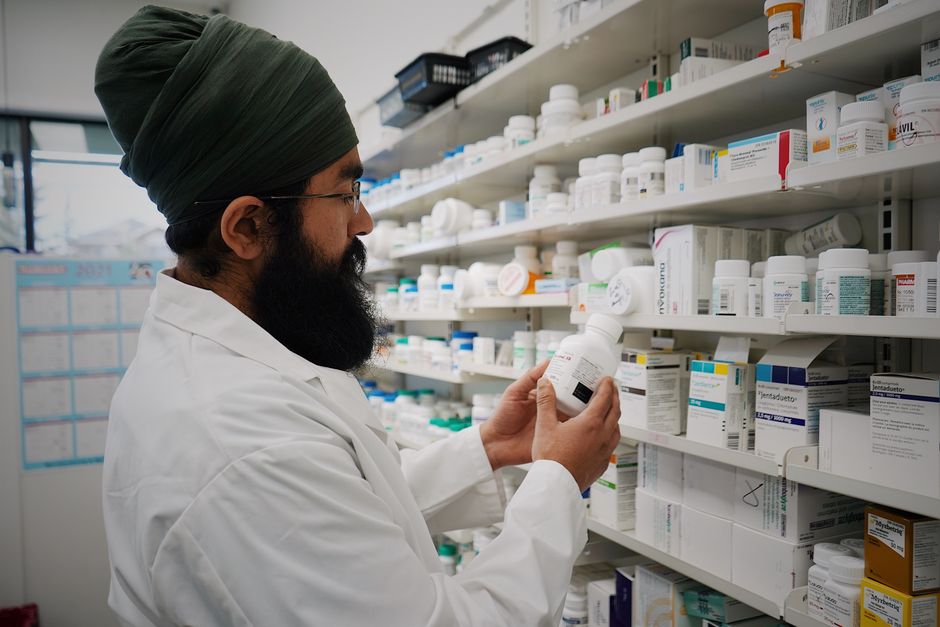
Your prescription routes electronically to a licensed fulfillment pharmacy, where a pharmacist verifies the order, screens it against your other medications, and releases it to be packed. Retail works differently in one key way: it leans hard on in-store technicians to count, label, and hand medication across a counter. You can see that in the job postings themselves, like the pharmacy technician roles at Walmart, which are built around the physical, in-person side of dispensing. Fulfillment centers run the same clinical verification but ship in batches. That's the reason auto-refill actually works online and rarely works in a store. There's no visit to forget.
The gap gets obvious the moment something is backordered. Walk into a brick-and-mortar store, hear "we don't have it," and you're the one calling three other locations. A telehealth pharmacy network can usually see inventory across multiple fulfillment partners and reroute the order without telling you it happened. Anyone who has driven to a Safeway pharmacy and been told the refill is "still processing" knows exactly how much dead time that removes, which is exactly why it's worth knowing what to ask before transferring to Safeway pharmacy before you hand over your next prescription, and it's the same reasoning behind learning how to close Kaiser pharmacy refill gaps if that's your plan instead. Our guide on how online prescription services actually work walks through the routing in more detail.
Who's actually licensed to fill your prescription online?
Whoever dispenses to you has to hold an active pharmacy license in the state where you live, not just where the pharmacy sits. That's true for a strip-mall CVS and it's true for a mail-order fulfillment center.
State boards of pharmacy run this, and they run it in the weeds. Connecticut, for example, requires a formal notification form when a pharmacy intern simply changes training sites. Multiply that level of paperwork across all 50 boards and you get a sense of what a national telehealth pharmacy has to maintain. It's a heavier administrative lift than a single-state chain faces. It is not a loophole. Same bar, fifty times over.
Pro tip: Ask which licensed pharmacy fills the orders and what state it's licensed in. Any legitimate operator names it, usually in the FAQ or terms of service. If a site dodges the question or answers with "our pharmacy partners," close the tab. The same goes for a site that will sell you a prescription medication with nothing but a checkbox questionnaire and no licensed clinician reading it.
The role itself has been drifting this way for years. Research on pharmacy leadership describes the profession pushing pharmacists toward clinical, consultative work rather than pure dispensing. Telehealth just made that shift literal by taking away the counter.
How do you get real counseling without a face-to-face visit?
Through secure messaging, a phone call, or a video visit with a licensed pharmacist or provider who reads your medication list before anything leaves the building.
This part isn't theater. Interaction screening, dose confirmation, and side-effect counseling have to happen before a new prescription ships, whether the conversation crosses a counter or a chat window. A few things we flag constantly that patients never think to mention:
- Supplements count as drugs. St. John's wort can reduce the effectiveness of hormonal birth control. Most people list it under "vitamins," if they list it at all.
- Nitrates and ED medication don't mix. That includes nitroglycerin someone was prescribed years ago and still keeps in a drawer.
- GLP-1 dosing questions almost always arrive at night. Secure messaging answers them at 11 p.m. A retail counter closed at 9.
- Timing beats everything for compliance. Telling someone to take metformin with food, specifically the largest meal, prevents more dropouts than any pep talk about adherence.
The credential behind that advice is the same one hanging on the wall at a community clinic. A PharmD-credentialed pharmacist profile lists the same specialties, certifications, and financial-assistance knowledge in either setting. The delivery channel changed. The license didn't.
If you've been going to an independent pharmacy in Baltimore or a compounding pharmacy in Towson where someone knows your name, the adjustment is mostly habit, not trust. Even compounding, which is often the whole reason people hunt down an independent pharmacy, is increasingly available through telehealth-connected compounding partners when a commercial dose doesn't fit.
Does insurance cover a telehealth pharmacy, or is it all cash-pay?
Both exist. Which one you want depends entirely on the drug.
Insurance processes telehealth prescriptions through your plan's pharmacy benefit manager, same as a Walgreens fill. That's the right path for generics your plan already covers at a low copay. Where it breaks down is any medication sitting behind a prior authorization. GLP-1s are the obvious case. You submit, you wait, the plan asks for documentation, you wait again, and the answer that eventually arrives may be no. Weeks gone, zero medication.
Transparent cash pricing trades the possibility of a cheap copay for a number you know today. For a medication your plan is likely to deny anyway, that's not much of a trade.
A rough rule: if your plan's formulary lists the drug on tier 1 or tier 2 with no prior authorization note, run it through insurance. If it requires prior authorization or step therapy, price the cash option before you start the paperwork, because the paperwork is free but your time isn't.
| Factor | Traditional pharmacy counter | Telehealth pharmacy |
|---|---|---|
| Time per refill | Roughly 30 to 60 minutes of driving and waiting | Five minutes online, then it ships on its own |
| Out of stock | You call around to other locations yourself | Order reroutes across fulfillment partners |
| Counseling | In person, often two minutes at a busy counter | Messaging or video with a licensed pharmacist |
| Payment | Insurance claim at the register | Insurance or a cash price quoted upfront |
| Refills | You call, or the app nags you | Auto-ships before you run out |
| Hours | Closes at 9 p.m., closed Sunday afternoons | Submit the request whenever you're awake |
What does skipping the counter actually save you?
Run your own numbers. The formula is simple: minutes per round trip × refills per year ÷ 60 = hours lost.
Say your pharmacy is ten minutes away. Twenty minutes of driving, five to park and walk in, twenty at the counter because two people ahead of you are sorting out insurance problems. That's 45 minutes. On a monthly maintenance medication, that's twelve trips:
45 × 12 = 540 minutes, or 9 hours a year.
More than a full workday, and that's the clean version. It doesn't count the trip where the prescription wasn't ready, the one where you checked CVS pharmacy hours and arrived eight minutes after close, or the Sunday you discovered the pharmacy counter closes earlier than the store. Our breakdown of why CVS pharmacy waits cost you refill days gets into where those delays pile up.
Here's the threshold worth knowing: if you're losing more than about four hours a year to refills, mail delivery wins on time alone, before you've compared a single price.
Pro tip: On any maintenance medication, birth control, a GLP-1, an SSRI, finasteride, auto-refill shipping is the single biggest improvement you can make. It removes the step people forget, which is reordering, and people only remember it when they're already down to two pills.
Frequently asked questions
Can a telehealth pharmacy fill a controlled substance prescription?
Sometimes. Federal rules are considerably stricter for controlled substances than for everything else, and the pandemic-era flexibilities have kept shifting. Don't assume your ADHD medication ships the same way your blood pressure medication does. Ask the provider directly before you start a visit.
What happens if I need my medication faster than standard shipping?
Most telehealth pharmacies offer expedited shipping, and some can route select prescriptions to a local pharmacy for same-day pickup. For a genuine bind, our guide to faster options when there's no 24-hour pharmacy nearby covers the backup routes.
Is one telehealth provider enough, or should I compare a few?
Compare, especially on price transparency and which conditions they actually treat. Our roundup of best telehealth providers in the United States covers several solid options, including complementary platforms like yourxhealth.com, alongside Zealthy's own services for weight loss, ED, birth control, and skincare.
Pull up your prescription bottle, check the refill date, and count how many trips you've got left this year. If the number annoys you, Zealthy's five-minute signup puts a licensed provider on the other end instead of a counter.


.svg)
.svg)
.svg)
.svg)

