Most people who stop semaglutide without a plan regain a significant share of the weight they lost, often within a year. The strongest defenses are nutrition adjustments that preserve fullness, consistent physical activity that includes resistance training, and a medical follow-up plan agreed on with your clinician before you stop. Talk to your provider before changing your dose or discontinuing treatment.
TL;DR:
- In the STEP 1 extension, participants lost 17.3% over 68 weeks, then regained 11.6 percentage points by week 120, leaving a net 5.6% loss.
- Regain often accelerates during the first three to six months; modeling estimated about 60% of eventual regain occurs by week 52, so arrange early reviews.
- Aim for about 250 minutes of moderate activity weekly and resistance training two to three times weekly to preserve muscle and reduce regain.
- Before stopping, ask your clinician about tapering or maintenance dosing; track weight and waist, and check glucose or HbA1c if you have diabetes or prediabetes.
Table of Contents
- Why Rebound Weight Gain Happens After Stopping Semaglutide
- How Much and How Quickly Weight Returns: What the Evidence Shows
- Evidence-Based Strategies to Reduce Rebound Before and After Stopping
- Clinical Options and Monitoring When Planning to Stop
- How Zealthy Helps Patients Plan for Stopping Semaglutide
- Realistic Goals and Encouragement
- Ready to Plan Your Next Step With Zealthy
- FAQ
- Sources
Why Rebound Weight Gain Happens After Stopping Semaglutide
Semaglutide works by mimicking a gut hormone called GLP-1, which signals fullness to your brain and slows gastric emptying so food stays in your stomach longer. When you stop taking it, those signals fade within weeks, and appetite tends to climb back toward where it was before treatment. The clinical term for this is a return to your prior appetite set point, and it happens regardless of willpower.
Energy expenditure shifts play a role too. If weight loss included lean muscle along with fat, and resistance training wasn’t part of the routine, resting metabolic rate can drop, which makes it easier to regain weight even on a similar diet.
There’s also a behavioral piece worth naming honestly:
- Smaller portions felt automatic during treatment because appetite was suppressed, not because eating habits fundamentally changed.
- Reduced food preoccupation, often called “food noise,” masked an appetite drive that returns once the medication clears your system.
- Many people didn’t need to practice portion control skills because the drug did that work for them.
None of this reflects a lack of discipline. Harvard Health notes that increased hunger and food noise are expected after stopping a GLP-1 medication, and clinicians generally treat regain as a biological response rather than a personal failing.
How Much and How Quickly Weight Returns: What the Evidence Shows
The clearest data come from the STEP 1 trial extension, which followed participants after they stopped semaglutide 2.4 mg.
Participants commonly regained a substantial portion of their lost weight within a year of stopping semaglutide, according to the STEP 1 trial extension. During the 68-week treatment period, average weight loss reached 17.3%, but participants regained 11.6 percentage points of that by week 120, leaving a net loss of just 5.6% compared with 0.1% for those on placebo the whole time.
More recent research adds detail:
- A 2025 eClinicalMedicine meta-analysis found an average regain of about 8.21 kg (8.19% of body weight) after semaglutide discontinuation, somewhat larger than the regain seen after stopping liraglutide.
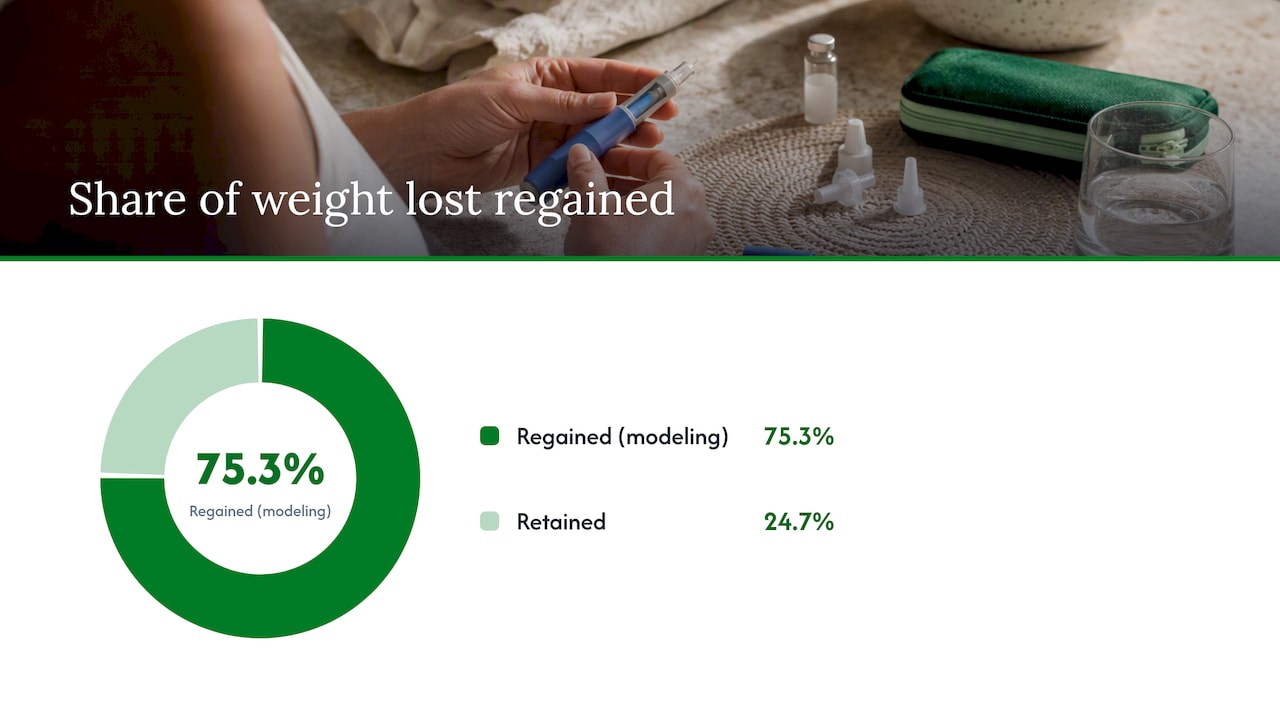
- A separate 2025 eClinicalMedicine modeling study estimated that regain plateaus around 75.3% of total weight lost, with about 60% of that regain already occurring by 52 weeks post-cessation.
- Individual results vary widely, and people who maintain exercise habits and follow a structured maintenance plan tend to regain less than those who stop all lifestyle changes along with the medication.
Put together, the pattern suggests the fastest regain happens in the first three to six months after stopping, with substantial regain often settling in by the 12 to 18 month mark. That timeline gives you a practical window to plan monitoring checkpoints with your clinician.
Evidence-Based Strategies to Reduce Rebound Before and After Stopping
The strategies that reduce rebound address the same three systems semaglutide affected: appetite, fullness, and energy balance. Building these habits while still on the medication makes the transition off it far less abrupt.
Nutrition adjustments that extend fullness:
- Build meals around lower energy density foods like vegetables and water-rich produce so you can eat satisfying volumes without excess calories.
- Target 20 to 30 grams of protein per meal, since protein is the most filling macronutrient and helps preserve muscle mass.
- Add fiber and pair carbohydrates with protein to slow digestion and smooth out blood sugar swings that drive hunger.
- Eat on a consistent schedule, roughly every three to five hours, to avoid the chaotic hunger spikes that lead to overeating.
Exercise that protects metabolism: Healthline reports that people who kept up consistent exercise after stopping a GLP-1 medication experienced less weight regain, and recommends working toward about 250 minutes of moderate activity weekly. Resistance training two to three times a week matters just as much, since it preserves the lean muscle that keeps resting metabolic rate from dropping. A sample week might include three strength sessions targeting major muscle groups, two to three days of brisk walking or cycling, and one or two lighter activity days like stretching or a short hike.
Behavioral tools that reduce food noise: Daily food logging, even informally, catches small increases in intake before they become a pattern. Mindful eating practices, such as slowing down and checking in with fullness mid-meal, help counter the intrusive hunger thoughts that often return after stopping treatment; our partner guide to mindful eating offers practical exercises worth trying. Sleep and stress management matter too, since poor sleep and chronic stress both raise appetite hormones.
Pro Tip: Start ramping up strength training and finalizing your meal structure at least four to six weeks before your planned last dose, not after.
Before stopping, a simple checklist helps: increase strength training frequency, lock in a meal plan you can sustain, set a monitoring cadence for weight and symptoms, and schedule a follow-up appointment with your clinician in advance rather than after regain has already started.
Clinical Options and Monitoring When Planning to Stop
Deciding how to stop semaglutide is a conversation for you and your clinician, not a solo decision. Harvard Health recommends discussing tapering, a lower maintenance dose, or intermittent dosing rather than stopping abruptly, since each approach carries different tradeoffs around cost, side effects, and your personal goals.
Mayo Clinic Press frames semaglutide as a long-term tool for managing a chronic condition rather than a short-term fix, which is why planning ahead for the transition matters as much as the medication itself. Maintenance dosing and intermittent schedules are options worth raising with your provider, but they need to be clinician-directed given how they interact with your overall metabolic picture.
Monitoring after you stop should include:
- Weight and waist circumference tracked on a consistent schedule, not just occasionally.
- Fasting glucose or HbA1c when your history includes prediabetes or diabetes.
- Blood pressure checks, since cardiometabolic markers can shift alongside weight.
- A brief mental health check-in for increased food preoccupation or mood changes tied to regain.
If regain exceeds the thresholds you and your clinician set in advance, that’s the signal to discuss restarting medication or getting a referral to an obesity medicine specialist rather than waiting to see how far things go.
How Zealthy Helps Patients Plan for Stopping Semaglutide
We built our weight-loss care around the moments that matter most, including the transition off medication. We offer appointments to help you discuss tapering promptly, and because primary care and specialty care are combined in one platform, your clinician can see your full health picture rather than just part of it.
When you’re ready to plan a change:
- We start with a clinician assessment of your current progress, health markers, and goals.
- We build an individualized taper or maintenance dosing plan based on that assessment.
- We connect you with dietitian or exercise guidance when your plan calls for it.
- We arrange prescription delivery so any adjusted regimen reaches you without added errands.
If you’re concerned about rebound or simply planning ahead, scheduling a consult before you stop gives you a real head start.
Realistic Goals and Encouragement
Success after semaglutide isn’t zero regain. It’s minimizing it and protecting the cardiometabolic gains you worked for, things like better blood pressure and blood sugar control that outlast the number on the scale.
Rebound is biology, not a character flaw. The people who do best treat the stop date as a planned transition, not an ending, and they loop in a clinician early enough to adjust course before momentum is lost. That single shift, planning ahead instead of reacting, makes the difference between a setback and a small course correction.
— Bryan
Ready to Plan Your Next Step With Zealthy
If you’re thinking about tapering off semaglutide or want a maintenance plan built around your specific history, we make that conversation easy to start. We provide timely appointments for guidance, and because weight loss, primary care, and prescription delivery services are integrated, your care plan stays connected rather than scattered across providers.

- Book a consult to talk through tapering, monitoring, or a maintenance dosing schedule.
- Get a personalized plan from a licensed provider rather than a generic protocol.
- Have any prescription changes delivered without extra pharmacy trips.
Visit our weight loss page to get started today.
This article is general information, not a substitute for advice from a qualified doctor. Consult a qualified healthcare professional about your own circumstances before acting on anything here.
FAQ
Why am I gaining weight back on semaglutide?
Weight regain while still on semaglutide, or after a dose reduction, usually points to a sub-therapeutic dose, a plateau in the medication’s effect, or lifestyle factors that have shifted over time. It’s worth discussing with your clinician whether your current dose still matches your needs rather than assuming the medication has simply stopped working.
How long does it take to gain weight back after stopping semaglutide?
Regain typically begins within weeks of stopping and accelerates over the first three to six months. In the STEP 1 trial extension, participants regained about two-thirds of their lost weight within one year of discontinuing treatment.
Does semaglutide stop working after a while?
Semaglutide’s appetite-suppressing and gastric-emptying effects can feel less pronounced over time for some people, though this varies by individual and is different from the medication having no effect at all. If your results have plateaued, your clinician can assess whether a dose adjustment or added support makes sense rather than assuming the medication has failed.
Is it normal to gain weight on Ozempic after taking it for 2 years?
Weight regain after a long period on a GLP-1 medication follows the same biological patterns seen in shorter trials, since appetite and fullness signals depend on continued use of the medication at an effective dose. A 2025 eClinicalMedicine modeling study found regain plateaus around 75% of total weight lost after discontinuation, regardless of how long someone was on treatment beforehand.
Sources
- Weight regain and cardiometabolic effects after withdrawal of semaglutide: The STEP 1 trial extension
- Meta-analysis of weight regain after GLP-1RA discontinuation (eClinicalMedicine, 2025)
- Modeling weight regain after GLP-1RA cessation (eClinicalMedicine, 2025)
- Maintaining weight after stopping GLP-1s - Mayo Clinic Press
- Weaning off a GLP-1? Tips for the transition - Harvard Health


.svg)
.svg)
.svg)
.svg)

