

Supervised weight loss is defined as a structured program run or overseen by certified health professionals who monitor your diet, activity, and health status on an ongoing basis. This is not simply about motivation or discipline. The NIDDK frames supervision as formal medical oversight that addresses your individual health conditions and adjusts your plan continuously. Understanding why weight loss needs supervision starts with recognizing that the body’s response to calorie restriction and medication is complex, variable, and sometimes dangerous without expert guidance.
Why weight loss needs supervision: the medical case
Professional supervision does more than track your progress. It catches health problems that would otherwise derail your efforts or put you at risk.
Many patients begin a weight loss program without knowing they have an underlying condition affecting their results. Hormonal imbalances, thyroid dysfunction, insulin resistance, and metabolic disorders all interfere with weight loss in ways that no app or diet plan can address alone. A licensed clinician identifies these issues early and adjusts your plan accordingly.
Medication safety is the other major reason professional oversight matters. GLP-1 receptor agonists like semaglutide are now among the most widely used weight loss treatments in the United States. These drugs are effective, but they carry real risks when used without clinical guidance. GLP-1 medications require proper titration and ongoing monitoring to avoid complications like pancreatitis and nutrient deficiencies. Proper titration means a clinician gradually increases your dose based on how your body responds, not a fixed schedule from an online forum.
Supervised programs also protect against three specific physical risks that patients rarely anticipate:
- Nutrient deficiencies. GLP-1 medications suppress appetite significantly. Without structured nutritional guidance, patients eat less but also absorb fewer vitamins and minerals, creating deficits that affect energy, immunity, and organ function.
- Muscle loss. Rapid weight reduction without adequate protein monitoring causes the body to break down muscle tissue alongside fat. University of Cambridge experts recommend structured nutritional advice alongside weight loss drugs specifically to preserve lean mass.
- Organ complications. Unsupervised use of weight loss medications, including trending microdosing practices, bypasses the safety checks that catch early warning signs of kidney, liver, or cardiovascular stress.
Pro Tip: Ask your provider to check your B12, iron, and vitamin D levels at the start of any medically supervised weight loss program. These are the deficiencies most commonly triggered by appetite suppression.
How does nutritional guidance fit into supervised weight loss?
Nutritional guidance is not optional in a well-designed supervised program. It is the mechanism that keeps weight loss safe while your body adjusts.

Structured nutritional advice addresses three things that patients cannot reliably manage alone: calorie quality, protein adequacy, and micronutrient balance. Eating less does not automatically mean eating well. A clinician or registered dietitian monitors your food intake to confirm you are getting enough protein to protect muscle, enough fiber to support digestion, and enough micronutrients to prevent the deficiencies that GLP-1 medications can accelerate.
Self-monitoring is the practical tool that makes this guidance work day to day. The process works best when it follows a clear sequence:
- Track food intake daily. Apps that log meals give your care team real data on calorie quality and macronutrient distribution, not estimates.
- Record physical activity. NIDDK advises 300 minutes per week of moderate activity for weight maintenance. Tracking confirms you are meeting that target.
- Weigh yourself regularly. Weekly weigh-ins catch early signs of weight regain before they become significant, giving your provider time to adjust your plan.
- Log sleep and stress. Both directly affect cortisol levels and hunger hormones. Supervision that ignores these factors misses a major driver of weight fluctuation.
“Supervision provides structure and encouragement that turns self-monitoring from an occasional habit into a consistent practice. Consistency is what produces lasting results.” — Endotext, Behavioral Approaches to Obesity Management
Behavioral coaching is the third pillar of nutritional supervision. Regular contact with a counselor or care coordinator reinforces the habits that prevent weight regain. Patients who receive frequent check-ins are more likely to maintain their progress because they have someone to report to, adjust with, and problem-solve alongside. This is not accountability in a motivational sense. It is a clinical function that keeps behavior change on track when life gets complicated.
Do supervised programs produce better long-term results?
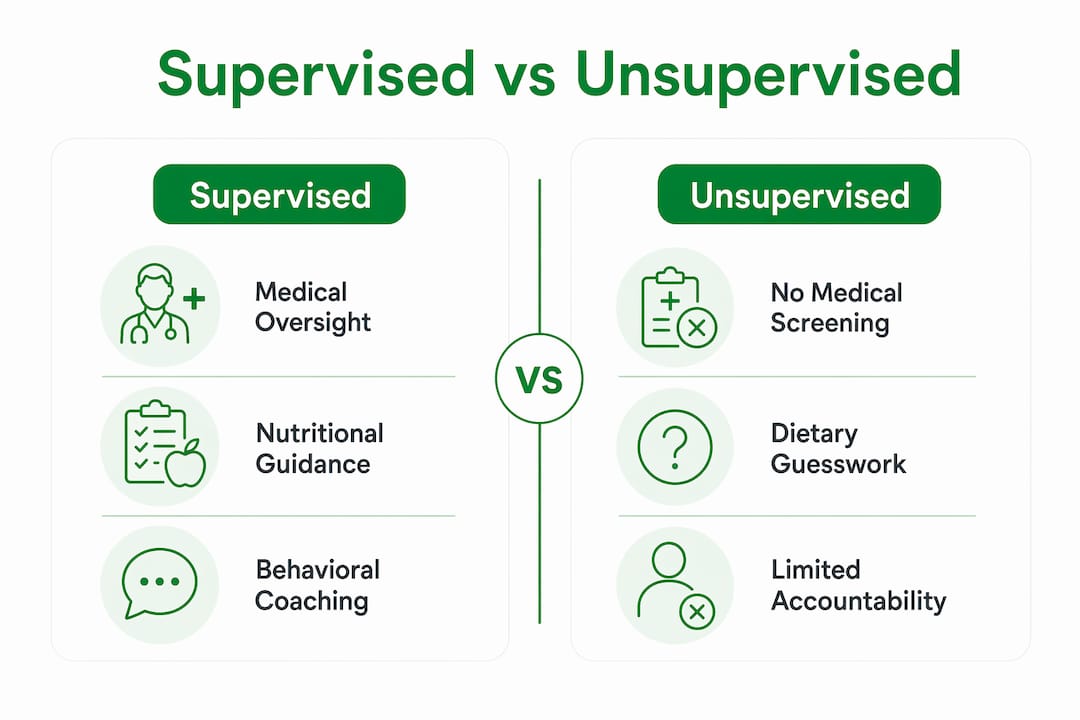
The evidence on long-term outcomes is clear. Supervised programs outperform unsupervised efforts not just at the six-month mark, but over years.
Research cited by Endotext shows that monthly in-person sessions with an interventionist reduce weight regain by roughly half compared to control groups or online-only interventions over 18 months. That is a significant difference. It means the frequency and consistency of professional contact is itself a treatment variable, not just a support service.
ApproachWeight regain riskNutritional monitoringMedication safetySupervised programLower with monthly contactStructured and ongoingClinician-managed dosingUnsupervised effortHigher without regular check-insSelf-directed, often incompleteNo clinical oversightOnline-only programModerate, better than nothingVariable by platformDepends on provider access
The reason unsupervised efforts fail so often is not willpower. It is biology. After initial weight loss, the body increases hunger hormones and reduces metabolic rate to resist further loss. Without a clinician adjusting your plan in response to these changes, most patients regain weight within one to two years. Supervision turns that biological resistance into a manageable challenge rather than an inevitable setback.
Pro Tip: When evaluating a weight loss program, ask specifically how often you will have direct contact with a licensed provider. Monthly contact is the minimum that research supports for preventing weight regain.
What are the risks of unsupervised weight loss attempts?
Unsupervised weight loss carries risks that go beyond simply not losing enough weight. Some approaches cause direct harm.
The most significant risk right now involves self-directed use of GLP-1 medications. Online communities have popularized microdosing semaglutide, the practice of taking smaller, self-adjusted doses to reduce side effects or extend supply. Cedars-Sinai stresses that clinically indicated patients on FDA-approved GLP-1s require proper titration and ongoing monitoring. Microdosing without supervision bypasses both. The result is unpredictable drug exposure, unmonitored side effects, and no safety net if something goes wrong.
Common risks in unsupervised weight loss include:
The core misconception driving unsupervised attempts is that weight loss is primarily a discipline problem. It is not. It is a medical process that responds to individual biology, and individual biology requires individual oversight.
Key Takeaways
Professional supervision is the single most important factor separating safe, lasting weight loss from attempts that fail or cause harm.
PointDetailsMedical oversight catches hidden risksClinicians identify hormonal and metabolic issues that block weight loss before they become serious.GLP-1 safety requires clinical managementProper titration and monitoring prevent complications like pancreatitis and nutrient deficiencies.Nutritional guidance preserves muscleStructured dietary monitoring prevents the muscle loss that unmonitored appetite suppression causes.Frequent contact prevents weight regainMonthly provider sessions cut weight regain risk significantly compared to unsupervised or online-only efforts.Self-monitoring works best with structureTracking food, activity, and weight produces results when a care team reviews and responds to the data.
Why I believe supervision is non-negotiable, not optional
I have seen patients arrive having tried every popular approach on their own: calorie counting apps, elimination diets, online GLP-1 prescriptions with no follow-up, and supplement stacks assembled from social media recommendations. Almost universally, the ones who struggled longest were not lacking effort. They were lacking a feedback loop.
What supervision provides that no self-directed program can replicate is a clinician who sees the whole picture. A patient losing weight rapidly while feeling exhausted and losing hair is not succeeding. They are depleting themselves. Without a provider reviewing labs and adjusting their plan, they will either give up or develop a more serious problem. I have watched patients turn that exact situation around within weeks once they had proper nutritional monitoring and dosing adjustments.
The other thing I have observed is that patients who have regular contact with their care team stay in the program longer. Not because they are more motivated, but because they feel seen and supported. That sustained engagement is what produces the 18-month and two-year outcomes that matter. Short programs and one-time consultations do not build the behavioral infrastructure needed for maintenance. Long-term, consistent supervision does.
My advice is direct: if you are considering a GLP-1 weight loss plan or any medically assisted approach, do not start without a provider who will stay with you beyond the first prescription. The medication is only one part of the equation.
Zealthy’s approach to medically supervised weight loss
Weight loss that lasts requires more than a prescription. It requires a care team that monitors your progress, adjusts your plan, and supports you through the challenges that every patient faces.

Zealthy offers medically supervised weight loss programs built around licensed professionals with an average of over ten years of clinical experience. Patients receive personalized care plans that integrate medical oversight, nutritional guidance, and behavioral support in one place. Same-day appointments and prescription delivery make it practical to stay consistent without disrupting your schedule. If you are ready to approach weight loss with the clinical structure it requires, Zealthy connects you with the professional support that makes the difference between short-term results and lasting change. Learn more about weight loss injections and whether they are right for your situation.
FAQ
Why does weight loss need professional supervision?
Weight loss needs professional supervision because the body’s response to calorie restriction and medication is highly individual and can involve serious risks. Clinicians identify underlying conditions, monitor for side effects, and adjust your plan based on real data.
What are the risks of losing weight without medical guidance?
Unsupervised weight loss can cause muscle loss, nutrient deficiencies, electrolyte imbalances, and dangerous medication interactions. Patients using GLP-1 medications without clinical oversight face additional risks including improper dosing and unmonitored side effects.
Is weight loss coaching necessary if I am already eating well?
Yes. Even patients with good dietary habits benefit from professional monitoring because weight loss triggers hormonal and metabolic changes that require clinical adjustment. Behavioral coaching also significantly reduces the risk of weight regain over time.
How often should I meet with a provider during a supervised weight loss program?
Research supports at least monthly contact with a licensed provider to prevent weight regain. More frequent contact during the initial phase helps establish habits and catch early problems before they affect your results.
Can I safely use GLP-1 medications without supervision?
No. FDA-approved GLP-1 medications require proper titration and ongoing clinical monitoring. Self-directed use, including trending microdosing practices, bypasses the safety checks that protect against serious complications.
Recommended
- A Guide to Effective Weight Loss Treatments at Zealthy
- How to Maintain Weight Loss For Long-Term: Proven Strategies That Work
- How to Build a Sustainable Weight Loss Plan | Zealthy
- Weight Loss For Seniors and Tips for Healthy Aging | Zealthy



.svg)
.svg)
.svg)
.svg)

