
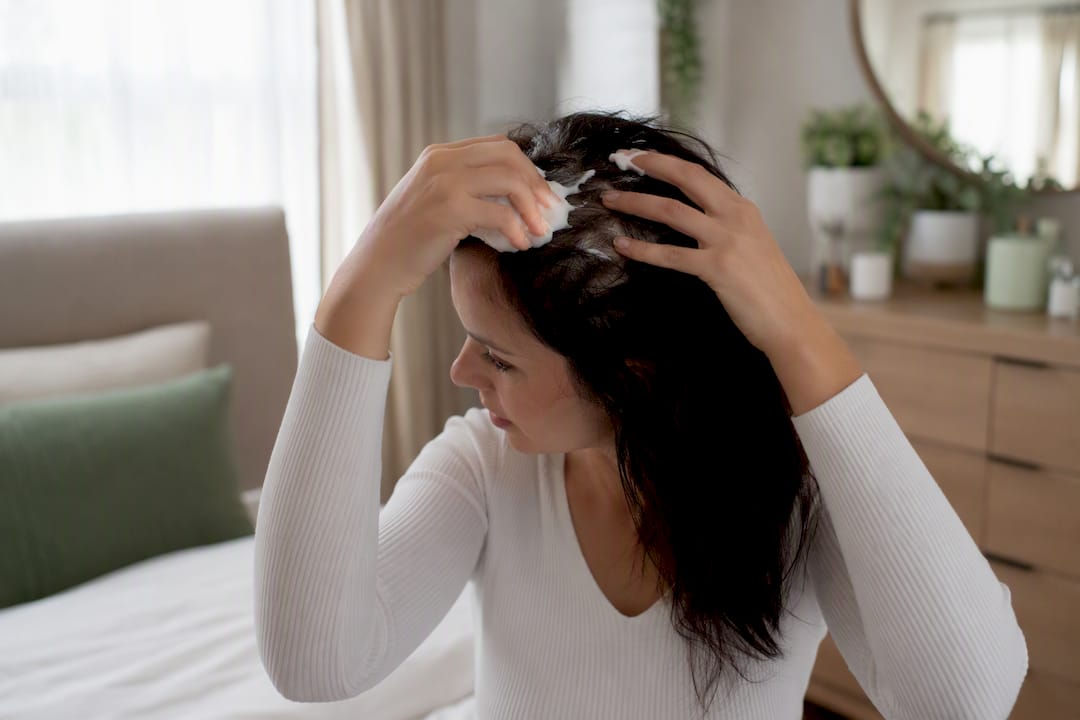
Topical minoxidil is the FDA-approved first-line treatment for female pattern hair loss, and it remains the therapy with the strongest evidence base available today. Clinical data show about 19% of women achieved moderate regrowth with 2% minoxidil solution after 8 months, compared with 7% on placebo. That’s a real but modest effect, and it explains why so many women feel confused about what to try next.
Several adjuncts show promise but carry more variable evidence:
- Oral minoxidil (low-dose): growing off-label use, fewer local skin effects than topical
- Spironolactone: an oral antiandrogen often added when topical therapy stalls
- PRP (platelet-rich plasma): modest trial support, but protocols vary widely between clinics
- LLLT (low-level light therapy): FDA-cleared devices exist, though evidence remains mixed
Low-dose oral minoxidil requires medical supervision: it can cause fluid retention, a faster heart rate, and lowered blood pressure, so clinicians typically monitor blood pressure and ask about heart conditions before prescribing. It is not recommended during pregnancy or breastfeeding. Discuss these risks with a physician before starting.
Overall, 30% to 60% of women don’t respond adequately to topical minoxidil alone, which is why a proper workup matters before you spend months on the wrong plan.
If you’re starting today, three moves matter most: get a focused evaluation to confirm the diagnosis, check baseline labs (ferritin, thyroid function), and start minoxidil correctly before considering systemic add-ons with a clinician’s guidance.
TL;DR:
- Up to 60% of women may not respond adequately to topical minoxidil alone, emphasizing the importance of proper diagnosis and baseline lab checks before treatment.
- Low-dose oral minoxidil and spironolactone are systemic options that can help nonresponders but require close monitoring for side effects and pregnancy risks.
- Procedural treatments like PRP, microneedling, and laser therapy show some promise but generally do not outperform topical minoxidil and are best used as complementary options.
- Accurate diagnosis through clinical tools and lab testing is critical to distinguishing female pattern hair loss from other causes like telogen effluvium or alopecia areata.
- Telehealth platforms can streamline evaluation, lab testing, and prescription processes, enabling women to start effective treatment quickly and with fewer in-person visits.
How Is Female Pattern Hair Loss Diagnosed?
Getting the diagnosis right matters more than most women realize. Female pattern hair loss (androgenetic alopecia) has a distinct look: gradual thinning concentrated along the part line and crown, with the frontal hairline typically staying intact. That pattern separates it from telogen effluvium, which causes diffuse shedding across the whole scalp, often triggered by illness, childbirth, crash dieting, or a stressful year. Alopecia areata looks different still, showing up as round, well-defined bald patches rather than gradual thinning.
Clinicians rely on a few low-tech but reliable tools to sort this out:
- Hair pull test — gently tugging a small section of hair to count how many strands release, a rough gauge of active shedding
- Trichoscopy — a handheld magnifying dermatoscope that reveals hair shaft diameter variation, a hallmark of androgenetic alopecia called miniaturization
- Standardized photography — consistent lighting, angle, and part-line position at each visit, since memory alone badly underestimates or overestimates change
Miniaturization on trichoscopy, where some hairs look normal and others are visibly thinner, is one of the more useful bedside clues, because it points specifically to androgen-related follicle shrinkage rather than a temporary shedding event.
Labs come next, and skipping them is one of the most common mistakes in this whole process. A reasonable baseline panel includes:
- Ferritin — low iron stores are a well-documented, reversible contributor to hair thinning
- TSH — both an underactive and overactive thyroid can accelerate shedding
- CBC — screens for anemia and other blood abnormalities that mimic pattern loss
- Pregnancy test, when relevant — pregnancy and postpartum shifts cause a distinct shedding pattern that resolves without antiandrogen therapy
An endocrine workup, including free testosterone, DHEA-S, or prolactin, becomes relevant when hair loss appears alongside irregular periods, new acne, or excess facial hair, since those signs suggest an underlying hormonal condition like polycystic ovary syndrome rather than isolated pattern hair loss.
Biopsy or dermatology referral is warranted when the presentation is atypical: patchy rather than diffuse loss, scarring, scalp pain or itching, or no improvement after a genuinely adequate trial of first-line therapy. A dermatologist can also distinguish scarring alopecias, which destroy follicles permanently, from the non-scarring pattern that responds to medical treatment.
Topical Minoxidil: Dosing, Application, and What to Expect
Topical minoxidil is the only medication with FDA approval specifically for female pattern hair loss, and it comes in two forms: 2% solution and 5% foam. The foam tends to dry faster and causes less scalp irritation for many women, while the solution has the longer track record in published trials. Both work the same way: they extend the growth phase of the hair cycle and may increase blood flow to the follicle, though the exact mechanism isn’t fully mapped.
Statistic Callout: In an early controlled trial, roughly 19% of women using 2% minoxidil solution reported moderate new hair growth after 8 months, versus 7% on placebo. That gap is modest by design, since minoxidil rarely produces dramatic reversal, but it consistently outperforms doing nothing.
Correct application looks like this:
- Apply to a dry scalp, not wet hair, so the product doesn’t run off before absorbing
- Use the labeled amount, typically 1 milliliter of solution or half a capful of foam, twice daily
- Apply directly to the thinning areas, parting hair to expose the scalp rather than saturating the hair shaft
- Wait at least 4 hours before washing your hair or lying down on a pillow to avoid transfer
Response takes time. Most women see early signs, less shedding, some finer new growth, between 3 and 6 months, with fuller results by 9 to 12 months. A frustrating but well-documented phase happens around 6 to 8 weeks in, when some women notice increased shedding. This is usually a sign the medication is pushing resting follicles into a new growth cycle, not a sign of failure, and it typically resolves within a few weeks.
Pro Tip: Keep a dated photo log from day one, same lighting, same part, same angle, once a month. Shedding and regrowth both happen too gradually to trust memory, and a photo series is often the only way you and your clinician can tell if the treatment is actually working.
The prescribing label is clear that continued use is necessary to maintain any benefit: stopping minoxidil typically leads to loss of the gains within several months. If you’ve used a formulation consistently and correctly for 6 months with zero change, that’s the point to discuss switching from solution to foam, adding a second agent, or reevaluating the diagnosis with a clinician rather than assuming minoxidil doesn’t work for you. Zealthy’s telehealth hair loss program walks patients through exactly this kind of formulation and adherence troubleshooting.
Do Oral Minoxidil and Spironolactone Work Better?
Low-dose oral minoxidil and spironolactone are the two systemic options clinicians reach for most often when topical therapy alone hasn’t done enough, and both come with real tradeoffs worth understanding before you start either one.
Low-dose oral minoxidil has gained traction largely because it skips the scalp irritation and daily application hassle of the topical version. Doses used for hair loss are far lower than the ones used for blood pressure, typically in the range of 0.625 to 2.5 milligrams daily. The tradeoff is systemic absorption: some women experience fluid retention (mild swelling in the ankles or face), unwanted facial hair growth, or a faster heart rate. Anyone with a history of heart disease, low blood pressure, or fluid-retention issues needs closer monitoring before starting.
Spironolactone is an antiandrogen used off-label for female pattern hair loss, and it works by blocking androgen receptors at the follicle rather than lowering hormone levels systemically. Doses in published data range widely, with some trials using up to 100 milligrams daily, often paired with topical minoxidil for a combined effect. The catch is that menstrual irregularity was reported in up to roughly 37.5% of patients in some trials, along with breast tenderness and occasional dizziness from its mild blood-pressure-lowering effect. Because spironolactone can feminize a male fetus, reliable contraception is non-negotiable for anyone who could become pregnant while taking it.
Finasteride and dutasteride, the antiandrogens more commonly associated with male pattern baldness, have far less evidence behind them for premenopausal women, and they carry a serious fetal risk (specifically, the potential to cause birth defects in a male fetus) that makes them inappropriate for anyone who is pregnant or trying to conceive. Some clinicians consider them selectively in postmenopausal women with confirmed androgenetic alopecia who haven’t responded to other options, but this remains a smaller, more specialized use case than spironolactone.
Statistic Callout: Roughly 37.5% of women on spironolactone in clinical data reported some degree of menstrual irregularity, a figure worth weighing seriously against the potential regrowth benefit before starting.
Monitoring on systemic therapy typically includes:
- Baseline pregnancy test for anyone of reproductive age, before starting either oral minoxidil or spironolactone
- Blood pressure checks periodically while on oral minoxidil
- Follow-up visits around the 3-month mark to assess side effects and early tolerance
- A clear contraception plan discussed and documented for anyone on spironolactone who could become pregnant
Most clinicians treat these as add-ons to topical minoxidil rather than replacements for it, since the two work through different mechanisms and the combination has more supporting data than either systemic agent used alone.
Are PRP, Microneedling, and Laser Therapy Worth Trying?
Procedural options appeal to women who want to do more than apply a topical twice a day, but the evidence behind them is genuinely uneven, and it’s worth knowing exactly where each one stands before paying out of pocket.
PRP (platelet-rich plasma) involves drawing your own blood, spinning it to concentrate the platelets, and injecting that concentrate into the scalp to stimulate follicles with growth factors. One randomized controlled trial found 57% of women showed photographic improvement with PRP versus 7% with a saline injection at follow-up, a meaningful gap. The problem is standardization: preparation methods, injection depth, and session frequency vary enormously between clinics, and there’s no single accepted protocol. Most regimens involve three to four sessions spaced about a month apart, followed by maintenance treatments every few months.

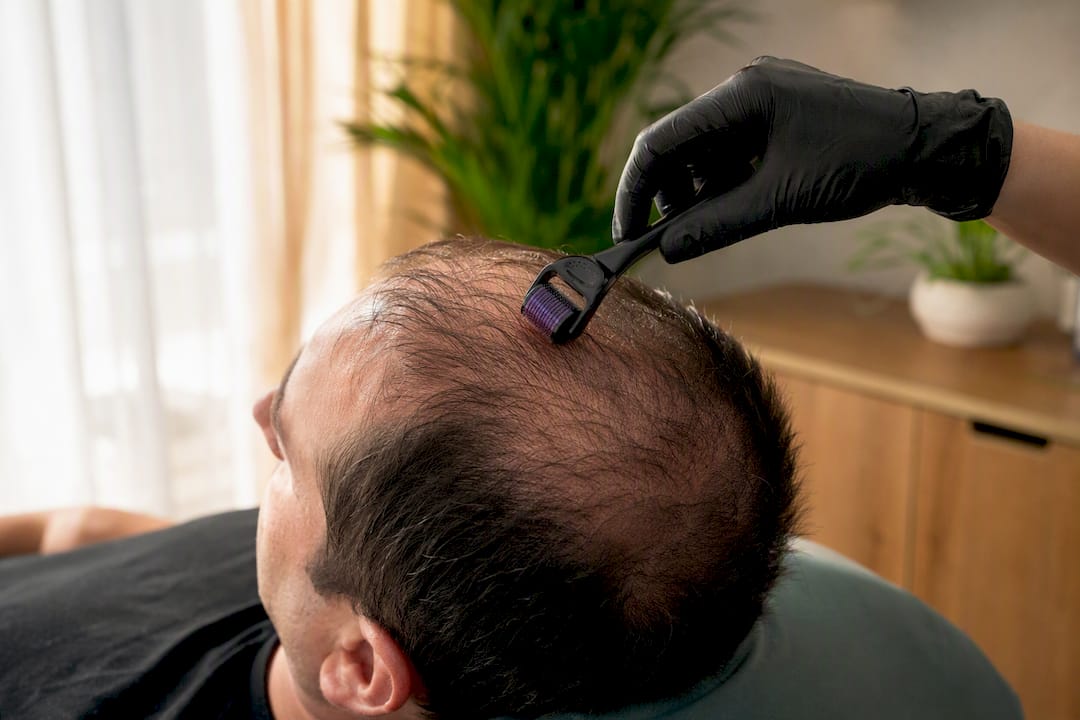
Microneedling uses a device with fine needles to create controlled micro-injuries in the scalp, which may improve absorption of topical minoxidil and trigger a mild wound-healing growth response. It’s most often used as an add-on rather than a stand-alone therapy, at needle depths around 0.5 to 1.5 millimeters, roughly once a week. Expect mild redness and pinpoint bleeding immediately after, resolving within a day.
LLLT (low-level light therapy), also called photobiomodulation, uses red or near-infrared light delivered through combs, caps, or helmet-style devices. Some devices have FDA clearance as an adjunctive treatment, and it’s a reasonable option for women who prefer a nonpharmacologic approach or who can’t tolerate topical or oral agents. Evidence quality is mixed, and most studies are small, so it’s best framed as a supplement to medical therapy rather than a substitute.
Pro Tip: If you’re considering PRP, ask the clinic directly how many sessions their specific protocol includes and what preparation method they use. “PRP” isn’t one standardized treatment, it’s a category, and outcomes vary with technique.
None of these procedures currently outperforms topical minoxidil as a sole treatment. Combining minoxidil with PRP or microneedling is common in practice for women whose response to medication alone has plateaued, though head-to-head data comparing specific combinations remains limited. The honest takeaway is that these are reasonable additions for the right candidate, not replacements for a solid medical foundation.
When Is Hair Transplant Surgery an Option?
Hair transplant surgery is rarely the right first move for female pattern hair loss, and understanding why helps set realistic expectations. The procedure works by moving follicles resistant to hormonal thinning, typically from the back of the scalp, into thinning areas. That logic holds up well in men with a stable donor zone, but many women have more diffuse thinning across the whole scalp, including the donor area itself, which limits how much can safely be transplanted. Good candidates usually have a clearly localized area of thinning with a healthy, stable donor zone elsewhere, confirmed through trichoscopy before any surgical consultation.
For women not ready for or not eligible for surgery, two camouflage approaches offer meaningful help while medical therapy has time to work:
- Scalp micropigmentation deposits pigment into the scalp to mimic the look of density, a semi-permanent option that requires touch-ups every few years and works best for diffuse thinning rather than complete bald patches.
- Hair toppers and wigs offer an immediate cosmetic solution with no procedural risk, ranging from clip-in partial toppers to full wigs, and quality varies enormously with price.
Camouflage isn’t a failure to treat the underlying condition. It’s a practical bridge, especially given how much psychosocial distress female pattern hair loss can cause. Many women use a topper or targeted micropigmentation during the 6 to 12 months it takes to judge whether minoxidil or a combination regimen is working, then reassess once the medical picture is clearer.
Does Ketoconazole Shampoo or Biotin Actually Help?
Ketoconazole shampoo has some real, if modest, supporting logic: it has mild antiandrogenic and anti-inflammatory properties at the scalp level, which makes it a reasonable adjunct alongside minoxidil rather than a stand-alone fix. Most protocols use it two to three times weekly, left on the scalp for a few minutes before rinsing.
Supplements are where marketing claims tend to outrun the evidence. Biotin, zinc, and vitamin D show no proven benefit for female pattern hair loss in women who aren’t actually deficient in them. Iron is the one clear exception: when ferritin comes back low on bloodwork, replacing it can meaningfully help hair density, but taking iron or biotin without a documented deficiency is unlikely to move the needle and, in iron’s case, can cause harm if levels are already adequate.
A few practical guardrails:
- Check ferritin and vitamin D before starting any supplement, not after months of guessing
- Skip biotin megadoses unless a lab has confirmed a deficiency; high-dose biotin can also interfere with certain thyroid and hormone lab tests, muddying future diagnostic workups
- Treat ketoconazole shampoo as a low-risk addition to a prescribed regimen, not a substitute for it
- Be skeptical of nutraceutical blends promising dramatic regrowth without citing controlled trial data (the evidence summaries available for popular hair supplements are worth a skim before buying)
How Long Before You Know If Treatment Is Working?
Hair biology moves slowly, and that single fact explains most of the frustration women feel with treatment. Hair follicles cycle through growth (anagen), transition (catagen), and resting (telogen) phases, and most therapies work by extending the anagen phase or coaxing resting follicles back into growth. That process simply cannot show visible results in a matter of weeks.
Here’s the realistic timeline clinicians use to judge response:
- 0 to 6 weeks: possible increased shedding as resting hairs cycle out, often mistaken for the treatment failing
- 3 to 6 months: early signs of improvement, less shedding, fine new hairs at the part line
- 9 to 12 months: fuller assessment of response, when a genuine verdict on efficacy becomes possible
Clinicians rely on the same tools mentioned earlier to judge progress objectively rather than by feel: standardized photography, trichoscopy comparisons, and patient-reported changes in shedding or styling. Objective measures matter because subjective impressions swing wildly week to week depending on humidity, styling, and simple attention bias.
When treatment “fails,” it’s rarely because the medication doesn’t work at all. The far more common culprits are an incorrect original diagnosis (treating telogen effluvium like pattern hair loss, for instance), inconsistent application, or simply not waiting long enough before giving up.
Pro Tip: Set a calendar reminder for the 3-month and 6-month marks specifically to review your photo log with a clinician, rather than judging progress in the moment. Most premature “this isn’t working” conclusions happen around week 6 to 8, right in the shedding phase that actually signals the medication is doing its job.
Practical adherence tips that make a measurable difference: pick the foam if the solution irritates your scalp, apply at the same two times each day so it becomes automatic, and don’t skip doses around travel, since inconsistent use is one of the most common reasons a genuinely effective regimen looks like it isn’t working.
Getting Evaluated and Treated Through Telehealth
A proper female pattern hair loss workup doesn’t require an in-person specialist visit for most women, and that’s exactly the gap Zealthy’s telehealth model is built to close. The pathway typically runs like this: a remote intake capturing your history and shedding pattern, photos submitted for trichoscopy-informed review, baseline labs ordered (ferritin, TSH, and a pregnancy test for reproductive-age patients), then a prescribing decision and a scheduled follow-up to track response.
Safety steps stay non-negotiable throughout. Anyone of reproductive age starting spironolactone or oral minoxidil needs a documented pregnancy test and a clear contraception plan, since both carry fetal risk. Cases with patchy or scarring-pattern loss, or no response after an adequate trial, get referred to in-person dermatology rather than managed indefinitely through telehealth alone.
Getting the diagnosis right before you spend six months on the wrong treatment is the single highest-leverage decision in this entire process, and it’s one a focused remote evaluation can genuinely make.
Pro Tip: Bring three months of consistent, well-lit photos to your first telehealth visit if you have them. It shortens the time your clinician needs to distinguish pattern hair loss from a shedding event, and it means treatment can start sooner.
Zealthy’s hair loss program connects women with licensed clinicians who order the right labs, prescribe evidence-based first-line therapy, and schedule the follow-up visits that actually catch nonresponse early.
Key Takeaways
Topical minoxidil remains the only FDA-approved treatment for female pattern hair loss, and pairing it with an accurate diagnosis and realistic 3-to-12-month timeline gives most women their best shot at visible improvement.
| Point | Details |
|---|---|
| Confirm the diagnosis first | Rule out telogen effluvium and alopecia areata with trichoscopy and pull testing before starting treatment. |
| Check labs before treating | Order ferritin, TSH, CBC, and a pregnancy test when relevant to catch reversible causes. |
| Start topical minoxidil correctly | Apply the labeled amount twice daily to a dry scalp and expect 3 to 6 months for early signs. |
| Weigh systemic options carefully | Spironolactone and low-dose oral minoxidil can help nonresponders but require monitoring and contraception planning. |
| Get evaluated through telehealth | Zealthy offers remote intake, lab ordering, and prescribing for female pattern hair loss with follow-up built in. |
What the Evidence Actually Supports
The conventional advice on female pattern hair loss tends to oversell certainty in both directions. Some sources treat minoxidil like a guaranteed fix, ignoring that 30% to 60% of women don’t respond adequately. Others swing the opposite way, dismissing it as barely effective because the response rates aren’t dramatic. Both framings miss the more useful truth: minoxidil is modest but reliable, and the biggest lever most women aren’t pulling is proper diagnosis before treatment, not a fancier treatment itself.
What gets underestimated is how much a wrong diagnosis wastes. Treating telogen effluvium like androgenetic alopecia, or skipping a ferritin check because it feels like an extra step, quietly burns through the exact months a woman needed to see if minoxidil was actually working. Procedures like PRP get outsized attention because they feel proactive, but they’re additions to a medical foundation, not replacements for one.
If you take one thing from this guide, prioritize the evaluation over the escalation. Get the labs, confirm the pattern, start minoxidil correctly, and give it the months hair biology actually requires before judging it.
— Bryan
Start Your Hair Loss Evaluation Today
Zealthy gives you a faster, more direct route to treatment than piecing together a diagnosis on your own or waiting weeks for an in-person dermatology slot. You get a licensed clinician who reviews your history and photos, orders baseline labs like ferritin and TSH, and prescribes first-line therapy, all from your phone, with prescriptions delivered instead of requiring a pharmacy trip.

That matters most for the women stuck in the guessing phase: wondering whether their shedding is hormonal, nutritional, or just pattern hair loss, and hesitant to book a specialist visit for something that feels hard to explain out loud. Zealthy’s hair loss care pathway is built specifically to sort that out quickly, with follow-up visits scheduled in from the start so nonresponse gets caught at 3 months instead of a year later. If irregular hormones or thyroid symptoms show up alongside the hair changes, Zealthy’s primary care service can fold that evaluation into the same visit.
Start an online evaluation to get your labs ordered and a treatment plan started this week.
Sources
- Female-pattern hair loss: therapeutic update - PMC
- DailyMed - WOMENS ROGAINE UNSCENTED- minoxidil solution
- Spironolactone clinical data (Europe PMC summary)
- Hair cycle biology and clinical timelines (PubMed)
FAQ
Can Female Pattern Hair Loss Be Fixed?
Female pattern hair loss can’t be permanently cured, but it can be effectively managed. Topical minoxidil, sometimes combined with spironolactone or procedural adjuncts like PRP, produces real regrowth in many women, though ongoing treatment is needed to maintain results.
What Is the Most Effective Treatment for Female Pattern Hair Loss?
Topical minoxidil is the treatment with the strongest evidence base and the only one with FDA approval for this condition. Adding spironolactone or PRP can help women who don’t respond to minoxidil alone, though evidence for those add-ons is less robust.
What Are the Newest Treatments for Female Pattern Hair Loss?
Low-dose oral minoxidil has become increasingly popular as an alternative to the topical form, and PRP protocols have grown more refined, though standardization across clinics still lags. LLLT devices have also expanded, with some receiving FDA clearance as adjunctive therapy.
What Shampoo Is Best for Hair Loss?
Ketoconazole shampoo has mild antiandrogenic and anti-inflammatory effects that make it a reasonable adjunct alongside prescribed treatment, typically used two to three times weekly. No shampoo alone replaces topical minoxidil or a proper medical evaluation for female pattern hair loss.
How Do I Know If I Need Blood Tests for Hair Loss?
If your shedding is diffuse, sudden, or accompanied by fatigue, irregular periods, or skin changes, baseline labs, including ferritin, TSH, and CBC, help rule out reversible causes before starting hair-specific treatment. A telehealth evaluation through Zealthy can order these labs as part of an initial visit.

.png)
%20(1).png)

.svg)
.svg)
.svg)
.svg)

