

Finasteride carries three main risk categories: sexual side effects like lowered libido and erectile dysfunction, psychiatric effects including mood changes, and rarer physical effects such as breast tissue changes. Most of these are uncommon and tend to fade with continued use or after stopping, but a subset of men report symptoms that persist long after discontinuation, a phenomenon researchers call post-finasteride syndrome. Talk to a clinician before starting, and set up a monitoring plan from day one.
Finasteride is FDA-indicated for men only. Women who are or may become pregnant must not handle crushed or broken finasteride tablets, due to the risk of harm to a male fetus. It can also cause sexual side effects (reduced libido, erectile dysfunction) in a minority of men, which usually resolve after stopping treatment. Discuss these risks with a physician before starting.
TL;DR:
- Most sexual side effects from finasteride, such as decreased libido and erectile dysfunction, typically occur within the first year and often resolve with continued use or after stopping the medication.
- A small subset of men report persistent symptoms known as post-finasteride syndrome, but its true prevalence remains uncertain due to reporting bias and limited long-term data.
- Mood changes, including depression and suicidal thoughts, are recognized risks, requiring regular mood monitoring and immediate action if symptoms worsen or new symptoms emerge.
- Finasteride’s effects on sperm count are usually reversible after discontinuation, and higher doses for prostate issues carry a greater risk of sexual side effects than the 1 mg dose for hair loss.
- Men with pre-existing mental health issues or using higher doses should consider closer supervision and thorough baseline assessments before starting finasteride.
Finasteride Side Effects at a Glance
Before diving into the research behind each risk, here’s the quick reference most men search for first.
- Sexual effects (most common): decreased libido, erectile dysfunction, and reduced ejaculatory volume, typically emerging in the first year of treatment.
- Serious effects requiring urgent care: breast lumps or nipple discharge, new or worsening depression, suicidal thoughts, or signs of an allergic reaction like swelling or difficulty breathing.
- Other physical effects: lightheadedness when standing up (orthostatic hypotension), skin rash, and testicular discomfort in rare cases.
- Monitoring flags: any new mood symptom, any change in sexual function that doesn’t resolve within a few weeks, or any breast tissue change deserves a call to your prescriber, not a wait-and-see approach.
The StatPearls clinical reference lists erectile dysfunction at 2% to 4% incidence alongside loss of libido and decreased ejaculatory volume as the most frequently documented adverse effects. Everything below unpacks the timing, the odds, and what the evidence actually supports.
Sexual Side Effects: How Common Are They, and Do They Go Away?
Sexual side effects are the reason most men researching this drug end up here, and the data is more nuanced than either the alarmist or dismissive takes online suggest.
Sexual dysfunction risk is real but modest, and it clusters early in treatment. A systematic review and meta-analysis found an increased risk of sexual dysfunction with finasteride 1 mg compared with placebo in men treated for androgenetic alopecia, with erectile dysfunction risk nearly doubling in some pooled analyses. That’s a meaningful signal, not background noise.
Timing matters more than most patients expect. Long-term trial data, including the multi-year PLESS study reported in FDA labeling, enrolled thousands of men and found sexual adverse effects were reported most often during year one, then declined in years two through four. Impotence and decreased libido rates that looked concerning at month three often normalized by month eighteen, and many men who stopped the drug saw symptoms resolve within weeks.
What the evidence can’t tell you:
- Most trials relied on self-reported symptoms rather than objective measures, which means recall bias and expectation effects (the nocebo response) can inflate numbers.
- Sample sizes for men who develop persistent dysfunction after stopping are small, so the true long-term incidence is still debated.
- Trials designed for hair loss or enlarged prostate weren’t built to isolate finasteride’s effect from aging, stress, or unrelated health changes.
For most men, sexual side effects surface early, stay mild, and fade with time or discontinuation. The exception, covered in detail below, is the smaller group whose symptoms don’t follow that pattern.
Can Finasteride Cause Depression or Suicidal Thoughts?
Yes, and this is the piece of the risk profile that gets the least attention despite carrying regulatory weight. Drug labeling has been updated over the years to direct prescribers to counsel patients about mood changes, reflecting post-marketing reports even though a clean causal link remains under study, according to StatPearls.
The mechanism is still being worked out. Finasteride blocks the conversion of testosterone to dihydrotestosterone (DHT), and DHT influences neurosteroid pathways connected to mood regulation. That’s a plausible biological route to depression or anxiety, but plausibility isn’t proof, and researchers haven’t nailed down exact incidence rates the way they have for sexual side effects.
Practical monitoring steps:
- Track your mood weekly for the first three months, not just when something feels obviously wrong.
- Tell a partner or close friend you’re starting the medication so they can flag changes you might miss in yourself.
- Treat any new or worsening depressive symptom as a reason to call your prescriber, not something to push through.
- Never dismiss suicidal thoughts as “probably unrelated.” Stop the medication and seek care immediately.
Pro Tip: Keep a simple two-line daily note, one line for physical symptoms and one for mood, for the first 90 days. Patterns that feel invisible day to day often jump out clearly when you scroll back through three weeks of entries.
If you or someone you know is having suicidal thoughts, contact the 988 Suicide & Crisis Lifeline immediately by calling or texting 988. This applies whether or not you believe finasteride is the cause.
What Is Post-Finasteride Syndrome?
Post-finasteride syndrome, or PFS, describes a cluster of sexual, physical, and psychological symptoms that persist for months or years after stopping finasteride, in some men who never fully returned to their pre-treatment baseline. It remains one of the most medically contested topics in dermatology and urology.
The syndrome is documented but not settled science. Case series and reviews describe real, persistent symptoms in a subset of men, yet the underlying mechanism and true incidence are still under investigation, according to a review in PMC. Critics of the PFS literature point to a recurring problem: most reports come from self-selected patient groups (often men who sought out PFS forums or advocacy organizations before entering a study), which almost certainly inflates apparent severity and prevalence compared with the general population of finasteride users.
At the same time, dismissing PFS outright isn’t supported by the evidence either. Reporting bias, study-quality differences, and the nocebo effect complicate clean attribution, but they don’t erase the men whose symptoms never resolved.
Before starting finasteride, protect yourself with documentation:
- Get a baseline assessment of sexual function, libido, and mood from your prescriber, ideally in writing.
- Ask specifically what “persistent symptoms” means in your clinician’s experience and how they’d handle it.
- Set a check-in date at 4 to 6 weeks to compare against that baseline, not just a vague “come back if something’s wrong.”
Does Finasteride Affect Fertility and Sperm Count?
Finasteride can lower sperm count and semen volume during treatment, but the effect is dose-dependent and, at the standard 1 mg dose used for hair loss, uncommon and usually reversible. Sperm parameters that decline during treatment generally recover after stopping, and permanent infertility following low-dose finasteride isn’t supported by current data, per fertility-focused research. Higher 5 mg doses, typically prescribed for enlarged prostate rather than hair loss, show more pronounced reversible effects in some studies.
If you’re trying to conceive:
- Ask your clinician whether a semen analysis before starting makes sense, especially if you have any prior fertility concerns.
- Watch for changes in ejaculatory volume, which can be an early signal worth discussing at your next visit.
- Know that stopping finasteride, if needed, generally allows sperm parameters to normalize over subsequent months.
Beyond Sex and Mood: Other Physical Side Effects
Sexual and psychiatric effects get most of the attention, but finasteride’s labeling includes several other effects worth knowing before you start.
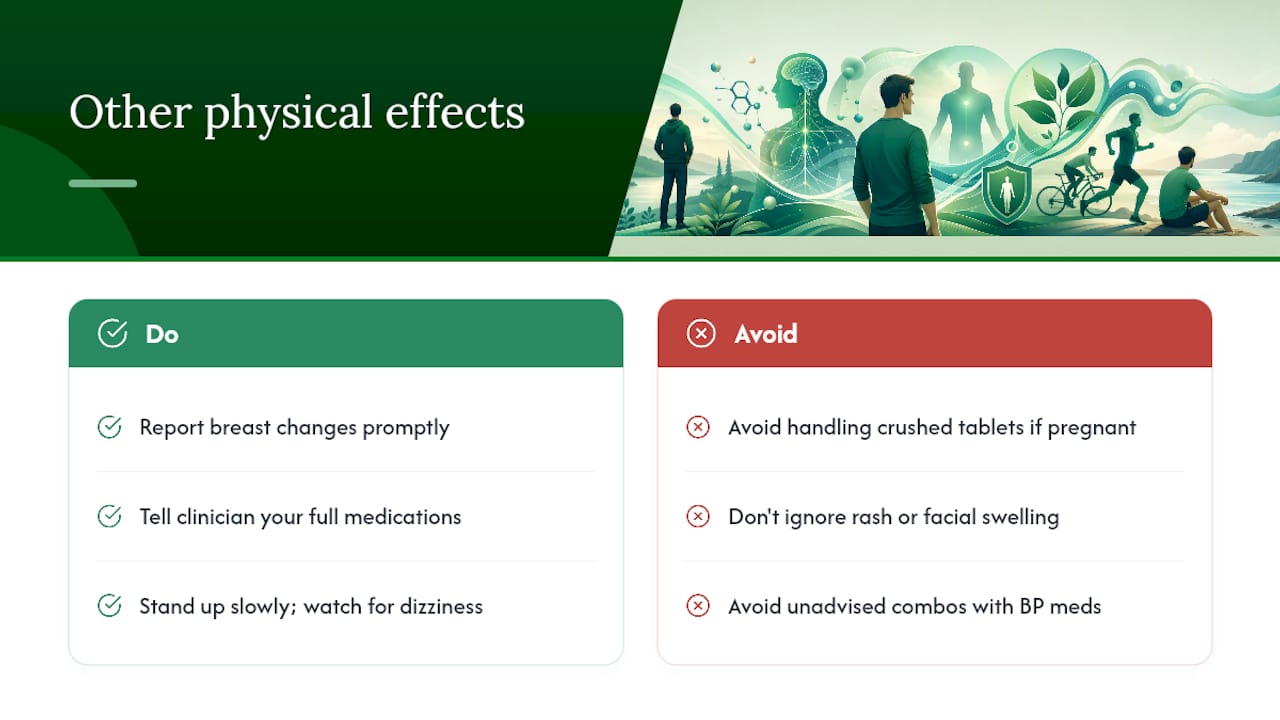
Gynecomastia, or breast tissue enlargement and tenderness, is a recognized effect that requires prompt evaluation if you notice a lump, swelling, or nipple discharge, since it needs to be distinguished from other causes. Orthostatic hypotension, a drop in blood pressure when standing that causes dizziness, shows up as an under-discussed signal in clinical references, and it becomes more relevant if you also take blood pressure medication or alpha-blockers. Allergic reactions, including rash, hives, or facial swelling, are uncommon but require stopping the drug and seeking care.
One contraindication overrides everything else: finasteride carries a pregnancy and birth-defect warning. Women who are or may become pregnant should not handle crushed or broken tablets, since the medication can be absorbed through skin and may harm a male fetus. Per current labeling, finasteride has no major documented drug-to-drug interactions, but always disclose your full medication list at every visit.
Who Faces Higher Risk From Finasteride?
Not every man carries the same odds. A few factors meaningfully shift your personal risk profile.
- Dose and combination therapy. Higher doses (5 mg, typically for prostate enlargement) carry a stronger sexual-side-effect signal than the 1 mg hair-loss dose, and combining finasteride with alpha-blockers for blood pressure raises the risk of orthostatic hypotension.
- Baseline mental health history. Men with a prior history of depression or anxiety may want closer mood monitoring, since it’s harder to distinguish a medication effect from a pre-existing pattern flaring up.
- Nocebo and confounding factors. Expecting a side effect can make you more likely to notice and report one, and unrelated stressors, including pornography-related sexual dysfunction, can muddy the picture. A clinician who asks good questions can help separate the two.
How to Monitor Side Effects and When to Stop
A structured approach beats waiting to see how things feel.
- Establish a baseline. Before your first dose, document sexual function, mood, and any relevant symptoms with your prescriber.
- Schedule follow-ups. Check in at 4 to 6 weeks, then again at 3 months, rather than only when something feels wrong.
- Keep a symptom diary. Brief daily or weekly notes catch gradual changes that memory alone tends to miss.
- Know your stopping rules. Breast lumps, suicidal thoughts, or signs of an allergic reaction (throat swelling, difficulty breathing) mean stop the medication and seek care immediately, not at your next scheduled visit.
- Report adverse events. File a report with FDA MedWatch if you experience a serious or unexpected side effect. Individual reports feed the post-marketing data that eventually shapes drug labeling for everyone else.
Pro Tip: Bring your symptom diary to every follow-up, even the ones where you feel fine. A clinician comparing three data points over three months catches patterns a single “I’m okay” at a checkup never will.
Finasteride vs. Dutasteride and Other Mitigation Options
If the sexual-side-effect profile worries you, you have real alternatives worth a conversation with your prescriber, not just finasteride or nothing.
- Dutasteride vs. finasteride: Reviews comparing the two find dutasteride more effective at increasing hair counts, thanks to deeper DHT suppression, but with similar rates of sexual adverse effects in most analyses, per a comparative review. Choosing dutasteride for hair loss trades one drug’s risk profile for a very similar one, not a safer one.
- Topical formulations: Topical 5-alpha reductase inhibitor strategies are being studied as a way to reduce systemic exposure compared with oral dosing, though availability and long-term evidence still vary by formulation and pharmacy.
- Finasteride and minoxidil together: Combining finasteride with topical minoxidil targets hair loss through two different mechanisms (DHT suppression plus blood flow to follicles), which some men use to justify a lower finasteride dose. Ask which is better for you, finasteride or minoxidil alone, based on your hair loss pattern.
The Bottom Line on Finasteride’s Risk Profile
The evidence supports a clear but nuanced picture: finasteride works for hair loss and prostate symptoms, and most sexual and psychiatric side effects are uncommon, early-appearing, and often reversible. A smaller, harder-to-quantify group reports symptoms that persist, which is exactly why informed consent matters more here than with a typical low-risk medication.
- Review your baseline health and mental health history with a prescriber before starting.
- Set concrete follow-up dates rather than an open-ended “check back if needed.”
- Keep the StatPearls and MedlinePlus references handy for symptom definitions if something new comes up.
— Bryan
Zealthy’s Approach to Assessment and Monitoring
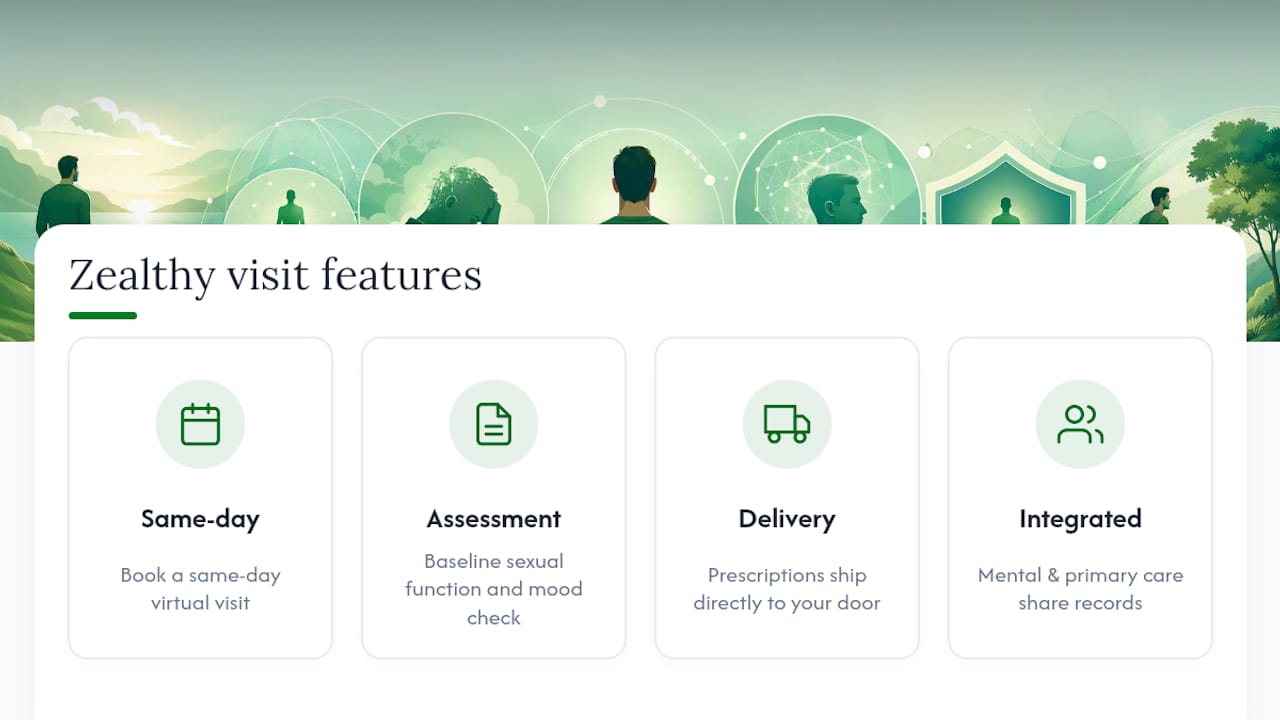
The telehealth model focuses on risk conversations that actually happen before a prescription, not after a side effect shows up. Same-day appointments with licensed clinicians help provide a thorough baseline assessment of sexual and mental health rather than a rushed five-minute intake.
Our providers document your starting point, screen for mood history, and set up follow-up check-ins so changes get caught early rather than dismissed. If you’re weighing finasteride against dutasteride for hair loss or want a second opinion before you start, that’s exactly the kind of conversation a consult is built for.
Zealthy: A Straightforward Way to Get Evaluated
If you’re ready to talk through your personal risk factors rather than keep reading forums, some telehealth services give a faster path than the typical wait for an in-person urology or dermatology appointment. Booking a same-day virtual visit can provide a baseline assessment of sexual function and mood before filling a prescription, along with follow-up monitoring through the same platform.
Every Zealthy consult includes access to licensed clinicians who can walk through finasteride’s risk profile against alternatives like dutasteride or topical options, and prescriptions, when appropriate, ship directly to your door. For patients dealing with related concerns, our mental health care and primary care services connect to the same medical record, so a mood change you mention in one visit doesn’t get lost before your next one. For background on alopecia causes and evidence-based treatment options, this patient education resource is worth a look too.
Start with Zealthy’s consent to telehealth page to see how a visit works, or head straight to Getzealthy to book your first consultation and get a personalized risk discussion before you decide anything.
This article is general information, not a substitute for advice from a qualified doctor. Consult a qualified healthcare professional about your own circumstances before acting on anything here.
Sources
- Finasteride and sexual side effects - PMC
- Finasteride - StatPearls - NCBI Bookshelf
- FINASTERIDE TABLETS
- Finasteride: MedlinePlus Drug Information
FAQ
What Is the Permanent Side Effect of Finasteride?
The most-discussed lasting effect is post-finasteride syndrome (PFS), a cluster of persistent sexual, physical, and psychological symptoms some men report after stopping. Its true incidence and mechanism remain medically contested, and most men do not experience it.
Is Finasteride Worth the Risks?
For many men treating hair loss or an enlarged prostate, the benefits outweigh the risks, since most sexual and psychiatric side effects are uncommon and often resolve with time or discontinuation. The decision depends heavily on personal risk factors, which is why a baseline evaluation with a clinician before starting matters.
Why Do Some Men Choose Not to Take Finasteride?
Concerns about sexual side effects, mood changes, and the small but real possibility of persistent symptoms after stopping lead some men to choose alternatives like topical minoxidil or dutasteride instead. Others simply want more data before committing to a daily medication with a debated long-term risk profile.
Is Finasteride Hard on Your Body?
For most men, finasteride is well tolerated, with sexual side effects like decreased libido or erectile dysfunction affecting 2% to 4% in the case of erectile dysfunction specifically. A smaller group experiences more persistent or bothersome effects, which is why ongoing monitoring rather than a one-time prescription matters.




.svg)
.svg)
.svg)
.svg)

