You can safely switch antidepressants, but only with a clinician-planned approach: do not stop or swap medications on your own. Switching is common and often necessary when a medication isn’t working well enough or side effects are hard to live with. The safest paths, tapering, cross-tapering, or a washout period, depend on which drugs are involved, and a couple of medications (MAOIs and fluoxetine) follow their own rules.
TL;DR:
- Switching antidepressants involves risks like withdrawal, relapse, serotonin syndrome, and drug interactions, requiring careful clinician monitoring and planning.
- Discontinuation symptoms typically appear within days and are more physical and intense after drugs with short half-lives, unlike gradual mood relapse.
- Approaches such as tapering, cross-tapering, or washout depend on the specific drugs’ half-lives, interaction risks, and urgency of symptom relief.
- Special handling is needed for medications like MAOIs, fluoxetine, and SNRIs due to their pharmacology, detection of withdrawal, and interaction profiles.
- Patients should prepare medication lists, symptoms logs, and follow early check-ins to ensure safe transition during supervised switching processes.
Table of Contents
- Why people switch and the main risks to be aware of
- Withdrawal and discontinuation symptoms: telling them apart from relapse
- Switching strategies in practice: direct switch, taper, cross-taper, and washout
- Medication-specific cautions and notable exceptions
- How clinicians plan and monitor a switch
- Zealthy’s approach to safe antidepressant switching
- Ready to make the switch with clinician support
- Sources
- FAQ
Why people switch and the main risks to be aware of
Most people who switch antidepressants do so because the first medication did not work well enough, caused side effects they could not tolerate, or interacted with another prescription. Pregnancy planning, new health conditions, or a psychiatric diagnosis that shifts the treatment target (such as recognizing bipolar disorder) can also prompt a change.

Switching is far from rare. A claims-database analysis covering more than 130,000 patients found that about 9% of people who started antidepressant monotherapy switched to a different antidepressant. That number gives useful context: needing a different medication is a normal part of treatment, not a sign that something went wrong.
The risks during a switch are what make clinician oversight necessary:
- Discontinuation syndrome: withdrawal-like symptoms when a drug is stopped too quickly.
- Relapse or worsening depression: especially if there’s a treatment gap with no active medication.
- Serotonin syndrome: a potentially dangerous reaction when two serotonergic drugs overlap.
- Drug interactions: some antidepressant combinations affect liver enzymes or heart rhythm.
- Early-treatment suicidality risk: a known concern flagged on antidepressant labels, especially in younger patients during dose changes.
When symptoms are severe or safety is an immediate concern, a clinician may move faster, using a cross-taper under close watch, instead of a slow, conservative switch. When there’s no urgency, the more cautious route almost always wins.
Withdrawal and discontinuation symptoms: telling them apart from relapse
Stopping or reducing an antidepressant, especially abruptly, can trigger discontinuation symptoms. These typically show up within days of a dose reduction and can include:
- Electrical “brain zap” sensations or dizziness.
- Nausea, flu-like aches, or fatigue.
- Irritability, anxiety, or mood swings.
- Sleep disruption, including vivid dreams or insomnia.
- Cognitive fog or difficulty concentrating.
Timing depends heavily on the drug’s half-life. Medications that clear the body quickly, like paroxetine or venlafaxine, tend to cause more noticeable and earlier discontinuation symptoms than drugs that leave the system slowly. Fluoxetine is the exception here: its long half-life means withdrawal symptoms are less common and, when they occur, tend to appear later and milder.
The harder question is distinguishing withdrawal from relapse. Discontinuation symptoms usually appear within days of a dose change, include physical sensations like dizziness or zaps, and improve on their own within one to three weeks. Relapse tends to develop more gradually, centers on mood and motivation rather than physical sensations, and does not fade with time. If low mood, hopelessness, or suicidal thoughts appear or worsen, that’s a signal to contact a provider promptly rather than wait it out.
Pro Tip: Keep a simple daily symptom log during any switch, noting mood, sleep, and physical symptoms. It makes it much easier for your clinician to distinguish withdrawal from relapse at your next check-in.
Switching strategies in practice: direct switch, taper, cross-taper, and washout
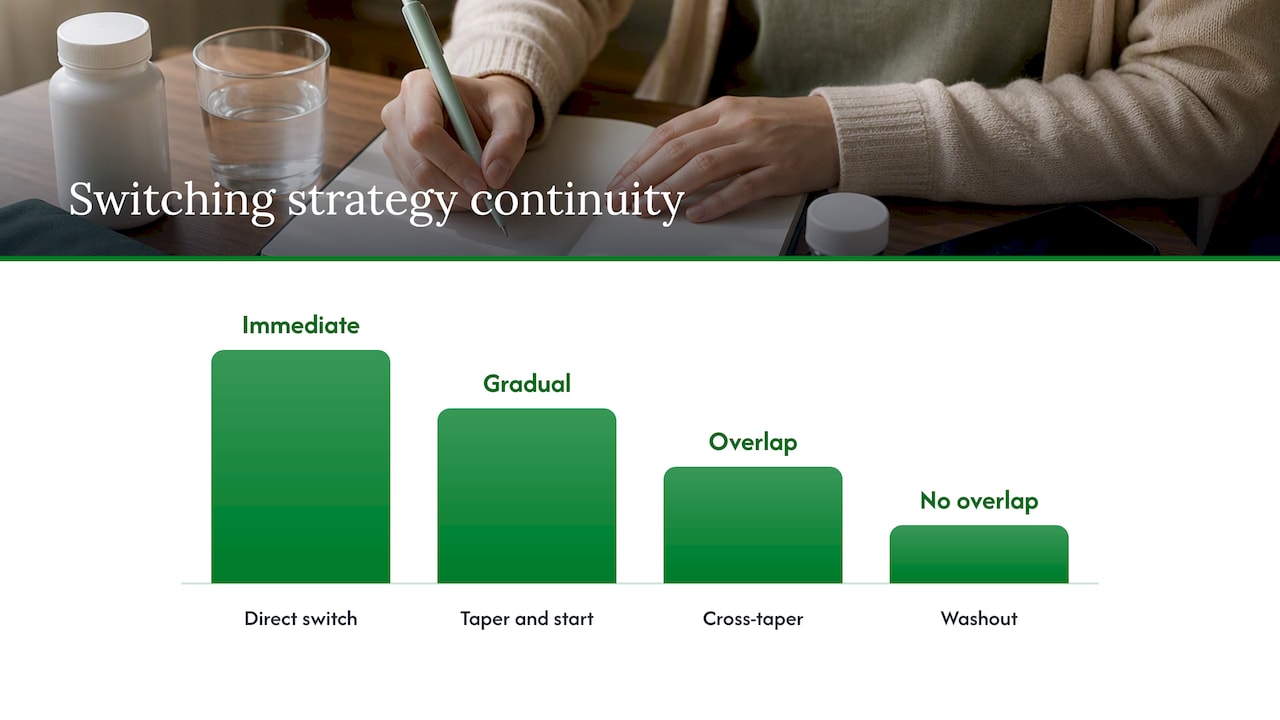
Clinicians generally choose from four approaches, and the right one depends on the specific drugs involved, how severe the symptoms are, and how urgently treatment needs to change.
- Direct switch: stopping one medication and starting the new one the next day. This works best between drugs in the same class with similar mechanisms and low interaction risk.
- Taper and start: gradually reducing the first medication’s dose while starting the new one, often used when the first drug has a short half-life and stopping abruptly would cause discontinuation symptoms.
- Cross-taper: slowly decreasing one medication while slowly increasing the other, so both overlap for a period. This is common between antidepressant classes but requires monitoring.
- Washout: stopping the first medication completely and waiting before starting the second, used when the two drugs cannot safely overlap at all.
The factors that push a clinician toward one approach over another include the first drug’s half-life, the interaction risk between the two medications, how urgently the patient needs symptom relief, and how severe current side effects or withdrawal risk already are.
A review of switching and stopping antidepressants describes the most conservative approach for minimizing drug interaction risk: taper off the first medication, then wait roughly five half-lives before starting the new one. For most SSRIs, that adds up to a matter of days. Fluoxetine breaks this pattern because its long half-life and active metabolite can persist for weeks, so clinicians often extend the washout window well beyond what they’d use for other SSRIs, or choose a different strategy altogether to avoid a long gap without treatment.
Cross-tapering carries its own tradeoff. It lowers the chance of discontinuation symptoms because the patient is never fully off medication, but it raises the risk of drug interactions, particularly serotonin syndrome, when two serotonergic drugs overlap. The same PMC review notes that clinicians managing a cross-taper watch closely for early signs like agitation, tremor, or a rapid heartbeat, and are prepared to slow or pause the taper if those appear.
Sertraline switches follow this same logic: reviewing the specific sertraline discontinuation and switching precautions before adjusting doses helps avoid an unplanned gap in coverage.
Medication-specific cautions and notable exceptions
A handful of medications need special handling because of their pharmacology or safety profile:
- MAOIs: switching to or from an MAOI generally requires a minimum 14-day washout, and combining an MAOI with many SSRIs or SNRIs, even briefly, can trigger a dangerous interaction.
- Fluoxetine: its long half-life means it can remain active in the body for weeks after the last dose, which is why clinicians often extend the washout period compared with other SSRIs, especially before starting an MAOI.
- SNRIs (including venlafaxine): these carry a higher risk of pronounced discontinuation symptoms and often need a slower taper than SSRIs.
- Bupropion: carries a seizure risk that rises with higher doses or rapid changes, so dose adjustments during a switch need extra caution, as outlined in bupropion-specific safety guidance.
- Citalopram and paroxetine: each carries its own interaction and discontinuation profile worth reviewing before any switch, covered in more detail in guidance on citalopram for anxiety and depression and paroxetine’s safety profile.
Liver or kidney impairment, other prescriptions, and supplements all factor into the plan, since they can change how quickly a drug clears the body or raise interaction risk.
How clinicians plan and monitor a switch
A safe switch starts before the first dose changes. Clinicians typically work through a checklist and a monitoring schedule rather than making the change in a single visit.
- Pre-switch review: a full medication and supplement list, pregnancy or breastfeeding status, a screen for bipolar disorder (since antidepressants alone can worsen it), and labs if the patient has liver, kidney, or heart conditions.
- Early follow-up: a check-in within one to four weeks of starting the change, since the FDA’s medication guide flags this early window as the period of highest risk for mood or behavior changes.
- Ongoing check-ins: spaced out as symptoms stabilize, often monthly until the new medication reaches a steady, effective dose.
- Troubleshooting: if withdrawal is severe, the clinician may slow the taper, add a short-term symptomatic medication, or revise the switching strategy entirely.
Red flags that call for urgent attention include a sudden spike in suicidal thoughts, severe withdrawal that doesn’t ease, and signs of serotonin syndrome, high fever, muscle rigidity, rapid heart rate, or confusion, which need emergency care immediately.
Pro Tip: If you notice new or worsening suicidal thoughts at any point during a switch, contact your prescriber the same day rather than waiting for your next scheduled visit.
Zealthy’s approach to safe antidepressant switching
Some virtual healthcare platforms combine primary care and mental health care, with features like same-day visits and prescription delivery, which can be helpful during a medication switch when timing and access to a clinician matter. Clinicians on the platform work through the same pre-switch checklist and follow-up cadence described above: reviewing your full medication list, screening for relevant conditions, and scheduling early check-ins during the highest-risk weeks.
Before a virtual visit, it helps to bring a current medication and supplement list, notes on side effects or symptoms you’ve tracked, and an emergency contact in case anything needs urgent follow-up. Preparing that ahead of time lets the visit focus on the plan itself.
— Bryan
Ready to make the switch with clinician support
Switching antidepressants safely means having a clinician who can adjust the plan as your body responds, not a one-time prescription. Zealthy pairs same-day mental health visits with integrated primary care for medication review and labs, so the switching plan accounts for your full health picture.

- Book a visit through Zealthy’s anxiety and depression care.
- Bring your current medication list and any symptoms you’ve tracked.
- Follow the taper or cross-taper schedule your clinician sets, and keep early follow-ups on the calendar.
Sources
- Switching and stopping antidepressants - PMC (NIH)
- Switching antidepressant medications in adults - UpToDate
- Medication Guide: Antidepressant Medicines, Depression and other Serious Mental Illnesses, and Suicidal Thoughts or Actions - FDA
- Full prescribing information (example: sertraline) - FDA
This article is general information, not a substitute for advice from a qualified doctor. Consult a qualified healthcare professional about your own circumstances before acting on anything here.
FAQ
Is it difficult to switch from one antidepressant to another?
Switching is usually manageable when a clinician chooses the right method, direct switch, taper, cross-taper, or washout, based on the specific drugs involved. Difficulty rises with medications that have short half-lives or strong interaction risks, which is why professional oversight matters throughout the process.
How do you know when it’s time to switch antidepressants?
Clinicians typically consider a switch when a medication hasn’t improved symptoms after an adequate trial, when side effects are intolerable, or when a new health condition or interaction changes the treatment picture. About 9% of people starting an antidepressant end up switching, so needing a change is a normal part of finding the right fit.
Can I immediately switch from Lexapro to Zoloft?
Because both are SSRIs with broadly similar mechanisms, a direct switch is often possible, but the decision still depends on your dose, how long you’ve been on the medication, and any other prescriptions you take. Only a clinician reviewing your full history can confirm whether a direct switch or a brief taper is safer for your case.
What is the most difficult antidepressant to get off of?
Medications with shorter half-lives, like paroxetine and venlafaxine, tend to produce more noticeable discontinuation symptoms than others, according to the PMC review on switching and stopping antidepressants. Fluoxetine is the opposite case: its long half-life usually means a gentler withdrawal, though it can require a longer washout before starting certain other medications.


.svg)
.svg)
.svg)
.svg)

