

Bupropion commonly causes dry mouth, insomnia, headache, nausea, and dizziness, most of which ease within a week or two. It also carries two safety warnings that deserve your full attention: an FDA boxed warning for suicidal thoughts and behaviors in people under 24, and a dose-related seizure risk. If you notice a convulsion, a severe rash, worsening mood, or new suicidal thoughts, contact your prescriber immediately or go to an emergency room.
TL;DR:
- Most side effects like dry mouth, headache, and nausea typically resolve within two weeks as the body adjusts to bupropion.
- Serious reactions such as seizures, worsening suicidal thoughts, and severe skin or liver issues require immediate medical attention, with risks increasing at higher doses or in certain health histories.
- The seizure risk is dose-dependent and higher in patients with a history of seizures, eating disorders, or alcohol dependence, especially when combined with other seizure-lowering medications.
- Bupropion’s potential for weight loss and low sexual dysfunction risk is modest and not guaranteed, making it an option primarily for depression rather than weight management.
- Telehealth options provide faster monitoring and dose adjustments, reducing safety concerns and allowing timely responses to side effects or complications.
Common Bupropion Side Effects and How Long They Last
Most people starting bupropion notice symptoms in the first few days, and most of those symptoms fade as the body adjusts. Prescribing information for Wellbutrin XL shows higher rates of dry mouth, headache, nausea, and insomnia compared with placebo in clinical trials, and StatPearls’ clinical summary lists the same cluster alongside constipation, dizziness, tremor, and sweating as the adverse effects patients report most often.
Here’s what tends to show up, and what it typically feels like:
- Dry mouth: A persistent cottony feeling, often the easiest symptom to manage with sugarless gum or water.
- Insomnia: Trouble falling or staying asleep, especially when the dose is taken too close to bedtime.
- Headache: Usually mild to moderate and most noticeable in the first two weeks.
- Nausea: Often tied to taking the medication on an empty stomach.
- Dizziness: Can appear with dose increases and usually settles within days.
- Constipation: Less common than with many other antidepressants but still reported.
- Tremor: A fine shake in the hands, typically dose related.
- Sweating: Increased perspiration unrelated to temperature or exertion.
Most of these symptoms improve within one to two weeks as your body adjusts to the medication. If a symptom is intensifying instead of fading, or if it’s disrupting your ability to function, that’s your cue to call your provider rather than wait it out. Bupropion adverse effects that persist past three to four weeks are worth a dose or timing conversation, not something to simply tolerate.
Serious Side Effects That Need Urgent Care
The vast majority of people on bupropion never experience a serious reaction, but a few possibilities are severe enough that you need to recognize them fast. StatPearls identifies a lowered seizure threshold and worsening suicidal ideation as the two most severe clinical concerns tied to this medication, and postmarketing surveillance in the drug’s prescribing information documents rare but serious skin, cardiovascular, and liver reactions.
FDA Boxed Warning: Bupropion can increase suicidal thoughts and behaviors in children, teens, and young adults under 24, particularly during the first few months of treatment or shortly after a dose change, according to MedlinePlus.
Watch for these red flags:
- Convulsions or seizures of any kind
- Facial, throat, or tongue swelling, or difficulty breathing (signs of anaphylaxis)
- A rapidly spreading rash accompanied by fever, or blistering skin (possible Stevens-Johnson syndrome or DRESS)
- Sudden eye pain or vision loss (possible acute angle-closure glaucoma)
- Severe headache with blurred vision or chest pain (possible hypertensive crisis)
- Yellowing skin or eyes, dark urine, or unusual fatigue (possible liver injury)
- New or worsening suicidal thoughts, agitation, or hostility
One detail that catches people off guard: some severe reactions like DRESS or liver injury can surface weeks or even months after starting therapy, not just in the first days. A fever-plus-rash combination six weeks into treatment deserves the same urgency as one that appears on day three.
Why Seizure Risk Rises With Dose and Certain Health Histories
Seizure risk with bupropion is dose dependent. It climbs with higher-than-recommended doses and tends to be greater with immediate-release formulations than with extended-release versions, since the immediate-release form produces sharper peaks in blood concentration.
Certain patients face meaningfully higher risk:
- A personal history of seizures or a significant head injury
- Bulimia or anorexia nervosa (electrolyte and metabolic changes raise vulnerability)
- Severe liver disease, which slows clearance of the drug
- Alcohol or sedative dependence, especially abrupt withdrawal
- Use of other medications that also lower the seizure threshold
Sudden cessation of alcohol or benzodiazepines can trigger seizures on its own, which is why clinicians typically screen for substance dependence before prescribing bupropion, not just for seizure history. In overdose, seizures with the immediate-release form often occur within six hours, while extended-release formulations can produce delayed seizures, so poison control guidance recommends observation windows of up to 24 hours.
Pro Tip: If you drink alcohol regularly, talk to your prescriber before starting bupropion rather than after. Tapering alcohol use gradually, under guidance, is safer than an abrupt stop once you’re on this medication.
Drug Interactions Your Prescriber and Pharmacist Need to Know
Bupropion is metabolized primarily through the CYP2B6 enzyme pathway and it inhibits CYP2D6, which affects how your body processes a wide range of other medications, including some beta blockers, antidepressants, and antipsychotics. That inhibition can raise blood levels of drugs you might already be taking for something unrelated.
A few combinations carry outsized risk:
- MAOIs: Combining bupropion with an MAOI, or starting one too soon after stopping the other, can cause a dangerous reaction. A washout period is required.
- Dopaminergic drugs like levodopa or amantadine: increased risk of agitation, tremor, and nausea.
- Drugs that lower the seizure threshold, including tramadol and certain antipsychotics: compounding seizure risk rather than adding to it linearly.
- CYP2B6 inducers or inhibitors (some anticonvulsants, for example): can raise or lower bupropion levels unpredictably.
- Warfarin: bupropion can alter warfarin’s effect, so clotting levels need closer monitoring after starting or stopping.
Interprofessional medication reconciliation, meaning your pharmacist and prescriber cross-checking your full medication list together, catches most of these risks before they become a problem. Bring an updated list, including supplements, to every appointment.
Practical Steps for Managing Side Effects Day to Day
Most common side effects respond well to simple adjustments rather than stopping the medication:
- Dry mouth: Chew sugarless gum, sip water throughout the day, and avoid excess caffeine.
- Insomnia: Take your dose earlier in the day and stick to consistent sleep hygiene, like a fixed bedtime and no screens beforehand.
- Nausea: Eat small, bland meals and take bupropion with food.
- Constipation: Increase fiber and fluids, and stay physically active if you can.
Call your provider promptly if you notice worsening mood, new suicidal thoughts, a seizure, shortness of breath, or a high fever with a rash. These aren’t symptoms to manage at home.
Clinicians commonly check blood pressure at follow-up visits, since bupropion can raise it in some patients, and schedule a mood check within a few weeks of starting or adjusting your dose. NAMI’s patient guidance echoes this: report significant mental-status changes promptly rather than waiting for the next scheduled visit.
Pro Tip: Keep a simple daily note of your mood and any physical symptoms for the first month. It takes thirty seconds and gives your provider real data instead of a foggy memory of “some bad days” at your follow-up.
What the Evidence Says About Weight and Sexual Side Effects
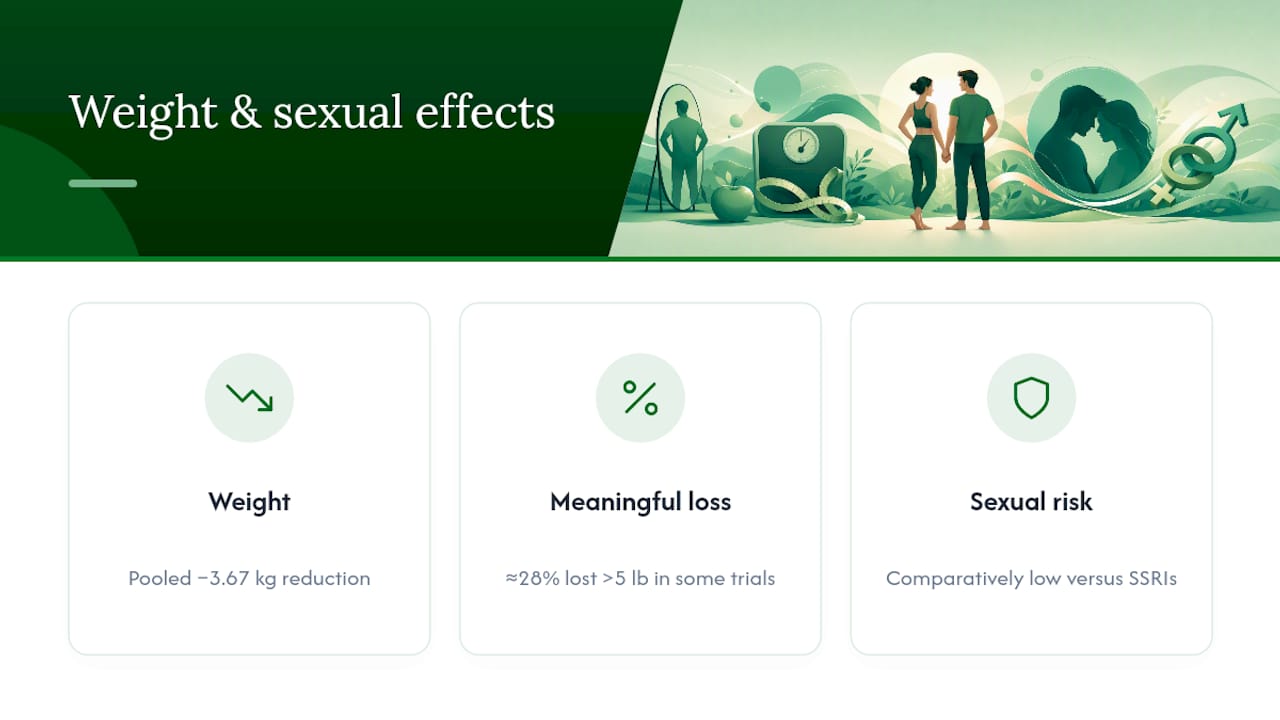
Bupropion stands apart from most antidepressants because it’s one of the few weight neutral antidepressants, and in many cases it’s associated with modest weight loss rather than the weight gain common with other classes. A meta-analysis of 25 studies found a pooled weight reduction of −3.67 kg compared with control groups, and roughly 28% of subjects in some trials lost more than 5 pounds. That’s a meaningful signal, but it isn’t automatic. Individual response varies, and the studies span different populations and durations.
Bupropion also carries a comparatively low risk of sexual dysfunction, a real advantage for people who’ve struggled with that side effect on SSRIs. If weight change or sexual side effects are a priority in your treatment decision, bupropion’s mood and weight profile is worth discussing directly with your prescriber before switching medications on your own.
Starting, Adjusting, and Stopping Bupropion Safely
Bupropion is typically started at a low dose and increased gradually. Never exceed your prescribed maximum, since seizure risk climbs sharply above the recommended ceiling.
- Wait the required interval before switching to or from an MAOI. Your prescriber will specify the timeline.
- Never stop bupropion abruptly without medical guidance, especially if you’ve been on it for weeks or months.
- In a suspected overdose or severe reaction, call emergency services immediately, bring the medication bottle, and disclose any other substances taken.
- Report unexpected or serious side effects to FDA MedWatch so regulators can track emerging safety signals.
How Zealthy Approaches Bupropion Monitoring
Some telehealth platforms combine primary care and mental health visits with prescription delivery on one platform, which matters for a medication that needs active monitoring in the first months. This article was written by Bryan, who covers antidepressants and related mental health therapies. A telehealth visit lets you flag new symptoms, adjust dosing, and get lab or blood pressure checks scheduled without waiting weeks for an in-person slot.
The Real Risk Isn’t the Common Stuff
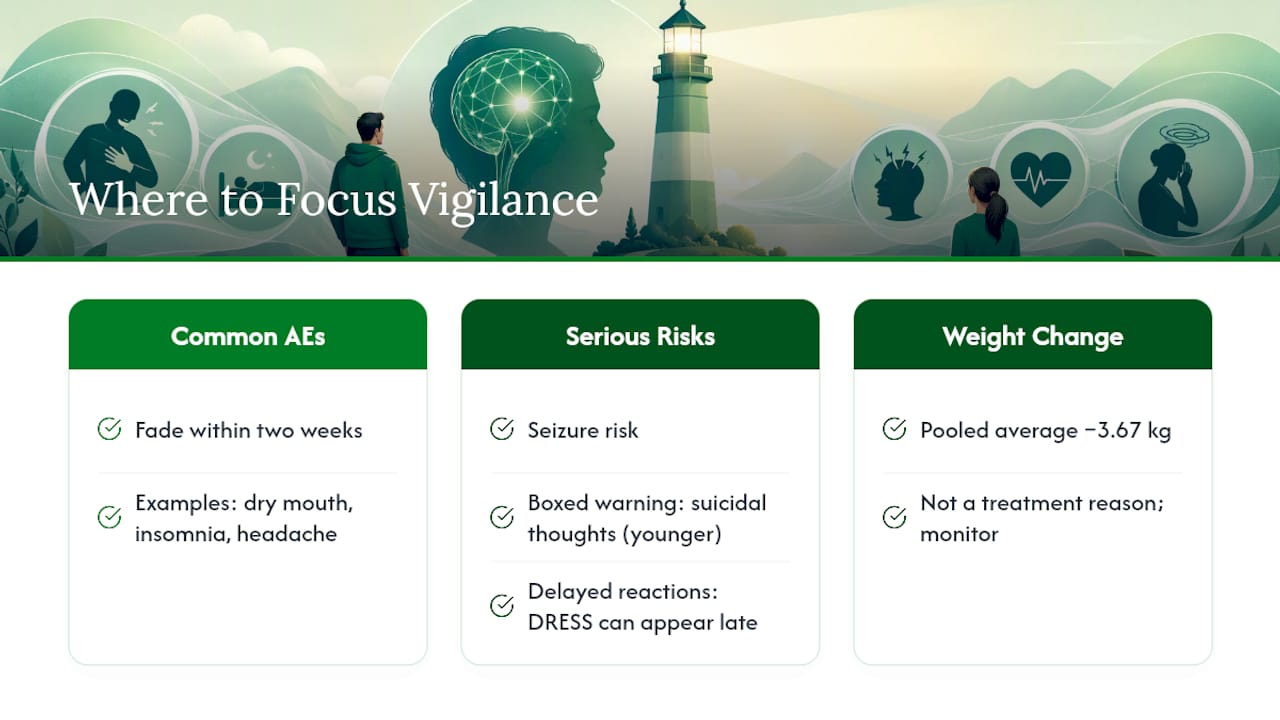
The conventional advice on bupropion side effects tends to overcorrect in one direction or the other: either dismissing dry mouth and insomnia as trivial or treating every headache as a five-alarm event. Neither is accurate. The evidence supports a calmer read: most common side effects fade within two weeks, and the real vigilance belongs on seizure risk, the boxed warning for suicidal thoughts in younger patients, and delayed reactions like DRESS that can appear well after you’ve settled into a routine.
Where I think patients get misled most often is the weight-loss angle. Bupropion is not a weight-loss drug dressed up as an antidepressant, and the pooled −3.67 kg reduction from the meta-analysis is an average across varied trials, not a promise. Treat it as a welcome possible side benefit, not a reason to choose this medication over one that treats your depression or anxiety better. Prioritize the mental health outcome first, and let monitoring, not guesswork, catch the rest.
— Bryan
Get a Same-Day Medication Review With Zealthy
Telehealth platforms can provide a faster, more coordinated way to start or manage bupropion than piecing together separate primary care and psychiatry appointments. Instead of waiting weeks for an in-person follow-up to report a side effect or request a dose adjustment, patients can message their care team or book a same-day visit through telehealth platforms.

A mental health visit through Zealthy typically includes a review of your current symptoms, a check on how you’re tolerating your medication, and a plan for any adjustments, with prescriptions sent directly to your pharmacy or delivered to your door. If you’re weighing bupropion against another option, or already taking it and want a second look at your side effects, book a visit and get your medication reviewed by a licensed clinician this week.
This article is general information, not a substitute for advice from a qualified doctor. Consult a qualified healthcare professional about your own circumstances before acting on anything here.
Sources
- Bupropion: MedlinePlus Drug Information
- Bupropion (StatPearls)
- DailyMed — WELLBUTRIN XL prescribing information
FAQ
What is bupropion used for?
Bupropion is FDA approved to treat major depressive disorder and seasonal affective disorder, and it’s also marketed as Zyban for smoking cessation.
Can bupropion be used to treat anxiety?
Bupropion isn’t FDA approved specifically for anxiety and can occasionally increase agitation in some patients, so it’s typically considered for depression first, with anxiety symptoms addressed alongside a prescriber’s broader treatment plan.
Why do some doctors avoid prescribing Wellbutrin?
Some clinicians are cautious with Wellbutrin because of its seizure risk, particularly in patients with a history of seizures, eating disorders, or heavy alcohol use, and because it can worsen anxiety or insomnia in sensitive patients.
What are the potential benefits of taking Wellbutrin?
Beyond treating depression, Wellbutrin carries a comparatively low risk of sexual dysfunction and weight gain compared to many other antidepressants, and some patients experience modest weight loss, based on meta-analysis data.
How does bupropion affect mood compared to other antidepressants?
Bupropion works through dopamine and norepinephrine pathways rather than serotonin, which is why it tends to feel more energizing than sedating and carries a different side-effect profile than SSRIs.




.svg)
.svg)
.svg)
.svg)

