

Online follow-up care works well for medication checks, test result reviews, and routine chronic-condition check-ins, but it isn’t built for every situation. The Department of Health and Human Services backs telehealth for many post-visit and post-discharge scenarios, and peer-reviewed research confirms it, with caveats. This guide walks through the visit types, the evidence, the costs, and how to prepare so your next virtual check-in actually accomplishes something.
TL;DR:
- Telehealth follow-up works best for medication adjustments, mental health checks, and routine results reviews, but not for complex physical exams.
- Staying with the same provider improves follow-up quality and reduces repeat appointments or missed issues.
- Preparing by noting medications, vitals, and questions beforehand is crucial for effective virtual visits and safer outcomes.
- Insurance coverage varies, so verifying benefits and costs before scheduling can avoid unexpected bills.
- Evidence shows telehealth can lead to faster follow-up but may increase short-term revisit rates unless continuity and preparation are prioritized.
What Is Online Follow-Up Care and What Visit Types Does It Include?
Online follow-up care, sometimes called telehealth follow-up, covers any post-visit or post-discharge check conducted remotely instead of in an exam room. It comes in several formats, each suited to different needs.
- Video visits: best for medication adjustments, mental health follow-ups, or anything requiring a visual check, like a rash or incision.
- Audio-only calls: useful when internet access is limited or the visit is a simple verbal check-in.
- Asynchronous messaging: patients send updates through a portal and a clinician responds later, good for low-urgency questions.
- Automated check-ins: scripted questions triggered on a schedule, often used after discharge.
- Remote patient monitoring (RPM): connected devices track blood pressure, glucose, or oxygen levels between visits.
Wound checks, chronic disease monitoring, and result reviews all fit naturally into this model. Complex physical exams do not.
Who Should Use Online Follow-Up Care Versus See a Doctor in Person?
Telehealth follow-up suits patients managing stable chronic conditions, adjusting a medication dose, or checking in after a straightforward procedure. It’s also a strong fit for mental health follow-ups, where a video conversation covers most of what an in-person visit would.
Certain symptoms mean skip the video call entirely:
- Worsening chest pain, shortness of breath, or signs of infection at a surgical site
- Uncontrolled bleeding, high fever, or confusion
- Any symptom your discharge instructions flagged as an emergency warning sign
Continuity matters more than most patients realize. A large study of over 4.8 million primary care visits found that timeliness and follow-up differences between telehealth and in-person care shrank significantly when patients saw their own primary care provider rather than someone new. Familiarity with your history changes the quality of the visit.
Pro Tip: If you have a choice, book your online follow-up with the same provider who saw you initially. It reduces the odds you’ll need a second appointment to sort out something the first visit missed.
What Happens During an Online Follow-Up Visit?
A typical virtual follow-up moves through three phases.
- Before the visit: You’ll schedule through a patient portal, complete a digital check-in, and the clinician reviews your chart. Have your medication list, recent vitals or RPM readings, and photos of any visible symptoms ready beforehand.
- During the visit: The clinician takes a history, performs whatever visual exam is possible on camera, and may adjust medications or order labs. Some things simply can’t be assessed remotely, like blood pressure without a home cuff or a deep tissue exam.
- After the visit: You’ll receive a visit summary, any new prescriptions sent electronically, and referrals if needed. Most clinicians will specify a timeline for the next check-in, whether that’s a follow-up message in 48 hours or a scheduled call in two weeks.
How Do Telehealth Platforms and Remote Monitoring Actually Work?
A reliable video visit depends on a few basics: a device with a working camera, a stable internet connection, and a quiet, well-lit space. If your connection is spotty, switching to audio-only rather than losing the call entirely often salvages the appointment.
RPM devices, like connected blood pressure cuffs or glucose monitors, sync data to your care team automatically between visits. Asynchronous check-ins and automated outreach systems, similar to platforms like CipherHealth’s post-discharge outreach tools, often use configurable triggers, so a normal reading gets logged quietly while an abnormal one escalates to a live clinician.
Before any visit, confirm a few things with your provider:
- How your data is stored and who can access it
- Whether the visit meets HIPAA privacy standards
- What you’re consenting to, since virtual visits carry different consent considerations than in-person care
What Does Online Follow-Up Care Cost, and Will Insurance Cover It?
Coverage for telehealth follow-up varies by payer, state, and plan, so confirming benefits before your visit saves you from a surprise bill. Ask your insurer three things: whether telehealth is covered at all under your plan, what your copay is, and which billing codes apply to follow-up versus new-problem visits.
Telehealth follow-up is often cheaper than an urgent care visit for the same issue, since it skips facility fees and travel time. But cost can climb the other direction too. If short-interval callbacks stack up, either because a modality feels less thorough or because scheduling gets inefficient, the cumulative expense can exceed what a single in-person visit would have cost.
- Verify eligibility and copay amounts before scheduling
- Ask which CPT or HCPCS codes will be billed
- Consider self-pay or subscription-based virtual care if your plan doesn’t cover telehealth follow-up
What Does the Research Say About Telehealth Follow-Up Outcomes?
The evidence on telehealth follow-up is genuinely mixed, and worth taking seriously rather than skimming past.
Telehealth visits were completed within 7 days more often than in-person visits, but were also linked to higher short-term return-visit rates in several specialties, according to the PMC-published continuity study of nearly 4.8 million primary care visits.
That timeliness cuts both ways. A JAMA Network Open cohort study of almost 17,000 emergency department discharges found telehealth follow-up was associated with 28.3 more repeat ED visits and 10.6 more hospital admissions per 1,000 patients compared with in-person follow-up. Epic’s research on follow-up patterns adds context: overall 90-day follow-up completion is under half regardless of visit type, so the gap between modalities is real but not the whole story. HHS guidance addresses this directly, recommending providers schedule the first follow-up before discharge and communicate expected call timing clearly, both of which reduce missed contacts and unnecessary escalation.
How Can You Prepare for an Online Follow-Up and Spot Warning Signs?
A little preparation prevents most of the friction that turns a five-minute check-in into three follow-up calls.
- Write down your current medications, recent vitals or RPM readings, and any photos of visible symptoms.
- List your questions and concerns in order of priority before the call starts.
- Confirm the expected call window and, if possible, the number that will show up on your caller ID.
- During the visit, show your medication bottles on camera and demonstrate any physical concern directly, rather than describing it verbally.
- Before hanging up, confirm the next step in writing, whether it’s a prescription, a referral, or a specific date for the next check-in.
Pro Tip: Many patients let a follow-up call go to voicemail because it looks like a billing call. Ask your provider exactly which number they’ll use, and save it in your contacts before the appointment window opens.
If you develop new chest pain, worsening shortness of breath, uncontrolled bleeding, high fever, or confusion between visits, call urgent care or 911 rather than waiting for your scheduled telehealth check-in.
A Straight Answer on Where Telehealth Follow-Up Actually Helps
Most of the debate around telehealth follow-up gets flattened into a simple “is it as good as in-person” question, and that framing misses what the data actually shows. The real pattern is that telehealth is faster but not automatically better, and the gap closes considerably when the same provider handles both visits. That’s a workflow problem as much as a technology one.
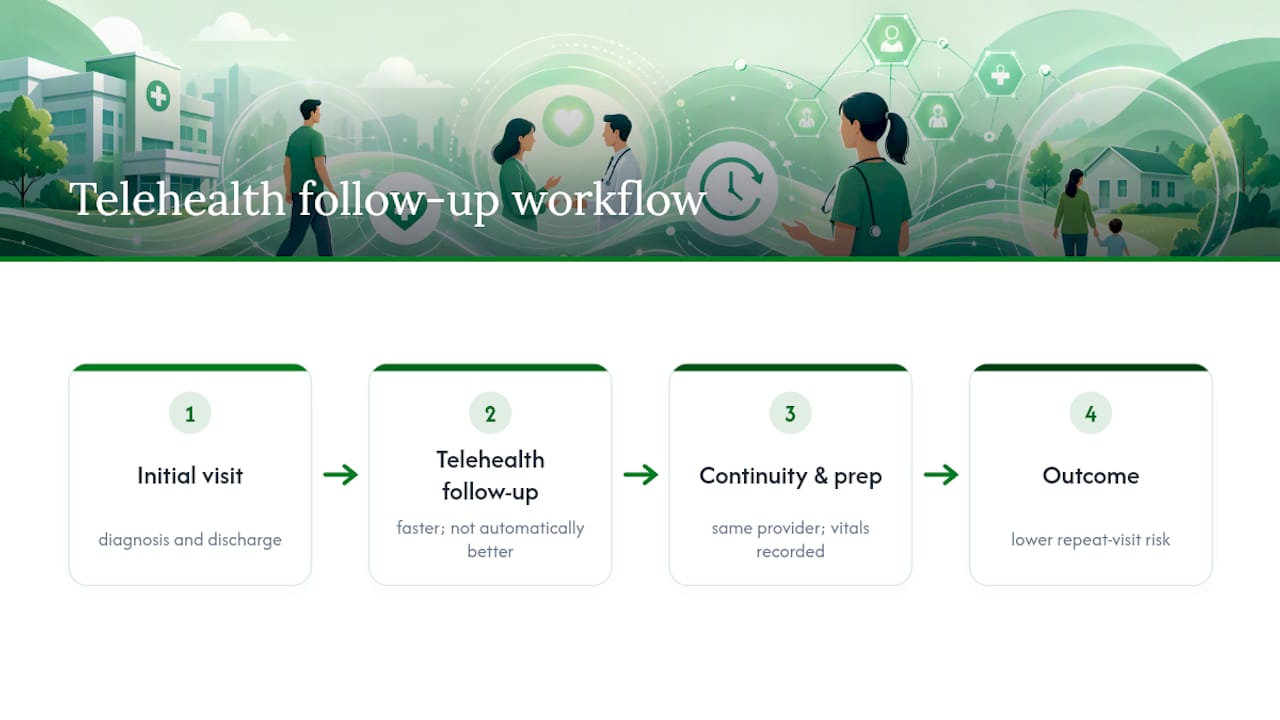
What gets underestimated is how much the “small stuff,” like confirming a caller ID number or writing down vitals beforehand, actually drives outcomes. The JAMA cohort study’s higher readmission numbers weren’t really an indictment of video calls; they reflected discharge follow-up happening with less continuity and less preparation than an in-person visit tends to force. Fix the preparation, and a lot of the risk gap narrows.
Platforms that build continuity into the model, rather than treating every follow-up as a fresh encounter with a new provider, are the ones positioned to close that gap. That’s the direction the evidence points, and it’s worth paying attention to as more routine care moves off-site.
— Bryan
Get Same-Day Online Follow-Up Care Through Zealthy
If continuity is what makes telehealth follow-up work, Zealthy builds it in from the start. Instead of bouncing between a portal message today and a different on-call provider next week, Zealthy connects you with licensed clinicians for same-day virtual visits, ongoing medication management, and prescription delivery, all inside one platform.
Whether you’re managing a chronic condition, adjusting a weight loss plan, or checking in after starting a new prescription, Zealthy’s model is built around personalized, ongoing care rather than one-off appointments. Before your first visit, you’ll review what to expect through Zealthy’s consent to telehealth information, covering privacy and what virtual care does and doesn’t include. From there, scheduling a primary care visit takes just a few minutes. If you’re ready to set up ongoing virtual follow-up care with a provider who actually knows your history, get started with Zealthy today.
This article is general information, not a substitute for advice from a qualified doctor. Consult a qualified healthcare professional about your own circumstances before acting on anything here.
Sources
- Primary Care Telemedicine and Care Continuity: Implications for Timeliness and Short-term Follow-up Healthcare - PMC
- Telehealth
- Association Between In-Person vs Telehealth Follow-up and Rates of Repeated Hospital Visits Among Patients Seen in the Emergency Department | JAMA Network Open
FAQ
Is There a Free Online Doctor to Talk To?
Some community health centers and state-run programs offer free or low-cost telehealth consultations, but most platforms, including subscription-based virtual care, charge a visit fee or require insurance. Check with your local health department for free options in your area.
Are Insurances Still Paying for Telehealth?
Coverage varies by payer, state, and plan, so telehealth follow-up isn’t universally covered the same way. Confirm your specific benefits and applicable billing codes with your insurer before scheduling.
Is It Cheaper to Go to Urgent Care or Use Telehealth for a Follow-Up?
Telehealth follow-up is often less expensive than urgent care for the same issue since it skips facility fees and travel time, but repeated short-interval telehealth visits can add up if the underlying issue needs in-person evaluation.
Can a Telehealth Visit Provide a Doctor’s Note for Missed Work?
Many telehealth providers can issue documentation for missed work following a virtual visit, though the number of days covered depends on the clinical assessment and the provider’s judgment, not a fixed policy.
What Symptoms Mean I Should Skip My Online Follow-Up and Seek In-Person Care?
Worsening chest pain, shortness of breath, uncontrolled bleeding, high fever, or confusion all warrant urgent or in-person care rather than waiting for a scheduled telehealth check-in.



.svg)
.svg)
.svg)
.svg)

