Yes, men in their 20s and 30s get erectile dysfunction, and it is far more common than the locker room jokes suggest. Psychological triggers like anxiety and stress cause a large share of cases, but vascular, hormonal, and lifestyle factors are often involved too, sometimes together. The right first move isn’t guessing which one applies to you. It’s getting a basic evaluation from a clinician, since the workup is quick and the answer changes your treatment plan.
TL;DR:
- Up to 14% of young men experience erectile dysfunction, with most cases being mild and often linked to psychological or lifestyle factors.
- Many young men with ED still have regular morning and masturbation erections, indicating an intact physical function and a psychological cause.
- Screening and early evaluation can identify underlying vascular, hormonal, or metabolic issues, particularly in those with family history of heart disease.
- Treatment success depends on accurate diagnosis; lifestyle modifications, therapy, and appropriate medications are tailored to the root cause.
- Self-medicating or delaying professional help can worsen outcomes; online telehealth services provide quick access for initial assessments and treatment.
Table of Contents
- How Common Is ED in Young Men, and Why Are Reports Rising?
- Psychogenic, Organic, or Both: How Doctors Sort the Causes
- Performance Anxiety, Depression, and Relationship Stress
- Vascular, Hormonal, and Structural Causes Worth Ruling Out
- What Happens During an ED Evaluation
- Matching Treatment to the Actual Cause
- Why Self-Medicating Makes ED Worse, Not Better
- Getting Evaluated Without the Waiting Room
- Seeking Help Early Changes the Outcome
- Get an ED Evaluation Without Leaving Your Couch
- Sources
- FAQ
How Common Is ED in Young Men, and Why Are Reports Rising?
Erectile dysfunction in young men shows up far more often in research than most people assume. A cohort study of 2,660 men found an overall prevalence of 14.2%, with 11.3% experiencing mild dysfunction and 2.9% falling into the moderate to severe range, according to a narrative review published on PMC.
That spread isn’t a data error. It reflects real differences in methodology: some studies rely on a single screening question, others use validated instruments like the International Index of Erectile Function, and populations vary from college students to military cohorts to general primary care patients. A man who reports “occasional difficulty” gets counted very differently depending on which study he lands in.
The numbers that matter:
- Overall prevalence in young cohorts: roughly 14% in a large U.S. sample, per the PMC review
- Mild dysfunction accounts for the majority of cases in that same cohort (11.3% of the 14.2% total)
- Broader population studies report ranges up to approximately 35%, driven by measurement differences
Part of the apparent rise ties to increased screening. Primary care visits now routinely include sexual health questions that didn’t exist a decade ago, and telehealth has made it easier for younger men to ask about symptoms they’d have hidden from an in-person doctor. But part of it is real, and clinicians increasingly treat ED in young men as a potential early warning sign of cardiovascular or metabolic disease rather than a standalone nuisance. The vascular system that supplies the penis is smaller and more sensitive than the coronary arteries, so erectile trouble can surface years before a cardiac event does. Dismissing it as “just stress” risks missing that window.
Psychogenic, Organic, or Both: How Doctors Sort the Causes
The old model split erectile dysfunction into two neat boxes: “it’s in your head” or “it’s a physical problem.” Clinicians have largely abandoned that framework because most cases in young men involve overlapping factors. A guy with early insulin resistance who also has performance anxiety about a new relationship doesn’t fit cleanly into either category, and treating only one side often leaves the other unaddressed.
Doctors instead think in terms of four intersecting categories: psychogenic (anxiety, depression, mental load), organic (vascular, hormonal, neurologic), relational (conflict, mismatched desire, communication breakdown), and mixed presentations that combine two or more. The Mayo Clinic frames sexual arousal as dependent on the brain, hormones, nerves, and blood vessels acting in coordination. A breakdown in any single piece of that chain can produce the same symptom.
Certain clues help narrow things down before you even see a clinician. Sudden onset that coincides with a stressful life event points toward psychogenic causes. A gradual decline over months, especially alongside low libido, tends to suggest something hormonal or vascular. Preserved erections during masturbation or on waking, but difficulty with a partner, is one of the more reliable signals of a psychological driver.
Before your appointment, it helps to have clear answers to a few questions:
- When did the difficulty start, and was it sudden or gradual?
- Do you still get morning or masturbation erections?
- Has your interest in sex changed, or just your ability to perform?
- Are you on any new medications, including antidepressants?
- How much are you drinking, and has that changed recently?
Performance Anxiety, Depression, and Relationship Stress
Psychogenic ED in young men usually has a recognizable shape. It tends to start suddenly, often tied to a specific event: a new partner, a breakup, a stressful job change, or even one bad sexual experience that triggers a cycle of worry about the next one. Crucially, spontaneous erections during sleep or masturbation typically stay intact, which is the clearest signal that the plumbing works and the block is happening somewhere else.
The Cleveland Clinic identifies psychogenic factors, including performance anxiety, depression, and relationship problems, as leading causes of ED in men in their 20s and 30s. Pornography-driven expectations have also emerged as a common contributor. Men who’ve built their sexual expectations around edited content sometimes struggle with the different pacing and stimulation of partnered sex, then interpret that mismatch as a physical failure rather than a mismatch in expectations.
Three approaches have solid evidence behind them:
- Cognitive behavioral therapy (CBT) helps break the anxiety loop by addressing the catastrophic thinking that follows an early difficulty (“this will always happen now”).
- Sex therapy or couples counseling works directly on communication and can address relationship strain that’s feeding the problem, especially where resentment or mismatched desire has built up over time.
- Antidepressant treatment, when depression itself is the primary driver, though this requires care since some antidepressants can independently affect erectile function.
Practical first steps don’t require a therapist’s office. Talking openly with a partner about what’s happening removes a huge amount of pressure, since silence tends to make the anxiety worse. Improving sleep hygiene and cutting back on evening alcohol also help, since both directly affect the nervous system’s ability to sustain arousal.
Pro Tip: If you notice erections are fine alone but disappear with a partner, say that specific detail to your clinician. It’s one of the fastest ways to steer the conversation toward psychological causes and avoid unnecessary testing.
Vascular, Hormonal, and Structural Causes Worth Ruling Out
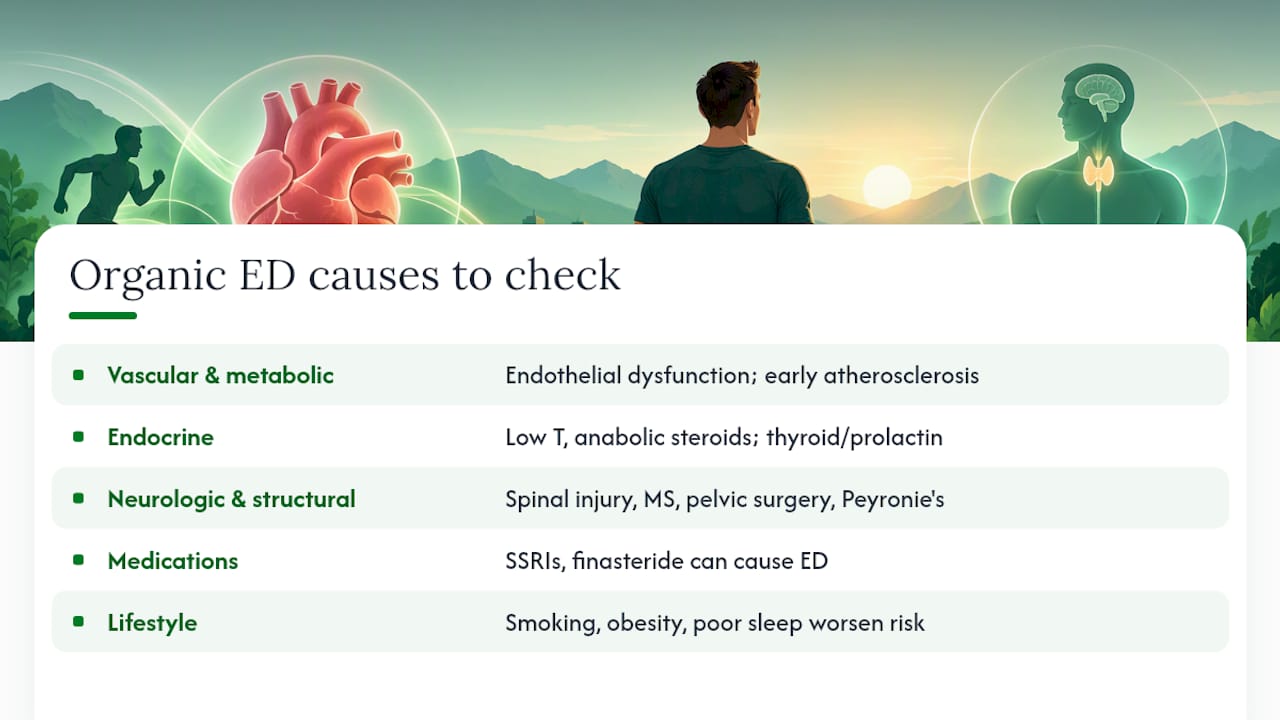
Organic causes of ED in young men get less attention than they deserve, partly because “erectile dysfunction in a 27 year old” doesn’t sound like a cardiovascular problem. It often is one. The blood vessels supplying the penis are only 1 to 2 millimeters wide, far narrower than coronary arteries, so early atherosclerosis or endothelial dysfunction shows up there first. A young man with erectile trouble and a family history of heart disease is not just unlucky. He may be looking at his earliest cardiovascular symptom.
Vascular and metabolic causes top the list clinically. Endothelial dysfunction (impaired blood vessel lining function) reduces blood flow to erectile tissue and correlates strongly with metabolic syndrome, a cluster of high blood pressure, elevated blood sugar, excess abdominal fat, and abnormal cholesterol. Diabetes, even in its earliest prediabetic stages, damages both blood vessels and the nerves involved in arousal.
Endocrine causes are the second major category. Low testosterone can blunt libido and erectile response, though it’s a less common standalone cause in men under 40 than most assume. Anabolic steroid use, increasingly common among young men chasing gym gains, is a more frequent culprit: steroids suppress the body’s natural testosterone production, and stopping them doesn’t always restore function immediately. Thyroid disorders and elevated prolactin round out the hormonal picture.
Neurologic and structural causes matter especially after injury. Spinal cord trauma, multiple sclerosis, and pelvic surgery can all interrupt the nerve signals required for an erection. Peyronie’s disease, a buildup of scar tissue that causes curvature or pain during erection, is a structural cause that’s frequently missed because men are embarrassed to mention the curvature.
Medications deserve their own scrutiny. Selective serotonin reuptake inhibitors (SSRIs), commonly prescribed for anxiety and depression, are a well-documented cause of erectile and orgasmic difficulty. Finasteride and other 5-alpha-reductase inhibitors, prescribed for hair loss, carry similar risk for some men. Neither of these means you should stop medication on your own, but both are worth discussing with whoever prescribed them.
Finasteride is FDA-indicated for men only. Women who are or may become pregnant must not handle crushed or broken finasteride tablets, due to the risk of harm to a male fetus. It can also cause sexual side effects (reduced libido, erectile dysfunction) in a minority of men, which usually resolve after stopping treatment. Discuss these risks with a physician before starting.
Lifestyle factors amplify all of the above. Smoking accelerates vascular damage, obesity worsens insulin resistance, poor sleep disrupts the testosterone production that happens overnight, and heavy alcohol use affects nerve signaling and hormone levels simultaneously. According to Mayo Clinic, effective management often requires addressing several of these factors together rather than treating ED as a single isolated symptom.
What Happens During an ED Evaluation
A proper ED workup is more conversation than exam. Clinicians researching erectile dysfunction in otherwise fit young men emphasize that a careful history is the single most valuable diagnostic tool, precisely because it points toward or away from cardiometabolic risk before any test gets ordered.
Expect these questions, roughly in this order:
- When did the difficulty start, and did anything specific trigger it?
- Do you have erections during sleep or masturbation?
- Has your sex drive changed, separate from your ability to perform?
- What medications, supplements, or recreational substances are you currently using?
- Do you smoke, and how much alcohol do you drink weekly?
- Any history of pelvic injury, surgery, or diabetes in your family?
The physical exam is brief: blood pressure, a genital exam checking for structural abnormalities like Peyronie’s plaques, and sometimes a testicular exam to screen for hormonal signs like reduced testicular volume.
Lab work depends on what the history suggests, but a reasonable baseline workup looks like this:
| Test | What it screens for | When it’s ordered |
|---|---|---|
| Fasting glucose or HbA1c | Diabetes or prediabetes | Standard for most patients |
| Lipid panel | Cardiovascular risk | Standard for most patients |
| Morning total testosterone | Hormonal deficiency | Standard blood test timing |
| TSH | Thyroid dysfunction | Standard or if fatigue is also present |
| Prolactin | Pituitary disorders | If testosterone is low or libido is very reduced |
| Penile duplex ultrasound | Blood flow abnormalities | If vascular cause is suspected and first-line treatment fails |
| Nocturnal penile tumescence testing | Distinguishing psychogenic vs. organic | Occasionally, in ambiguous cases |
Red flags that warrant urgent, not routine, evaluation include sudden painful erections lasting more than four hours (priapism), erectile loss following pelvic trauma, or ED accompanied by chest pain or severe fatigue, which can signal an active cardiac issue rather than a chronic one.
Matching Treatment to the Actual Cause
Treating ED in young men works best when the plan matches the driver, not when it starts with a pill by default. The NIDDK frames treatment as a layered process: address the underlying cause where possible, then add symptomatic treatment as needed.
Lifestyle changes for ED come first for a reason: they work, and they improve overall health at the same time. Regular aerobic exercise, 30 to 60 minutes performed three to five times a week, is associated with measurable improvement in erectile function, according to Harvard Health. Sedentary habits specifically worsen blood flow over time, so breaking up long sitting stretches matters even outside dedicated workouts. Reducing alcohol intake and quitting smoking round out the list, and both tend to show benefit within a few months rather than years.
Psychosexual therapy stays relevant even when medication enters the picture. CBT and sex therapy address the anxiety loop directly, and combining therapy with a PDE5 inhibitor often works better than either alone, since the medication restores confidence while therapy addresses the underlying thought pattern.
PDE5 inhibitors, which include sildenafil and similar medications, work by increasing blood flow to the penis during arousal. They don’t create desire or automatic erections; they enhance the body’s natural response to stimulation. Most men see effects within 30 to 60 minutes, and side effects are typically mild (flushing, headache, nasal congestion) but should be discussed with a clinician given interactions with certain heart medications.
Hormone therapy is appropriate only after lab-confirmed low testosterone, not based on symptoms alone. Testosterone replacement carries real considerations, including effects on fertility, so it’s typically reserved for men with a clear, repeated lab finding rather than prescribed empirically.
Second-line options, including vacuum erection devices, injectable medications, and penile prostheses, are reserved for men whose organic disease doesn’t respond to first-line measures. These are rarely the starting point for a healthy 25 year old but matter for men with significant vascular or neurologic disease.
A reasonable timeline: give lifestyle changes 8 to 12 weeks before judging their effect, since vascular improvement takes time to translate into function. If nothing has shifted by then, that’s the moment to revisit the evaluation rather than assume the plan failed.
Pro Tip: Track your progress with something concrete, like resting heart rate or weekly exercise minutes, rather than judging success purely by erections. Vascular improvement often shows up in those numbers before it shows up in the bedroom.

Why Self-Medicating Makes ED Worse, Not Better
Reaching for alcohol or recreational substances to manage performance anxiety almost always backfires. Alcohol depresses the central nervous system, and while a drink or two might reduce anxiety, it directly impairs the nerve signaling required for arousal at the same time. Recreational drugs including ketamine, cocaine, and heavy cannabis use have documented associations with erectile dysfunction in young men, according to the PMC narrative review, and the effect can persist well beyond the immediate high.
Buying medication online without a prescription carries a separate, serious risk. Counterfeit PDE5 inhibitors sold through unverified websites frequently contain incorrect dosages or contaminants, and there’s no way to verify what’s actually in the pill without a licensed pharmacy behind it.
A few concrete safety steps protect you regardless of what’s causing your ED:
- Fill prescriptions only through licensed pharmacies, never unverified international sellers.
- Bring a full list of medications and supplements to every appointment, including anything used recreationally.
- If you’re using anabolic steroids, stop only with medical supervision, since abrupt discontinuation can cause its own hormonal crash.
- Treat chest pain, an erection lasting more than four hours, or sudden vision changes after taking a PDE5 inhibitor as emergencies requiring immediate care.
Getting Evaluated Without the Waiting Room
A full ED workup doesn’t require an in-person urologist visit for most young men. History-taking, medication review, and lab ordering can all happen through a telehealth visit, and a clinician can flag within one conversation whether your presentation looks psychogenic, points toward a metabolic issue, or needs in-person imaging.
Some telehealth models offer first-pass evaluations and same-day appointments so you don’t wait weeks to talk to a clinician. Integrating primary care and mental health support on the same platform can allow addressing both performance anxiety or depression and physical causes in one visit. Prescriptions may be shipped directly to patients’ homes to avoid a pharmacy visit.
Telehealth isn’t the right fit for every case, though. If your history suggests Peyronie’s disease with significant curvature, a suspected spinal or neurologic injury, or vascular disease severe enough to need duplex ultrasound imaging, an in-person urology or endocrinology referral is the right next step. A good telehealth visit will tell you which category you’re in rather than guessing.
- History-taking, symptom triage, and initial lab orders: well suited to telehealth
- Mental health support for performance anxiety or depression: well suited to telehealth
- Structural abnormalities, suspected nerve injury, or complex hormonal disorders: typically need in-person referral
Seeking Help Early Changes the Outcome
Men delay talking about ED longer than almost any other health symptom, and the cost of that delay isn’t just embarrassment. It’s time. A hormonal imbalance caught early is easier to correct than one that’s been quietly worsening for two years. Anxiety-driven ED that gets addressed in month one rarely calcifies into the kind of chronic performance dread that takes real therapy to unwind later.
What strikes me most in the research is how often reassurance and evaluation go hand in hand. A man who learns his labs are normal often sees his anxiety ease before treatment even starts, because so much of the fear is about the unknown. And when something organic does turn up, catching it in your 20s or 30s means years of runway to fix it before it becomes a bigger cardiovascular problem.
If you’re reading this because something feels off, that instinct is worth acting on rather than talking yourself out of.
— Bryan
Get an ED Evaluation Without Leaving Your Couch
Zealthy is built for exactly the situation this article describes: a young man who suspects something’s wrong and doesn’t want to wait weeks or sit in a urology waiting room to find out. Zealthy’s erectile dysfunction service connects you with a licensed provider for an evaluation, and if treatment is appropriate, prescriptions ship directly to your door with ongoing follow-up built in.

The first visit covers your history, current medications, and lifestyle factors, the same groundwork described in the evaluation section above, and the provider will flag if in-person referral is needed for anything outside telehealth’s scope. Some telehealth providers accept insurance where applicable and offer out-of-pocket payment options. If your ED turns out to be connected to broader hormonal or metabolic issues, Zealthy’s primary care services can pick that up in the same platform, no separate scheduling required. Book a visit and get a clinician’s read on what’s actually going on, rather than sitting with the question another month.
Sources
The clinical claims in this article draw on peer-reviewed research and major medical center guidance rather than general wellness content. For deeper reading:
- Erectile Dysfunction in Young Adults: A Narrative Review — PMC
- What Causes Erectile Dysfunction in Younger Men? — Cleveland Clinic
- Erectile dysfunction — Symptoms and causes — Mayo Clinic
- Nondrug approaches to improve erectile function — Harvard Health
- Erectile dysfunction treatment — NIDDK
This article is general information, not a substitute for advice from a qualified doctor. Consult a qualified healthcare professional about your own circumstances before acting on anything here.
FAQ
Is It Normal for Men in Their 20s to Have ED?
It’s common, not necessarily “normal” in the sense of expected. Research puts overall prevalence around 14% in young male cohorts, according to PMC, so you’re far from alone, but it’s still worth a basic evaluation rather than assuming it will resolve on its own.
How Do You Fix ED in Young Men?
Treatment depends on the cause: lifestyle changes like exercise and weight loss help across the board, CBT or sex therapy addresses anxiety-driven cases, and PDE5 inhibitors or hormone therapy address physical causes when appropriate. A clinician, including through a telehealth visit with Zealthy, can help identify which combination fits your situation.
How Do You Check if You Have ED?
The clearest signal is a pattern: consistent difficulty achieving or maintaining an erection sufficient for sex over several weeks, rather than a single isolated incident. If you notice this pattern, a clinician evaluation involving a history review, basic exam, and bloodwork is the accurate way to check, not a home test or symptom checklist.
How Long Should an Erection Last With Medication?
PDE5 inhibitors like sildenafil support an erection during sexual stimulation rather than guaranteeing a fixed duration, and the medication typically stays active for several hours depending on the specific drug. An erection lasting more than four hours regardless of medication is a medical emergency called priapism and requires immediate care.


.svg)
.svg)
.svg)
.svg)

