
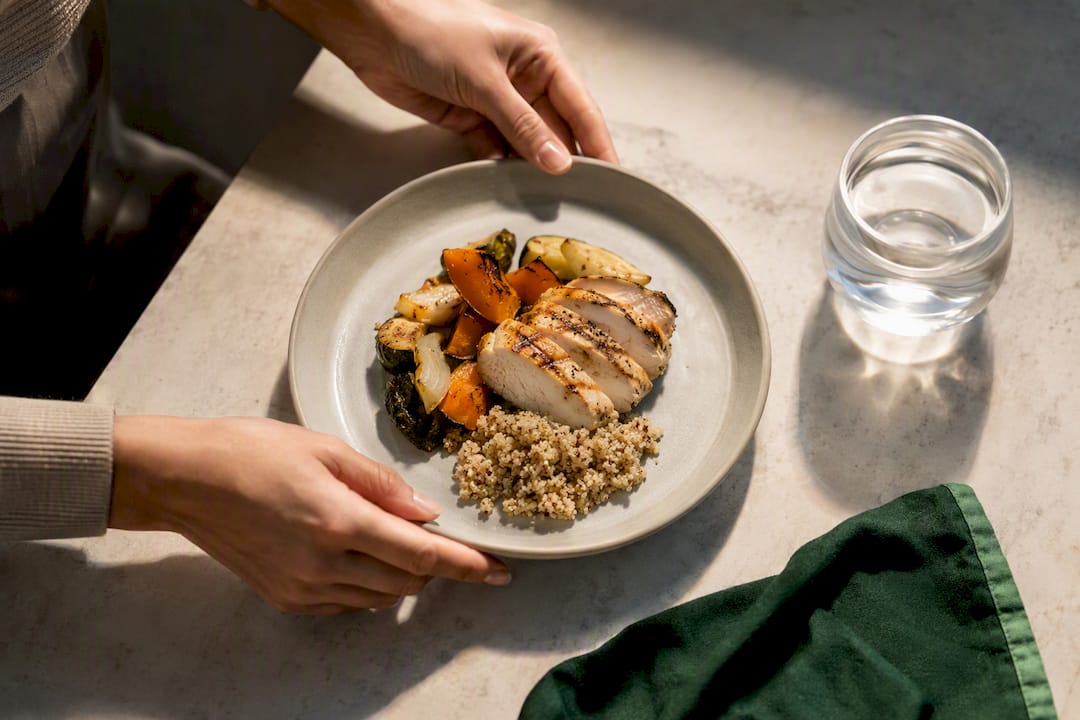
The GLP-1 diet comes down to three priorities: protein, fiber, and fluids, eaten in small, nutrient-dense portions. Aim for 20 to 30 grams of protein per meal, spread fiber intake gradually to avoid gas, and skip high-fat, fried, or heavily spiced foods while your body adjusts. Pair this eating pattern with resistance training twice a week to protect the muscle you worked hard to build.
TL;DR:
- Consuming 20 to 30 grams of protein per meal and 2 to 3 liters of fluids daily is essential to meet nutritional needs while on GLP-1 therapy.
- High-fat, fried, spicy, and sugary foods can worsen side effects like nausea and reflux, so reintroduce them carefully and in small portions.
- Resistance training twice a week and regular aerobic activity support muscle preservation, cardiovascular health, and digestion during weight loss.
- Monitoring hunger, fullness, and weight trends helps tailor calorie intake and avoids nutrient gaps or overly restrictive dieting.
- Collaborating with a healthcare professional ensures personalized management of side effects and safe transition off GLP-1 medications.
How GLP-1 Medications Change Appetite and Digestion
GLP-1 receptor agonists like semaglutide and tirzepatide slow gastric emptying, which means food sits in your stomach longer and signals fullness sooner. That is the entire mechanism behind reduced hunger on these medications, and it changes how you should think about food.
Because your stomach empties more slowly, every bite counts more than it used to. A plate that once needed 600 calories to feel satisfying might now stall you at 300. That is precisely why nutrient density matters more than portion size once you start GLP-1 therapy.
Clinical guidance notes that some patients eat fewer calories on these medications, which sounds like an advantage until you consider what gets crowded out along with the excess. Protein, fiber, and micronutrients need to fill that smaller space, not just whatever is easiest to swallow. Cutting calories further on top of an already-reduced appetite is a common mistake. Overly restrictive targets can lead to fatigue, nutrient gaps, and muscle loss rather than faster weight loss results.
What to Prioritize: Protein, Fiber, and Fluids
Your smaller appetite has to work harder for you nutritionally, and that starts with hitting specific, measurable targets rather than eating by feel.
Protein comes first. Clinical guidance from JAMA Internal Medicine recommends roughly 1.0 to 1.5 grams of protein per kilogram of body weight daily for moderately active adults, with 20 to 30 grams per meal as a practical target. For a 70-kilogram (154-pound) adult, that lands between 70 and 105 grams a day, split across three or four meals.
By the numbers: Clinical recommendations point to 20 to 30 grams of protein per meal and 2 to 3 liters (8 to 12 cups) of fluids per day for adults using GLP-1 medications, according to JAMA Internal Medicine.
High-quality protein sources that work well with a reduced appetite include:
- Eggs and Greek yogurt, easy to eat in small volumes
- Canned fish like tuna or salmon, shelf-stable and protein-dense
- Lean poultry and fish, versatile across meals
- Soy products such as tofu or edamame for plant-based options
- Protein powder mixed into smoothies when solid food feels like too much
Fiber needs a gentler approach than protein. Add soluble fiber first, from foods like oats, apples, and beans, and increase it gradually. Jumping straight to high-fiber eating can cause gas and bloating on top of the GI symptoms GLP-1s already cause. Always pair fiber with fluids, since fiber without water tends to worsen constipation instead of preventing it.
Hydration deserves its own attention. Aim for 2 to 3 liters, or 8 to 12 cups, of fluids daily. Water-rich foods like cucumber and watermelon can help you reach that target without forcing down glass after glass.
Pro Tip: Keep a protein shake or a container of cottage cheese within reach. On days when solid food feels unappealing, liquid or soft protein sources close the gap without triggering nausea.
Foods to Limit While Your Body Adjusts
Certain foods consistently make GLP-1 side effects worse, and the pattern is fairly predictable once you know what to watch for.
High-fat, greasy, and fried foods top the list. Because GLP-1s already slow digestion, fatty meals sit in your stomach even longer, which tends to worsen nausea and that overly-full feeling. Cleveland Clinic guidance specifically flags fried foods and heavy sauces as common triggers during the adjustment period.
Other foods to approach carefully:
- Spicy dishes, which can aggravate reflux on top of delayed gastric emptying
- Alcohol, which irritates the stomach lining and adds empty calories
- Sugary drinks and refined carbs, which spike blood sugar without the fullness benefit of protein or fiber
- Carbonated beverages, which can worsen bloating for some patients
None of these need to disappear permanently. Reintroduce them slowly, in small portions, and consider a different preparation method. Baked or grilled chicken sits better than fried chicken; a mild salsa may work where hot sauce does not.
Pro Tip: Keep a short food log for two weeks. Note what you ate and how you felt an hour later. Personal triggers vary more than generic food lists suggest, and your own log will tell you more than any chart.
What a Sample Day of GLP-1-Friendly Meals Looks Like
Smaller meals do not have to mean less structure. If anything, structure matters more when your appetite is unpredictable, because it keeps protein and fluid intake consistent even on days when eating feels like a chore.
A realistic day might look like this:
- Breakfast: Greek yogurt with berries and a drizzle of honey, roughly 20 grams of protein in a small volume.
- Midday meal: Tuna salad on whole-grain crackers, paired with a glass of water.
- Afternoon snack: A protein shake or a half-cup of cottage cheese.
- Dinner: Soft-baked fish with steamed vegetables, seasoned mildly.
- Evening: Herbal tea or water, spaced out from dinner to avoid overloading your stomach before bed.
On nausea-heavy days, texture matters more than variety. A blended soup, mashed beans with a soft protein like flaked fish, or plain crackers with a thin spread of nut butter tend to go down easier than anything crunchy or dense. One example worth trying is a white bean and Parmesan mash paired with soft chicken bites, which delivers close to 20 grams of protein and 6 grams of fiber in a texture that is gentle on a sensitive stomach.
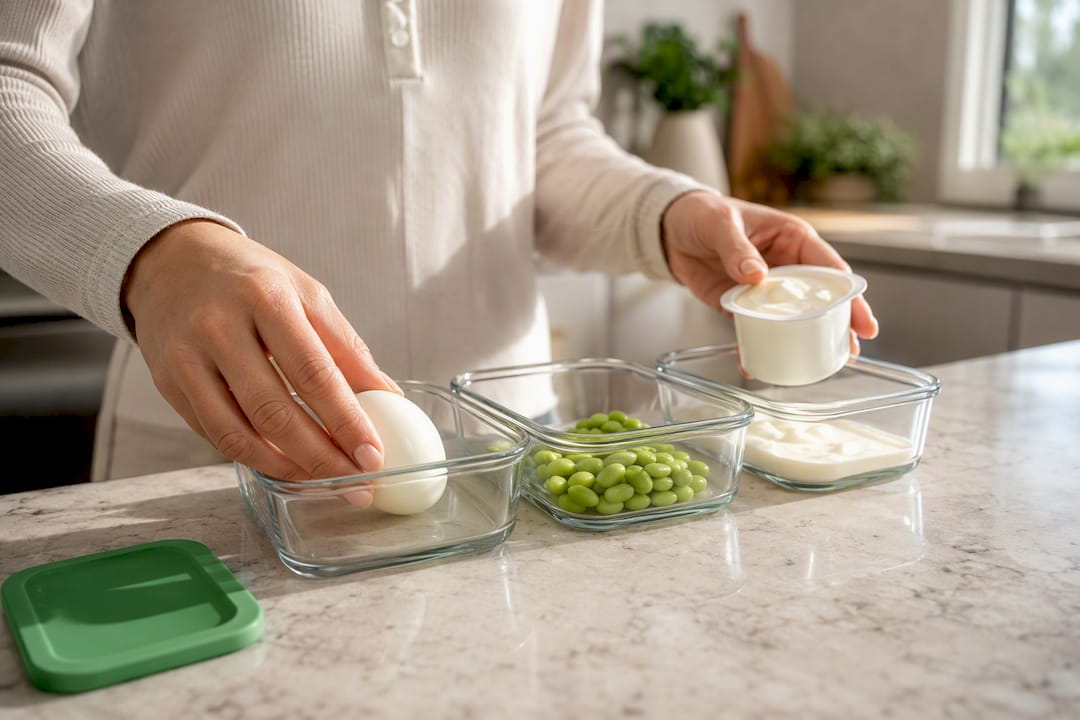
For low-effort days, pre-portion snacks into small containers. Packing a boiled egg, a handful of edamame, or a single-serving yogurt cup ahead of time means you reach for protein instead of whatever is fastest.
Managing Nausea, Reflux, and Constipation
Side effects are common enough on GLP-1 medications that a few behavioral changes can make a real difference, often more than switching foods around.
Timing matters as much as content. Eat slowly, take smaller bites, and give your body time to register fullness before adding more food. JAMA Internal Medicine recommends waiting 2 to 3 hours after eating before lying down, since reclining too soon after a meal tends to worsen both reflux and nausea.
Preparation method changes how well food sits with you:
- Bake, steam, or poach instead of frying
- Skip heavy cream sauces and butter-based dressings early on
- Choose mild seasoning over spicy blends until your tolerance improves
- Eat protein and fiber separately if combining them causes discomfort
Constipation deserves a stepwise approach rather than an aggressive fix. Increase fiber gradually, alongside fluids, and add light activity like a short walk after meals. Over-the-counter options can help if conservative measures do not resolve things within a few days, but that is a conversation worth having with a clinician before you self-treat, particularly if symptoms persist.
Pro Tip: If nausea hits hardest in the morning, try a small, bland snack like crackers before your GLP-1 injection day rather than starting the day on an empty stomach.
Preserving Muscle Mass While You Lose Weight
Weight loss on a GLP-1 does not distinguish between fat and muscle unless you give your body a reason to hold onto the muscle. That reason comes from two sources working together: adequate protein and resistance training.
Mayo Clinic Press notes that strength training combined with sufficient protein intake helps preserve lean mass during medically supported weight loss, and joint clinical guidance on GLP-1 care recommends folding resistance work into any weight-loss plan rather than relying on medication alone.
Practical steps that make this manageable:
- Distribute protein evenly across meals rather than saving it all for dinner
- Use a protein shake on days when appetite is too low for solid food
- Aim for two resistance training sessions per week targeting major muscle groups
- Start with accessible moves like bodyweight squats, step-ups, or resistance band rows
You do not need a gym membership to hit that twice-weekly target. Fifteen minutes of bodyweight work at home, done consistently, does more for muscle retention than an occasional intense workout.
Pro Tip: If you are new to resistance training, ask your care team for a referral to a physical therapist or trainer familiar with weight-loss patients. Proper form matters more than intensity in the first few weeks.
When to Contact Your Clinician
Some symptoms go beyond normal adjustment and need medical attention rather than dietary tweaks. Persistent vomiting, signs of dehydration, severe abdominal pain, black or tarry stools, and an inability to keep fluids down all warrant a call to your provider, not a wait-and-see approach.
Certain groups need closer oversight from the start. Pregnancy and breastfeeding, a history of eating disorders, significant kidney disease, and complex diabetes management all call for individualized guidance from a clinician or dietitian rather than general advice like this article. If any of these apply to you, loop in your care team before making significant changes to your eating pattern.
A short log helps here too. Track symptoms, what you ate, and fluid intake for a few days before your appointment. Specific details give your clinician far more to work with than a general description of feeling unwell.
How to Monitor and Adjust Your Calorie Intake
Calorie needs on a GLP-1 diet are not fixed. They shift as your appetite changes, your activity level increases, and your weight drops, which means the number that worked in month one may not work in month four.
Start by paying attention to hunger and fullness cues rather than fixating on a single calorie target. Because GLP-1 medications suppress appetite significantly, some patients under-eat without realizing it, which risks the fatigue and nutrient gaps mentioned earlier. If you are losing more than roughly 1 to 2 pounds a week for several consecutive weeks and feeling consistently drained, that is a signal you may need to add calories back, not fewer.
Weigh yourself under consistent conditions, once or twice a week rather than daily, since daily fluctuations reflect water and digestion more than fat loss. Look at the trend over two to three weeks instead of reacting to a single number.
If weight loss stalls for more than three to four weeks despite consistent eating habits, a few adjustments are worth trying before assuming something is wrong: reassess portion sizes, confirm you are hitting your protein target, and check whether stress or sleep disruption might be playing a role. Plateaus are common with GLP-1 therapy and often resolve with small tweaks rather than a complete overhaul.
Working with a clinician or dietitian to review your intake periodically catches problems earlier than adjusting alone. A structured weight-loss plan built around regular check-ins tends to produce steadier results than an unmonitored approach.
Why Aerobic Exercise Matters Alongside Resistance Training
Resistance training protects muscle, but aerobic activity carries its own weight in a GLP-1 weight-loss plan, and it is worth treating as a separate priority rather than an afterthought.
Walking, cycling, and swimming improve cardiovascular fitness and insulin sensitivity in ways that resistance training alone does not fully replicate. For patients managing complex diabetes alongside GLP-1 therapy, that insulin sensitivity benefit compounds the effect of the medication itself. Aerobic movement also supports digestion, which matters directly for people dealing with GLP-1-related constipation or bloating. A 15 to 20-minute walk after a meal is a simple, low-barrier habit that helps move food through your system and may ease some of the fullness that lingers after eating.
Aim for a mix rather than one type of exercise exclusively. Most general activity guidance suggests roughly 150 minutes of moderate aerobic activity weekly, spread across several days rather than crammed into one or two sessions. That could mean five 30-minute walks, three swim sessions, or a combination of walking and cycling depending on what fits your schedule and joints.
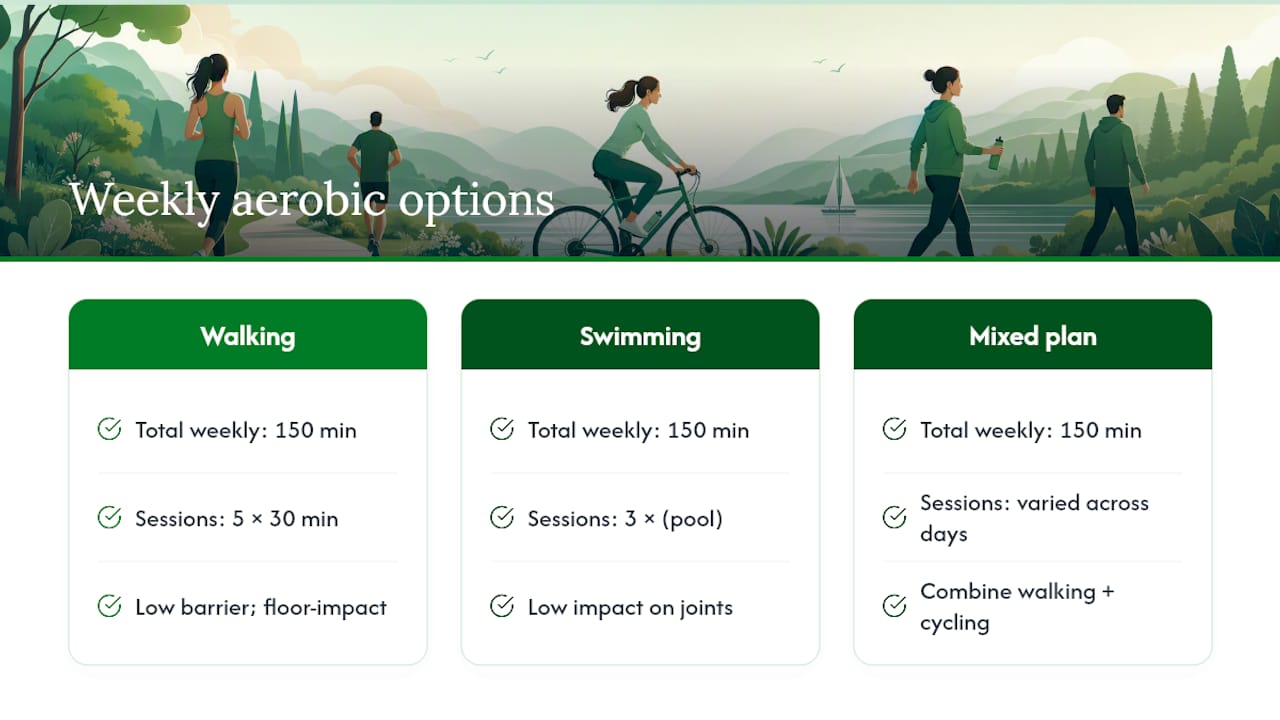
Low-impact options matter especially for anyone carrying significant excess weight, since high-impact cardio can stress joints before your body has adjusted to a lower weight. Start conservatively and build volume over weeks, not days. The goal is consistency over intensity, particularly in the early months when energy levels may still be adjusting to a smaller calorie intake and a new eating pattern.
Staying on Track Long Term and Life After GLP-1 Therapy
Long-term success with a GLP-1 diet depends less on willpower and more on whether the habits you build during treatment are ones you can actually sustain without the medication’s appetite suppression doing the heavy lifting.
Build habits now that do not depend on the drug. That means practicing portion awareness, keeping protein a priority at every meal, and maintaining the resistance and aerobic exercise routines you started, since muscle and cardiovascular fitness do not disappear the moment a prescription ends. Patients who treat the diet changes as temporary, something to tolerate until the medication does the work, tend to regain weight faster once treatment stops or doses taper.
If you are planning to transition off GLP-1 therapy, talk with your clinician about a gradual approach rather than stopping abruptly. Appetite often increases as the medication clears your system, and having a nutrition plan already in place, rather than scrambling to build one after the fact, makes that transition considerably smoother. Continuing resistance training through this period matters more than ever, since the muscle mass you preserved during weight loss is your best defense against regaining fat weight afterward.
Some patients stay on maintenance-dose GLP-1 therapy indefinitely under clinical guidance, while others taper off entirely. Either path works better with an eating pattern built on real habits, protein consistency, fiber intake, regular movement, rather than one built around suppressed hunger alone. Reviewing your weight-loss timeline with your care team periodically helps you recognize when it is the right time to discuss adjusting your plan.
What This Guide Gets Right That Most Advice Misses
Most GLP-1 diet content treats this like a keto or low-carb plan with extra steps. It is not, and that is the biggest thing the conventional wisdom gets wrong. The GLP-1 diet vs keto comparison misses the point entirely because keto is defined by restriction, while eating well on a GLP-1 is defined by addition: adding protein, adding fiber, adding fluids to a plate that is already smaller than it used to be.
The other blind spot is treating side effects as background noise instead of the main event. Nausea and constipation are not minor inconveniences to push through. They are often the reason patients abandon otherwise effective treatment. Addressing them with real preparation and timing strategies matters as much as the protein target itself.
Diet alone will not carry the outcome, and neither will medication alone. That combination, backed by resistance training and clinical oversight, is what shows up consistently in the guidance I trust most.
— Bryan
Get Clinical Support for Your GLP-1 Diet Plan
Reading about protein targets is one thing. Getting a plan that adjusts to your actual side effects, appetite, and lab results is another, and that second part requires access to licensed clinicians with experience, timely appointments, and support to help address nausea or a stalled plateau.

If you are managing GLP-1 side effects on your own, personalized care plans can include prescription management and delivery, so adjusting your dose or troubleshooting a reaction does not mean starting from scratch with a new provider. Whether you are just starting treatment or trying to fine-tune your current approach, a virtual weight-loss consultation is the direct next step. You can also check the weight-loss FAQ first if you want specific questions answered before booking.
This article is general information, not a substitute for advice from a qualified doctor. Consult a qualified healthcare professional about your own circumstances before acting on anything here.
Sources
- I Am Taking a GLP-1 Weight-Loss Medication—What Should I Know? | JAMA Internal Medicine
- GLP-1 Diet: What To Eat & Avoid | Cleveland Clinic
- Eating well on GLP-1 medications: Smaller appetites need quality nutrition | Mayo Clinic Press
- White Bean Parmesan Mash and Chicken Bites (High Protein High Fiber GLP-1 Meal) | The Gentle Plate
FAQ
What foods naturally trigger GLP-1 release?
Protein-rich foods, fiber, and healthy fats naturally stimulate your gut’s own GLP-1 production, with foods like eggs, beans, oats, and fatty fish among the most commonly cited examples in clinical nutrition discussions.
What do people on GLP-1 medications typically eat in a day?
A typical day includes small, protein-forward meals like Greek yogurt with berries, a tuna salad, a protein shake or cottage cheese as a snack, and a soft dinner such as baked fish with vegetables, spaced with fluids throughout the day.
How long does it take to lose 20 pounds on a GLP-1?
Timelines vary significantly by medication, dose, and individual response, so there is no single answer. Reviewing a GLP-1 weight-loss timeline with your clinician gives you a realistic pace based on your specific treatment plan.
What foods act similarly to Ozempic?
No food replicates a prescription GLP-1 medication’s effect, but high-protein and high-fiber foods that slow digestion and increase natural GLP-1 release, like oats, beans, and fatty fish, work in a similar direction on a smaller scale.
Does Zealthy offer support for people following a GLP-1 diet?
Zealthy provides virtual weight-loss consultations with licensed clinicians who can review your eating pattern, manage prescriptions, and adjust your care plan as side effects or goals change.



.svg)
.svg)
.svg)
.svg)

