

Yes: many U.S. patients can get evaluated online and receive a prescription for an ear infection the same day when the case is clinically appropriate. Licensed clinicians handle mild-to-moderate ear pain, swimmer’s ear, and follow-up care through video visits with e-prescribing to a nearby pharmacy. High fever, severe dizziness, facial weakness, or sudden hearing loss still call for urgent, in-person evaluation.
TL;DR:
- Telehealth is suitable for mild-to-moderate ear pain, swimmer’s ear, and routine follow-ups, but red flags like high fever or facial weakness require urgent in-person care.
- Virtual visits typically last a few minutes to thirty minutes and rely on symptom history, outer ear visual inspection, and patient-held light to assess swelling or redness.
- Prescriptions for bacterial ear infections usually involve antibiotics, delivered via local pharmacy or home delivery, but many cases improve without antibiotics following guideline-based watchful waiting.
- State licensing rules determine which clinicians can prescribe, emphasizing the need to have current medication lists, ear infection history, and temperature ready before the appointment.
- Online evaluation cannot replace an otoscope exam for definitive diagnosis, but it provides fast clinical judgment for non-emergency ear issues, avoiding unnecessary in-person visits.
What Happens During an Online Ear Infection Treatment Visit
A telehealth ear visit moves faster than most people expect, but it still follows a real clinical process, not a rubber stamp.
Before you connect with a clinician, most platforms ask you to answer a short intake questionnaire. This covers when the pain started, whether you have a fever, if your hearing has changed, and whether you’ve had ear infections before. That intake matters because it shapes how the clinician questions you once the video call starts.
During the actual video portion, the clinician cannot physically look inside your ear canal the way an in-person otoscope exam would. Instead, they rely on a detailed symptom history, visual inspection of the outer ear and surrounding area, and targeted questions about pain quality, drainage, and hearing. Good lighting and holding your phone steady near your ear canal opening helps the clinician assess visible swelling, redness, or discharge.
Visits typically run a few minutes to half an hour, and cash-pay telehealth appointments tend to cost noticeably less than an in-person urgent care or ENT visit, according to a Penn Medicine analysis of telemedicine costs. Insured visits may cost even less depending on your plan’s telehealth benefit.
Before your appointment, have this ready:
- A list of current medications and known drug allergies
- Your history of prior ear infections or ear surgeries
- A description of when symptoms started and how they’ve changed
- Your preferred pharmacy name and address
When Is It Safe to Treat an Ear Infection Online?
Telehealth works well for a specific slice of ear complaints, and knowing which slice you’re in saves you time and risk.
Mild-to-moderate ear pain without other alarming symptoms, suspected swimmer’s ear (otitis externa), and routine follow-up after a prior diagnosis are all situations clinicians commonly handle online. Mayo Clinic’s guidance on ear infection diagnosis notes that treatment decisions hinge on symptom severity and exam findings rather than routine imaging, which is part of why a thorough virtual history can safely inform care.
Certain symptoms mean you should skip telehealth and seek in-person or emergency care right away:
- Fever above 104°F, or any high fever in an infant under six months
- Severe or rapidly worsening ear pain
- Sudden hearing loss or ringing that won’t stop
- Facial drooping or weakness on one side
- Severe dizziness, vertigo, or loss of balance
- Pus or blood draining from the ear along with severe symptoms
- Recent head or ear trauma
Cleveland Clinic’s patient guidance lists similar red flags as reasons to bypass virtual care entirely.
Clinicians also weigh watchful waiting against antibiotics using guideline-based criteria from groups like the American Academy of Family Physicians, since many ear infections improve without antibiotics at all.
Pro Tip: Take your temperature before the visit starts. A documented fever reading gives the clinician a concrete data point instead of a vague “I feel warm,” and it can speed up the decision on whether antibiotics are warranted.
How a Telehealth Platform Like Zealthy Evaluates and Prescribes
A trustworthy telehealth visit follows a repeatable sequence, and that structure is what separates real clinical care from a symptom checker with a prescription pad attached.
At Zealthy, the process runs like this: you complete an intake questionnaire, a licensed clinician conducts a live video assessment, the clinician makes a clinical decision (prescribe, recommend symptomatic treatment, or direct you to in-person care), and if a prescription is warranted, it’s sent electronically to your local pharmacy or fulfilled through home delivery.
A few things make this workflow work in practice:
- Same-day appointments can help reduce wait times for ear infection treatment.
- Licensed clinicians conduct the assessments, not automated triage bots.
- Integrated prescription delivery offers the option to have medication shipped to your home.
- State licensure rules determine which clinicians can treat you, since prescribing authority is tied to the state where you’re physically located during the visit.
A significant portion of Americans live in states where the median wait for a new-patient primary care appointment stretches past several weeks, based on the ongoing gap between demand and clinician supply in traditional in-person care. Same-day telehealth access closes that gap directly for time-sensitive complaints like ear pain.
Come prepared with your allergy list, current medications, and prior ear infection history. That information shapes whether antibiotics, topical treatment, or symptomatic care is the right call.
How Ear Infection Prescriptions Get Filled Online
The medication itself usually falls into one of a few familiar categories, and the fulfillment path afterward is straightforward.
For bacterial middle ear infections (otitis media) that meet the clinical threshold for antibiotics, oral antibiotics are the standard prescription. Swimmer’s ear (otitis externa) usually calls for topical antibiotic or antibiotic-steroid drops instead, since the infection sits in the ear canal rather than behind the eardrum. Pain relievers, whether over-the-counter or prescription-strength for severe cases, address the discomfort itself while the underlying infection resolves.
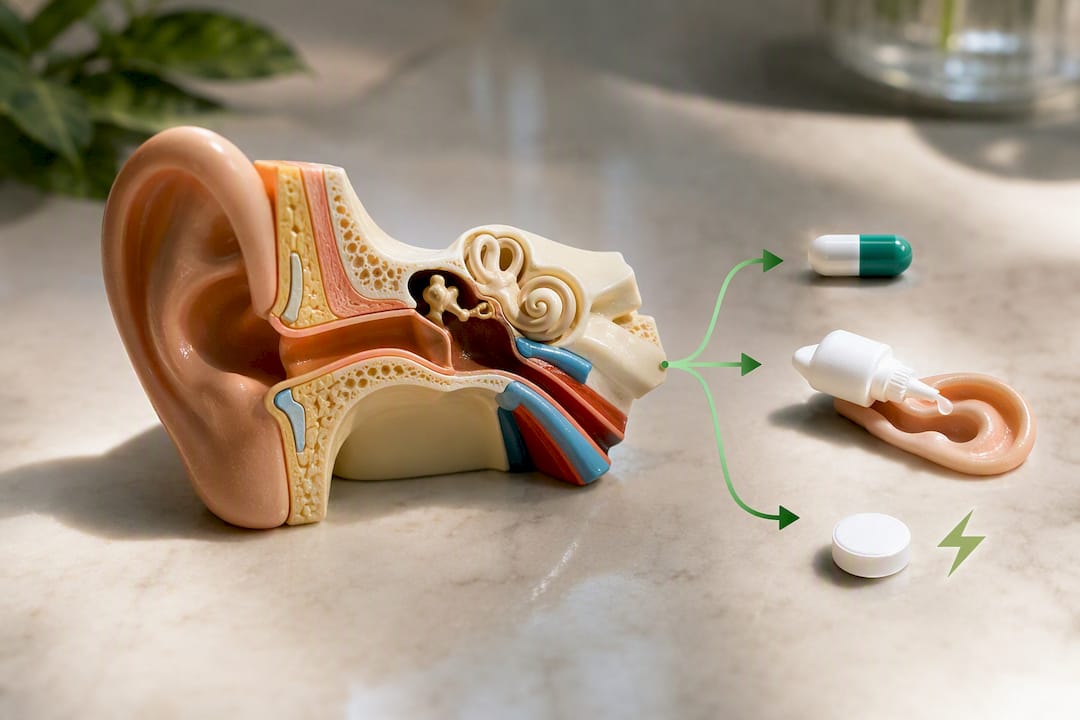
Not every ear infection needs antibiotics. The CDC’s guidance on ear infections notes that many cases improve on their own, which is why clinicians sometimes recommend a short watchful-waiting period with pain control before turning to antibiotics.
Once a clinician decides a prescription is warranted, fulfillment typically follows one of two paths:
- Local pharmacy pickup, where the prescription is sent electronically to a pharmacy near you, often ready within hours.
- Mail-order or home delivery, which takes longer but skips the pharmacy counter entirely.
Costs vary by insurance coverage and pharmacy, so confirming your plan’s telehealth and prescription benefits before your visit avoids surprises.
The Gap Between Telehealth’s Promise and Its Practical Limits
The biggest misconception about online ear infection treatment isn’t that it doesn’t work. It’s that people assume it works for everything, or alternatively, that they assume it’s just a video call to get antibiotics rubber stamped.
Neither is true. A visual otoscope exam, the gold standard for confirming a middle ear infection, isn’t something a webcam replicates. What telehealth actually offers is fast access to clinical judgment: a licensed provider who can weigh your symptom history, ask the right follow up questions, and make a defensible call about whether antibiotics, watchful waiting, or an in-person referral is the right next step. That’s not a lesser version of care. It’s a different tool for a specific job, and for the majority of ear pain complaints that aren’t accompanied by red flags, it’s the right tool.
Where conventional advice falls short is treating “see a doctor” as one-size-fits-all guidance. The more useful frame is matching the care setting to the symptom severity. Mild pain and suspected swimmer’s ear belong in a video visit. Facial weakness or sudden hearing loss belong in an emergency room, full stop. Readers who internalize that distinction get faster relief and safer outcomes.
— Bryan
Start a Same-Day Ear Infection Visit With Zealthy
Waiting on hold for a same-day slot at a crowded urgent care isn’t necessary when your ear pain doesn’t involve any red flags. Zealthy is built for exactly this kind of time-sensitive, non-emergency visit: sign up, consent to a telehealth visit, and request a same-day appointment with a licensed clinician who can assess your symptoms over video.

If a prescription is warranted, Zealthy sends it electronically to your local pharmacy or arranges delivery, so you’re not adding an extra errand to an already uncomfortable day. The same platform also handles broader primary care needs, so an ear infection visit isn’t a one-off interaction if other health questions come up later. Just remember the boundary: high fever, severe dizziness, facial weakness, or sudden hearing loss mean urgent care or the ER, not a video call. For everything else, start your visit with Zealthy and get evaluated today.
Sources
For deeper reading beyond this guide, the CDC’s ear infection page covers antibiotic stewardship and when treatment is or isn’t necessary. Mayo Clinic and Cleveland Clinic both offer patient-facing breakdowns of symptoms, diagnosis, and red flags worth bookmarking. For the clinical reasoning behind antibiotic decisions, the American Academy of Family Physicians publishes prescribing guidance that many telehealth clinicians reference.
This article is general information, not a substitute for advice from a qualified doctor. Consult a qualified healthcare professional about your own circumstances before acting on anything here.
- CDC — Ear infection (otitis media) information
- Mayo Clinic — Ear infections: Diagnosis and treatment
- Cleveland Clinic — Ear infection (otitis media)
- AAFP — Antibiotics for upper respiratory tract infections (prescribing considerations)
FAQ
Can I get ear infection medication from telehealth?
Yes. Licensed clinicians can evaluate ear pain over video and prescribe antibiotics, topical drops, or pain relief when your symptoms meet clinical criteria for treatment.
Can I get antibiotics online for an ear infection?
Often, yes, though not every ear infection requires antibiotics. Clinicians follow guideline-based criteria to decide between antibiotics and watchful waiting, similar to the approach outlined by the AAFP.
Can an online doctor prescribe antibiotics for an ear infection?
Yes, when your state’s prescribing rules allow it and your symptoms don’t require an in-person otoscope exam or urgent evaluation. Platforms like Zealthy handle this through same-day video visits with licensed clinicians.
How fast can I get treatment through online ear infection treatment?
Many platforms offer same-day video visits, with appointments typically running a few minutes to half an hour and prescriptions sent electronically to a pharmacy within hours.
When should I skip telehealth and go to urgent care instead?
Go in person if you have high fever, sudden hearing loss, facial weakness, severe dizziness, or drainage accompanied by severe symptoms, all of which need a hands-on exam.




.svg)
.svg)
.svg)
.svg)

