Telehealth weight loss usually costs you two separate things: the clinical care (a visit fee or a membership) and the medication itself. Care can run from nothing to well over a hundred dollars for a visit or a month of membership, while prescription medication can add anywhere from a modest monthly sum to more than a thousand dollars a month at list price, depending on the drug and your insurance. This guide breaks the total into its parts so you can compare programs on the number that matters: what you pay each month, all in.
TL;DR
- Your total is usually care (visit fees or membership) plus medication, plus any lab work. Programs that advertise only one of these are not showing you the whole cost.
- Online consultations to assess eligibility range from $0 to $129 across platforms, according to a Healthline review of online Wegovy providers.
- Brand-name weight-loss drugs carry very high list prices, and what you actually pay depends on your plan, coverage rules and any manufacturer savings.
- Medicare covers many telehealth services at the same cost-sharing as in-person care, but coverage of weight-loss drugs is a separate question.
- Before enrolling, ask which medication you would receive, whether it is FDA-approved, and what happens to the price if your dose changes.
Table of Contents
- The two bills behind every telehealth weight loss plan
- What telehealth care itself costs
- What weight-loss medication costs
- Does insurance cover telehealth weight loss?
- Will telehealth prescribe weight-loss medication?
- Can you really get semaglutide for $25 a month?
- FDA-approved vs. compounded: why the label matters for price
- Our perspective: judge the program by the monthly total
- A checklist to run before you enroll
- A worked example of comparing two plans
- Starting with Zealthy
- What results to expect for the money
- FAQ
- Sources
The two bills behind every telehealth weight loss plan
Most confusion about price comes from treating a telehealth weight loss program as one product. It is almost always two.
1. Clinical care. This is the time with a licensed clinician: the intake, the review of your health history, the prescribing decision and the follow-ups. Programs charge for it in one of three ways:
- A fee per visit, often with a separate fee for each follow-up.
- A monthly or multi-month membership that includes visits and messaging.
- Billing through your health insurance, where you pay a copay, coinsurance or deductible.
2. Treatment. This is the prescription, plus any supplies. It might be paid to a pharmacy, paid to the telehealth company that ships it, or paid through your insurance. Some programs bundle medication into one monthly price. Others list it separately.
When you compare two programs, add both bills together for the same medication at the same dose. A low membership fee next to a high medication price can cost more than a higher membership with the drug included.
What telehealth care itself costs
The range is wide. A Healthline review of online Wegovy providers found online consultations to assess eligibility priced from $0 to $129. The low end is typically a free intake with charges that begin once you are prescribed. The high end is a consultation fee that may or may not be credited toward ongoing care.
Here is what the care portion tends to cover, and where extra charges can appear:
| Item | Often included | Can cost extra |
|---|---|---|
| Initial clinician review | Yes, in most memberships | Yes, in pay-per-visit models |
| Follow-up check-ins | Often included in membership | Per-visit fees in some models |
| Messaging with your care team | Usually included | Sometimes limited by tier |
| Lab work | Sometimes bundled | Often billed by the lab or ordered separately |
| Medication | Sometimes bundled | Often billed separately |
| Shipping | Often included | Occasionally charged |
| Dose changes | Usually included | Some plans reprice by dose |
The row to read twice is dose changes. Weight-loss medications are typically started low and adjusted, so a plan that is cheap at the starting dose may cost more later. Ask for the price at every dose you might reach, not just the first.
What weight-loss medication costs
Medication is where totals diverge most. Peterson-KFF’s U.S. analysis of weight-loss drug prices cited list prices of $1,349 per month for maintenance-dose Wegovy and $1,023 for Mounjaro as of its August 2023 publication. The same analysis notes that list prices are not necessarily what patients pay, since rebates, coupons and insurance change the final figure, and that coverage and cost-sharing vary by health plan.
That is why two people on the same drug can pay very different amounts. Four things move your price:
- Insurance coverage. Some plans cover weight-loss drugs, some cover them only for diabetes, and some exclude them. Plans that do cover them often require prior authorization.
- Which medication. Brand-name FDA-approved products, generic options and compounded formulations are priced differently and are not interchangeable (more on that below).
- Dose. Some programs charge more as the dose rises.
- Commitment length. Multi-month plans can lower the monthly rate, but you pay for the commitment if the medication does not suit you.
To see how the two common medications compare clinically before you compare prices, our guide on semaglutide vs. tirzepatide for weight loss covers how each works and who they tend to suit.
Does insurance cover telehealth weight loss?
It depends on two separate coverage questions: the visit and the drug.
The visit
If you have Original Medicare, Medicare.gov explains that after you meet the Part B deductible you generally pay 20% of the Medicare-approved amount for covered telehealth services, and that most telehealth services cost the same as the in-person equivalent. The exact amount depends on the service, the provider and other coverage you have. The same page says that through December 31, 2027, Medicare covers eligible telehealth services from anywhere in the United States, including your home. Covered services include certain office visits, consultations and medical nutrition therapy.
Note that this describes the visit. It does not mean Medicare pays for a weight-loss prescription. Check your plan’s drug coverage separately.
Employer and private plans
Many commercial plans cover telehealth visits with a copay or coinsurance, but drug coverage for weight loss is set plan by plan. Call the number on your insurance card and ask three things: whether weight-loss medication is covered, whether prior authorization is needed, and what your copay or deductible would be. Then ask the telehealth provider whether it accepts your plan. We also keep a rundown of insured telehealth weight-loss programs for readers who want to use coverage.
Paying out of pocket
If your plan does not cover weight-loss drugs, you pay a cash price. That price may include the clinician, the medication and shipping together, or only some of them. This is the situation where reading the fine print saves the most money.
Will telehealth prescribe weight-loss medication?
Often yes, but not for everyone. A clinician has to decide the medication is appropriate for you. For Wegovy, Healthline notes that eligibility generally means a BMI of 30 or higher, or 27 or higher with at least one weight-related medical condition, and that a thorough consultation is usually required.
The clinician will also review conditions and medicines that rule a drug out. If you are considering semaglutide, read our clinician-vetted list of semaglutide contraindications to report before your visit, and bring your full medication list.
A legitimate program does not guarantee a prescription. If a site promises approval before any clinician has reviewed your history, treat that as a warning sign.
Can you really get semaglutide for $25 a month?
You will see low monthly figures in ads, and they are worth understanding rather than dismissing. A low headline price can mean several different things:
- A membership fee only, with medication billed separately.
- An introductory rate that rises after a set number of months.
- A price tied to a long commitment, such as a 12-month plan.
- A compounded product, which is priced differently from an FDA-approved drug.
- A price after insurance or a savings program, which only some people qualify for.
So the right question is never “is the number real?” but “what does it include, for how long, and at what dose?” Ask for the month-three and month-six price in writing.
FDA-approved vs. compounded: why the label matters for price
Compounded versions of drugs often cost less than the brand-name product, and that is a big reason they appear in low-price offers. But they are a different category. In a September 2025 warning letter to FitRX, LLC, doing business as Zealthy, the FDA stated that compounded drug products are not FDA-approved, and that describing compounded semaglutide as the same as an approved product such as Wegovy or Ozempic is false or misleading. Sharing an active ingredient does not make the two identical.
We take that distinction seriously, and you should look for it with any provider. A trustworthy program tells you plainly which type of medication you are being offered, and prices it as what it is. We explain the safety questions in more detail in our review of FDA reports on compounded semaglutide, and in our overview of whether semaglutide is safe and effective.
Our perspective: judge the program by the monthly total
We built Zealthy around a simple idea: weight loss care works best when it is easy to start and easy to keep going. That is why we combine same-day appointments, personalized care plans, messaging with licensed providers and home delivery of prescriptions in one place, and why you can use insurance where it applies or pay out of pocket.
From what we see in this category, cost problems rarely come from the first month. They come from the third or fourth, when a dose changes, a promotional rate ends, or a fee nobody mentioned appears. Weight loss is a long process, and many people feel discouraged when progress is slow. The last thing a plan should add is billing surprises.
So our advice is the same for any program, ours included. Ask for the full monthly cost at your starting dose and at the dose you may reach. Ask what is billed to you and what goes to a pharmacy or lab. Ask whether the medication is FDA-approved or compounded. Then choose the plan you can afford to continue, because consistency matters more than a low first month.
— Bryan
A checklist to run before you enroll
Use this list with any telehealth weight loss provider:
- Total monthly cost. Care plus medication plus shipping, at the starting dose.
- Price at higher doses. Does it change as you titrate up?
- Commitment terms. Is there a minimum term? What happens if you stop early?
- Cancellation and refunds. How do you cancel, and is it online?
- Medication type. Which drug, and is it FDA-approved or compounded?
- Labs. Are they required, who orders them, and who bills for them?
- Follow-ups. Are visits and messaging included, or charged per use?
- Insurance. Is your plan accepted, and what is your expected out-of-pocket cost?
- Clinician access. Will a licensed provider review your history before prescribing?
- Side effect support. Who do you contact if something goes wrong?
If a provider cannot answer most of these before you pay, keep looking.
A worked example of comparing two plans
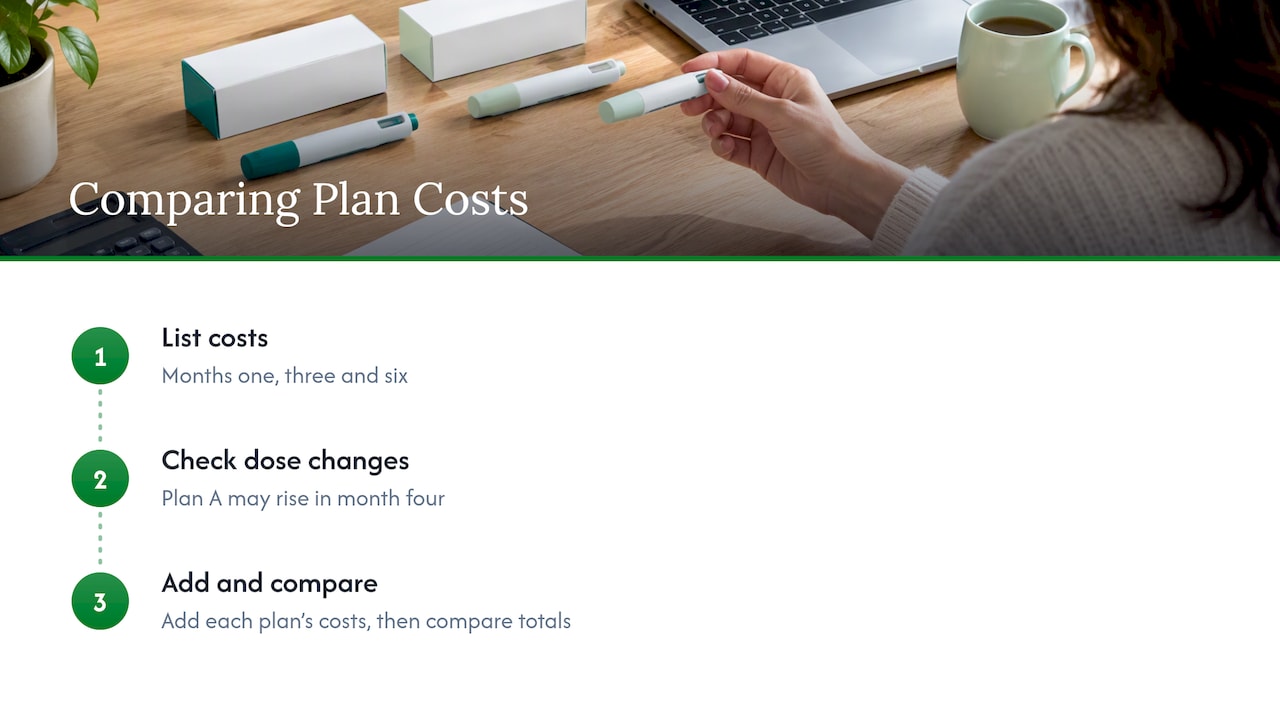
Suppose Plan A lists a low membership fee and bills medication separately, while Plan B lists a higher monthly price that includes medication and shipping. Plan A looks cheaper at first glance. Add the medication price at your starting dose, any lab charge and shipping, and Plan A may be the more expensive one. Now check month four: if Plan A’s medication price rises at the next dose and Plan B’s does not, the gap widens.
The method is the same every time. Write down each cost for months one, three and six, add them up, and compare the totals. It takes ten minutes and it is the most reliable way to avoid being steered by a headline number.
Starting with Zealthy
If you want to see whether telehealth weight loss fits your life, you can start with our weight loss program. A licensed provider reviews your health history, talks through whether medication is appropriate, and builds a plan around your goals. Our weight loss FAQ answers common questions about visits, prescriptions and delivery, and you can read about semaglutide prescription consultations if that is the option you are exploring. For current pricing, check the program page before you start, since prices and plans can change.
What results to expect for the money
Cost only makes sense next to outcomes. Clinical results vary by person, medication, dose and how consistently you follow the plan, and no program can promise a specific number. If you want realistic expectations, our articles on average weight loss on semaglutide and the benefits of semaglutide for weight loss go through what studies report and what that means for patients. If you are considering injections, how to inject semaglutide walks through the process step by step, so you know what to expect before a prescription arrives.
FAQ
How much does a telehealth weight loss consultation cost?
It varies by platform. A Healthline review found online eligibility consultations priced from $0 to $129. Some programs fold the consultation into a membership, so ask what the first visit and each follow-up will cost.
Will telehealth prescribe weight loss medication?
It can, if a licensed clinician finds it appropriate after reviewing your history. For Wegovy, eligibility generally means a BMI of 30 or higher, or 27 or higher with a weight-related condition. Some conditions and medications can make a drug unsuitable, so a full review matters.
Does Medicare cover telehealth weight loss visits?
Medicare covers many telehealth services, and Medicare.gov says most cost the same as in-person care, with 20% coinsurance after the Part B deductible. That applies to covered visits. Whether a weight-loss drug is covered depends on your drug plan, so confirm it separately.
Why do weight loss drug prices vary so much?
List prices are high, but patients often pay something different after insurance, rebates or coupons, as Peterson-KFF explains. Your plan, the specific medication and the dose all affect what you pay.
Is a very low advertised monthly price the full cost?
Usually not. It may cover only a membership, apply for an introductory period, or depend on a long commitment. Ask what is included and what the price will be after the first few months.
Sources
- Telehealth Insurance Coverage, Medicare.gov
- How do prices of drugs for weight loss in the U.S. compare, Peterson-KFF Health System Tracker
- FitRX, LLC dba Zealthy warning letter, FDA
- Where to Get a Wegovy Prescription Online in 2026, Healthline


