

A weight loss assessment is a
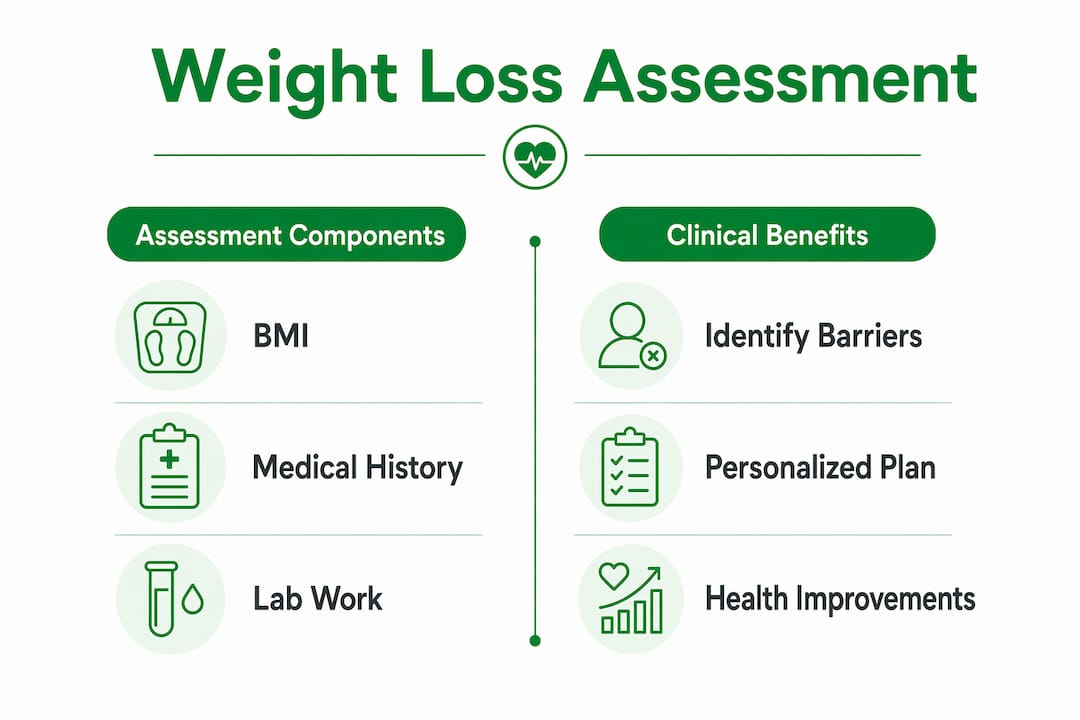
designed to build a full picture of your health before creating a personalized weight management plan. It goes far beyond stepping on a scale. Clinicians review your medical history, current medications, dietary patterns, physical activity, sleep quality, and key measurements like BMI and waist circumference. The session typically lasts 30 to 60 minutes. The goal is to give both you and your provider the clinical data needed to build a weight loss strategy that actually fits your body, your habits, and your health conditions.
What is a weight loss assessment and what does it measure?
Assessment ComponentWhat It RevealsBMI and waist circumferenceWeight classification and abdominal fat riskBlood glucose and HbA1cDiabetes or prediabetes statusThyroid panelHormonal barriers to weight lossMedication reviewDrug-induced weight gain or lossSleep and stress historyBehavioral and hormonal weight drivers
Physical measurements and lab work
The physical component of a weight management assessment covers several key metrics:
Laboratory testing often accompanies the physical exam. Common panels include:
Medical history and lifestyle review
The assessment also screens for comorbidities like sleep apnea, hypertension, and Type 2 diabetes that both influence and are influenced by body weight. Your provider will ask about previous weight loss attempts, what worked, and what did not. Lifestyle factors including sleep duration, stress levels, and daily activity patterns are documented as well. These details are not background noise. They are clinical data points that shape the entire treatment plan.

Assessment ComponentWhat It RevealsBMI and waist circumferenceWeight classification and abdominal fat riskBlood glucose and HbA1cDiabetes or prediabetes statusThyroid panelHormonal barriers to weight lossMedication reviewDrug-induced weight gain or lossSleep and stress historyBehavioral and hormonal weight drivers
How does a weight loss evaluation distinguish intentional from unintentional weight loss?
The type of weight loss you are experiencing changes the entire clinical approach. Clinically significant unintentional weight loss is defined as losing more than 5% of body weight over 6 to 12 months without trying. That threshold triggers a diagnostic evaluation for underlying causes, which can include cancer, gastrointestinal disease, endocrine disorders, or psychiatric conditions.
Unintentional weight loss: a diagnostic priority
When weight loss is unintentional, the assessment shifts toward ruling out serious medical causes. The clinical priority is not weight management. It is diagnosis. Routine testing for unexplained weight loss can lead to unnecessary investigations and incidental findings that cause patient anxiety without improving outcomes. Current clinical practice favors a conservative, symptom-led approach. That means testing is guided by what the patient reports, not by running every possible panel.
Key features of an unintentional weight loss evaluation:
Intentional weight loss: a behavioral and lifestyle focus
Intentional weight loss assessments take a different path. Here, the clinician focuses on behavioral patterns, dietary habits, physical activity levels, and psychological factors like emotional eating or stress-driven food choices. The medical workup still screens for conditions that could block progress, such as hypothyroidism or insulin resistance. But the primary goal is building a personalized, sustainable plan rather than diagnosing disease.
Pro Tip: If you have lost weight without trying, tell your provider immediately. Do not frame it as a positive development until a clinical evaluation rules out underlying causes.
What are the clinical benefits of a thorough weight loss assessment?
The benefits of a weight loss assessment extend well beyond knowing your starting weight. Modest weight loss of 5–10% of body weight produces measurable reductions in the risk of Type 2 diabetes, hypertension, and sleep apnea. That is a significant health return for a relatively small change. The assessment creates the foundation that makes those gains achievable and sustainable.
Setting goals that go beyond the scale
Weight loss assessments help patients set realistic, personalized health goals that extend beyond a number on the scale. Improved mobility, better sleep, reduced joint pain, and lower medication burden are outcomes that motivate long-term behavior change more reliably than weight targets alone. A clinician who knows your full health profile can help you identify which of these goals are most relevant to your situation.
“Sustainable weight loss is best achieved by setting health goals like improved mobility, not just weight targets.” — NCBI Overweight and Obesity Management Guidelines, 2026
Uncovering hidden barriers
Assessments move beyond calorie counting to identify metabolic or hormonal barriers that simple dieting cannot address. A patient with undiagnosed hypothyroidism, for example, may struggle to lose weight despite consistent effort. Identifying that barrier changes the treatment entirely. The same applies to medications that cause weight gain as a side effect, such as certain antidepressants, corticosteroids, and antipsychotics. Without a formal assessment, these factors go undetected and unaddressed.
Additional clinical benefits include:
How can you prepare for and get the most from your weight loss progress check?
Preparation directly affects the quality of your assessment. Relying on memory alone leads to inaccurate data that can skew your treatment plan. Bringing concrete records gives your provider a clearer, more accurate picture of your health.
Here is how to prepare effectively:
Bringing detailed logs to your consultation consistently improves its effectiveness compared to relying on patient memory alone. Your provider can only work with the information you give them. The more accurate that information is, the more targeted your plan will be.
Pro Tip: Use a free app like Apple Health or Google Fit to export a 30-day activity summary before your appointment. That data gives your provider objective movement patterns rather than estimates.
View your assessment as the start of an ongoing health management process, not a one-time event. Scheduling regular weight loss progress checks every three to six months allows your provider to adjust your plan as your body and circumstances change. A sustainable weight loss plan built on assessment data is far more likely to produce lasting results than any generic program.
Key Takeaways
A weight loss assessment is the most effective starting point for personalized, sustainable weight management because it identifies clinical, hormonal, and behavioral factors that generic diets cannot address.
PointDetailsAssessment scopeCovers medical history, physical measurements, lab work, and lifestyle factors in one evaluation.Intentional vs. unintentionalUnintentional weight loss triggers diagnostic testing; intentional loss focuses on behavioral planning.Clinical benefitsLosing 5–10% of body weight reduces risks of diabetes, hypertension, and sleep apnea.Hidden barriersHormonal imbalances and certain medications can block weight loss and are only found through assessment.Preparation mattersBringing medication lists, food logs, and weight history improves assessment accuracy and plan quality.
Why I think most people underestimate what a weight loss assessment actually does
Most patients walk into a weight loss evaluation expecting to be told to eat less and move more. What surprises them is how much of the conversation has nothing to do with food. Sleep quality, stress load, medication side effects, and hormonal function all shape body weight in ways that a calorie deficit simply cannot fix.
I have seen patients who spent years following textbook diet advice with minimal results, only to discover through a proper assessment that a thyroid condition or a medication they had been taking for years was working against them. That is not a failure of willpower. It is a failure of incomplete information.
The clinical shift toward conservative, symptom-led evaluation for unintentional weight loss is one of the most important developments in this space. Ordering every possible test sounds thorough, but it frequently produces misleading findings that send patients down stressful diagnostic paths for no clinical benefit. Targeted testing based on what the patient actually reports is both more accurate and less harmful.
The other thing most articles miss is the goal-setting conversation. Setting a target weight is easy. Setting a goal around improved mobility, reduced medication dependence, or better sleep quality is harder and far more motivating over the long term. Patients who connect their weight loss to a functional health outcome they care about are more likely to stay the course when progress slows.
If you are considering a weight loss assessment, go in with records, not just memories. And go in ready to talk about your whole life, not just your diet.
Getzealthy’s approach to personalized weight loss support
A weight loss assessment gives you the data. Acting on it requires the right clinical team.

At Getzealthy, we connect patients with licensed providers who have an average of over ten years of clinical experience in weight management. Same-day appointments mean you do not wait weeks to get started. Our providers review your full health profile, including the factors most programs overlook, such as medications, hormonal health, and mental wellbeing, and build a personalized weight loss plan grounded in your assessment findings. Prescription delivery is included when clinically appropriate. If you are ready to move from assessment to action, start with Getzealthy today.
FAQ
What is included in a weight loss assessment?
A weight loss assessment includes medical history, physical measurements like BMI and waist circumference, blood pressure, laboratory tests, and a review of lifestyle factors such as diet, sleep, and stress. The session typically lasts 30 to 60 minutes.
How is unintentional weight loss different from intentional weight loss in an assessment?
Unintentional weight loss greater than 5% of body weight over 6 to 12 months triggers diagnostic testing for underlying medical causes. Intentional weight loss assessments focus on behavioral patterns and building a personalized lifestyle plan.
How much weight loss produces health benefits?
Losing 5–10% of body weight produces clinically meaningful reductions in the risk of Type 2 diabetes, hypertension, and sleep apnea. Some conditions may require greater than 15% weight loss for significant symptom improvement.
How often should I have a weight loss progress check?
Most clinicians recommend a weight management assessment review every three to six months to track progress, adjust goals, and update the treatment plan based on changes in your health or lifestyle.
What should I bring to my weight loss assessment appointment?
Bring a complete medication list, a food diary covering at least three days, your weight history, and notes on your sleep and stress patterns. Detailed records improve assessment accuracy and lead to more targeted treatment recommendations.




.svg)
.svg)
.svg)
.svg)

